

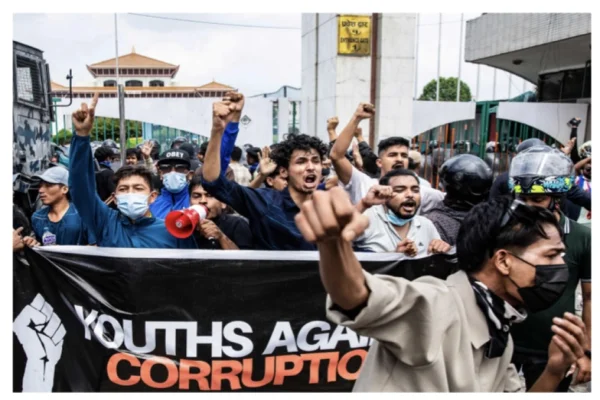
"If you keep doing what you have been doing, you will keep getting what you have been getting." Nepal’s post–Gen Z political scene feels stagnant and dispirited. The parties and leaders who once promised transformation now seempreoccupied with preserving the old order. Institutions are busy repairing what is broken instead of rethinking the system itself. Do we want to return to what once was, or can we reimagine what could be? Restoration preserves the old; reinvention creates the new. Choosing the latter can help avoid repeated disasters.
Nepal’s political history explains why reinvention is imperative. I grew up in the generation that fought against the Panchayat—a system that failed to meet the aspirations of youth. The democratic movement of 1990 brought some economic progress but failed to transform the institutions. The 2005–2006 political shift sparked another wave of change, yet institutions collapsed further under the new regime. Since then, fifteen prime ministers have come and gone, none completing their tenure, and no genuine effort has been made to reform the institutions that continue to falter. After the 2015 Constitution, politics regressed—alliances were built for convenience rather than conviction. Youth unemployment now hovers above 20 percent. These repeated cycles of instability and ineffective leadership fueled the current Gen-Z uprising, propelling digitally connected youth to the forefront and reflecting both the hopes and frustrations of a nation still searching for accountable, visionary leadership.
The rupture is not just historical—it is ongoing, with failures across all key institutions. The first and foremost failure lies with the executive, the source of dysfunction. Some truths must be spoken out loud. Corruption control mechanisms are weak and biased, law enforcement is uneven, crisis management is inadequate, and party interests outweigh public welfare. Discourse on national priorities and development is scarce; what prevails are reactionary exchanges centered on maintaining political control. The question is not about restoring what failed but about reimagining leadership capable of inspiring trust, integrity, and transformation. Do we restore the system, or do we reinvent it?
The legislature, too, has failed to live up to its promise. The Proportional Representation (PR) system, designed to ensure inclusion and diversity, has been subverted by party elites who handpick loyalists. Today, a handful of individuals decide who enters parliament, using the system to perpetuate their own dominance. This is democracy in form, not in spirit. Fairness requires structural reinvention. Parliamentary leadership must emerge from the public’s mandate, not from party patronage; PR parliamentarians should not have the authority to choose the parliamentary party leader. The question of parliament’s dissolution remains sub judice, but even if it is restored, will that resolve the crisis—or deepen it? Restoration, in my view, is not the solution; it is the problem.
Beauties, build the thick skin

The judiciary, too, faces repeated public skepticism. Its integrity has been questioned not only by citizens but also by members of the legal fraternity. Allegations of favoritism and controversial verdicts have shaken public confidence in justice. Will we merely restore courtrooms and reshuffle judges, or rebuild a judiciary worthy of public trust—transparent, accountable, and fair?
Law enforcement suffers from similar inconsistencies and politicization. Some escape accountability while others face excessive scrutiny, a pattern that corrodes trust and perpetuates corruption. The case of Rabi Lamichhane is an example. Are we simply building offices and buying vehicles for law enforcement while ignoring the underlying rot, or investing in competence, fairness, and courage so officers can act impartially, even under political pressure?
This is an opportunity for reinvention across the institutions that sparked the uprising. But who will bell the cat? “Ghumdai Firdai Rumjhatar.” The primary responsibility lies with the political parties. The irony is striking: despite the magnitude of change and the clear call for reinvention, the old parties remain deaf, focused solely on restoring their old structures and control—while Gen-Z youth are watching, comparing, and stepping into the fray.
Consider the New York City mayoral election, one of the world’s most competitive political arenas. Despite formidable, entrenched party machinery, a young, foreign-born citizen from a minority community, Zohran Mamdani, was elected on the Democratic ticket. Mamdani was neither a loyalist to the party establishment nor a long-time insider; in fact, he represented the progressive wing, challenging the party’s traditional centrist ideology. Yet the Democratic Party, recognizing the wave of public support, chose to back him because he was capable, popular, and visionary. Many analysts argue that this win has set up a stage for his party in next year’s midterm elections. This is how a party becomes genuinely inclusive and responsive to its base. When internal loyalty and patronage override merit and vision, a party ceases to be democratic; it becomes a syndicate.
In contrast, Nepal’s major parties remain closed to capable individuals, reserving election tickets for loyalists. This culture of patronage over merit has driven Gen-Z youth to form alternative movements. The political order keeps fracturing and reuniting because it is neither inclusive nor genuinely democratic. Are we truly prepared to restore that same old culture, or will we build parties that welcome independent, bright, and visionary young leaders? By systematically shutting out new ideas, established parties are not merely resisting change—they are protecting their own interests, indifferent to the nation and its future.
It is time to reinvent democratic institutions, beginning with the political parties themselves. Reinvention demands accountability not only from political leaders and state institutions but also from the broader ecosystem that enables toxicity. Sensationalist media and misinformation have deepened divisions and fueled political violence. At the same time, segments of the public consume and amplify these destructive narratives. Reinvention must extend to civil society as well.
History reminds us that progress has never emerged from comfort. Every great leap in science, democracy, or human rights was led by those who refused to accept that "the way things are" must remain so. They chose reason over ritual, knowledge over dogma, and courage over conformity. As Steven Pinker argues in Enlightenment Now, globalization is today’s most powerful engine of progress, accelerating the spread of wisdom and knowledge. We now live in an era equipped for enlightenment—connected, informed, and technologically empowered—if we harness it through deliberate political reinvention.
The next generation, Gen Alpha, will not wait quietly. More informed, analytical, and globally connected than any before, they will judge Nepal not by its past struggles or legacy, but by its standing among its neighbors and the world. The question is simple yet profound: will we keep doing what we have always done and keep getting the same results, or will we dare to learn, change, and reinvent? Will we continue to cling to exhausted leadership that has failed repeatedly while expecting only the youth to drive change? In this age of rapid knowledge and global connectivity, survival belongs to those who dare to reinvent. The challenge is clear: are we merely restoring what is broken, or reinventing what has already failed? The future lies in the choice we make.
The author is an associate professor at Tennessee State University, Tennessee, USA


