

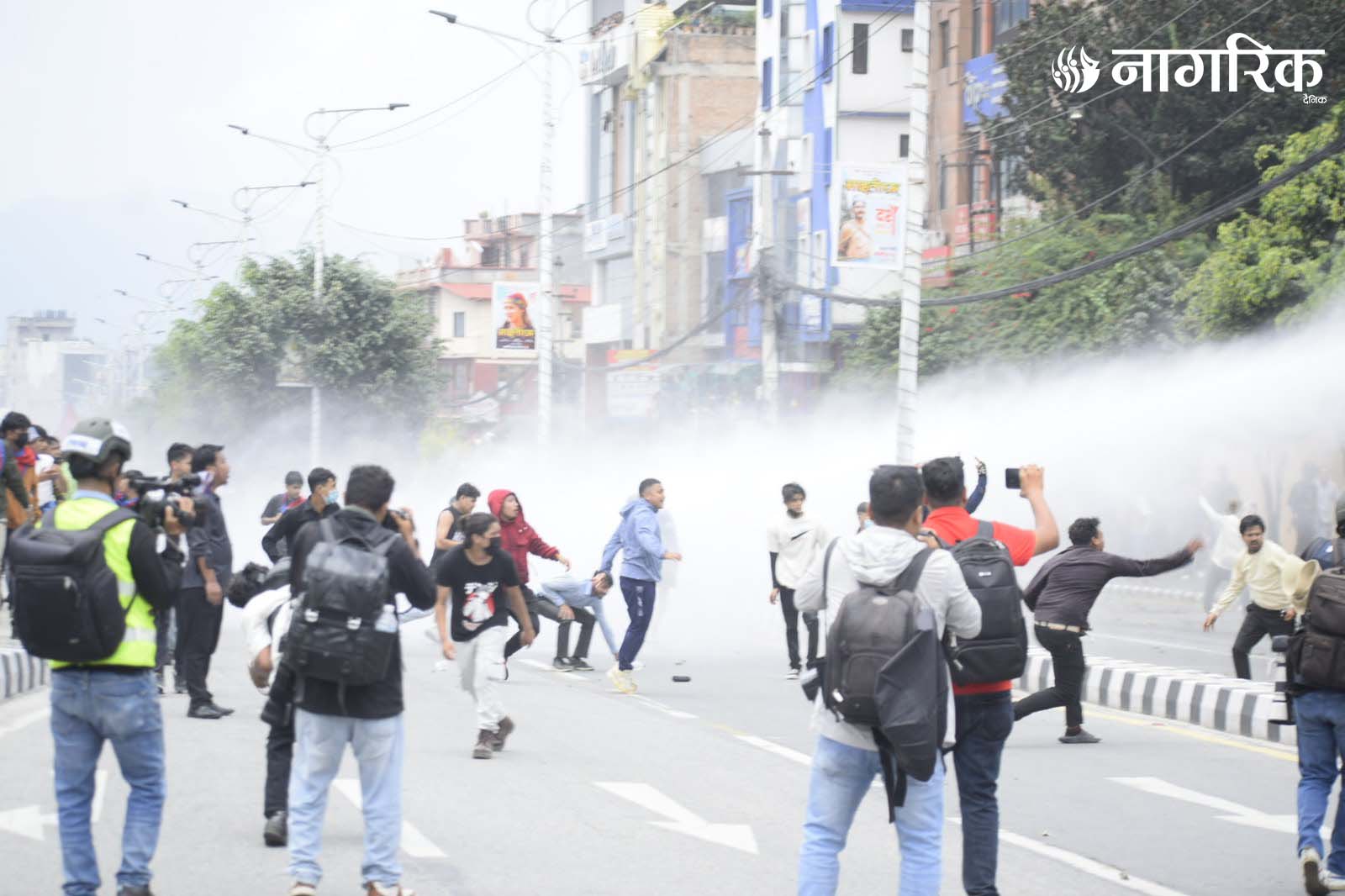
"With great power comes great responsibility." This line from the Hollywood movie Spider-Man extends far beyond the silver screen. Power without responsibility is dangerous. Nepal’s recent uprising showcased remarkable energy and courage, yet history is shaped not by those who merely protest, but by those who lead. While Gen Z’s intentions are clear, some critical questions remain: What is the purpose now? How will it be achieved? Who will assume responsibility? Do they possess the necessary experience to lead? If these questions go unanswered, Nepal risks descending once again into chaos—if it has not already.
Nepal’s Gen Z movement challenged the government in an unprecedented way, demanding accountability, transparency, and meaningful participation to confront corruption. Although Gen Z’s ideas exist within every major political party, its voice remains largely silent there. Meanwhile, entrenched leaders continue to protect their own interests, sending a blunt message to the youth: you do not matter to us.
The first question is: who will lead the nation, even if elections are held soon? Leadership is not about age or popularity; it demands the ability to transform outrage into sustainable policy. Without it, even the most powerful movements risk losing momentum and fading into disarray. Gen Z must decide whether it wants shared leadership that reflects its collective spirit if it does not have a single figure capable of unifying its aspirations. History teaches a simple truth: no matter how large and strong an army, it needs a commander.
Great Leadership: A Road Less Traveled

The second question is: what do they really want after this change? Vague populist slogans will not suffice. Whatever sparked the Gen Z uprising must now be translated into precise and achievable goals. Political failures worldwide often stem from economic mismanagement. After Dr. Ram Sharan Mahat in the 1990s, very few finance ministers in Nepal truly understood economics, except Dr. Rameshwar Khanal, who briefly emerged during this movement. In the years since, economic mismanagement has crippled institutions while avoiding structural solutions.
A useful parallel can be drawn from India: in 1991, facing a severe economic crisis, Prime Minister P. V. Narasimha Rao appointed Dr. Manmohan Singh as Finance Minister, entrusting him with the country’s economic recovery. Singh was not a conventional politician but a technocrat with deep expertise. Under his leadership, India implemented critical reforms, stabilizing the economy, liberalizing markets, and laying the foundation for long-term growth. The lesson for Nepal is clear: revolutions and mass movements alone cannot deliver lasting change. Nepal needs leaders who understand economics and can translate Gen Z’s energy into sustainable national development. Gen Z must move beyond protest. They need a concrete plan for reform, strengthening the judiciary, ensuring effective law enforcement, revitalizing the economy, and shaping a coherent political agenda.
The third question is: how will they do it? The old guard remains steadfast in its refusal to change. Even if Gen Z emerges as an electoral force, entrenched parties can unite to block newcomers, as they have repeatedly done. Nepal’s electorate is still largely rural, and party machines operate like rigid syndicates. Breaking through this system requires more than street protests; it demands a well-defined political agenda capable of winning hearts, cutting through hate-filled rhetoric, and withstanding waves of disinformation churned out by YouTube factories and WhatsApp universities. History offers a warning. The 1990 revolution brought political and economic change under strong leadership, but the system eventually collapsed. The powerful Maoist movement later showed that people could rise in revolt, yet it also revealed that revolutions without delivery or responsibility ultimately fail.
History shows that energy and revolt alone cannot deliver lasting change. Gen Z must translate courage into structured, accountable leadership if Nepal is to avoid repeating past mistakes. Thanks to the Gen Z movement, no party has been disregarded, and the constitution has endured. In a democracy, the opportunity to lead remains open to capable leaders across all parties and age groups. What Nepal needs now is leadership grounded in vision, integrity, and competence—leaders who can rise above division, translate protest into policy, and turn this moment of awakening into a lasting opportunity for reform. Failing to find such leaders would leave our democracy exposed to populist forces.
The fourth critical question is: do they possess the necessary experience to lead? Experience is a crucial complement after any uprising, as transforming momentum into lasting change requires leaders who understand the workings of government, the complexities of policy, and the realities of politics.
Not everything in Nepal is bleak. I grew up with a generation of leaders who long championed democracy, transparency, reform, and progress. Gagan Thapa, Bishwa Prakash Sharma, N.P. Saud, Chandra Bhandari, Ghanshyam Bhusal, Yogesh Bhattarai, Shankar Pokharel, Himal Sharma, and Lekhnath Neupane are among those still active in politics today. True leadership reveals itself in times of difficulty, yet vision and courage mean little when leaders remain confined within rigid party hierarchies. Memorizing slogans or serving as a loyal follower does not make one a leader.
The moment is now for these leaders to prove they are not mere paper tigers but individuals who stand by their promises. If they are truly progressive, they must break free from outdated ideology. The youth have already demonstrated what is possible; now experienced leaders must rise to meet that standard. They must choose: challenge orthodoxy from within or step out and forge a new path. Those who remain trapped behind the old guard and are unwilling or unable to act can no longer claim the mantle of leadership.
History will be written by those who act, not by those who watch. The train is leaving. Will you step aboard, or be left behind? The future will be shaped not by spectators, but by those ready to act. Our collective inaction will only hand advantage to populists—a form of power without responsibility that is deeply dangerous.





