

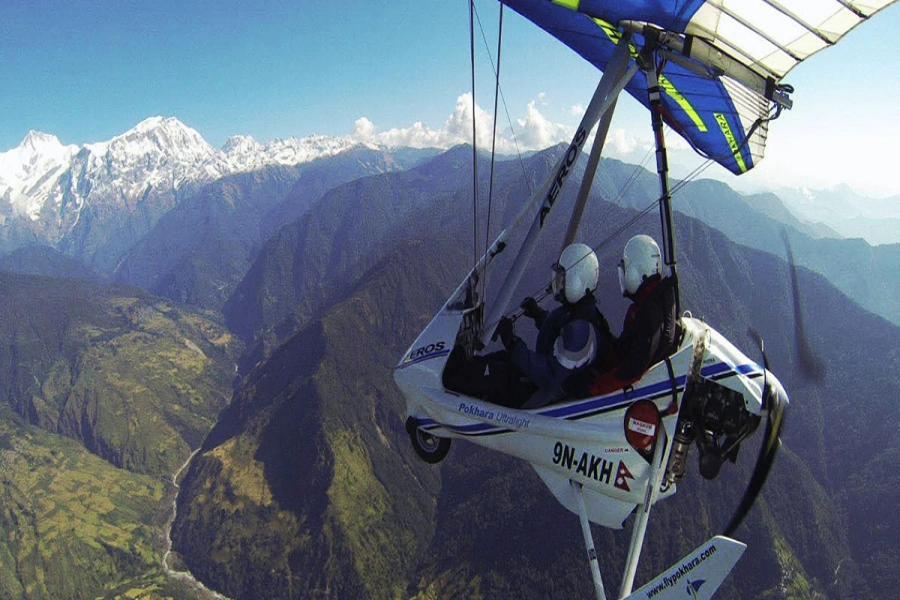
POKHARA, Dec 21: Pokhara, famed for the silver glow of Machhapuchhre and the Annapurna range above and lakes like Fewa, Begnas, Rupa, Maidi, Dipang, Gunde, Khaste, and Nyureni below, has long attracted tourists keen to admire its beauty from the sky. But the popular ultralight flight, often called the “butterfly aircraft,” has slowed in recent times as tourists shy away from the experience.
The ultralight aircraft, which can carry only two people and looks like a colorful butterfly while flying, once drew adventure seekers in large numbers. Offering a 360-degree aerial view while gliding with the wind, the activity was once a major attraction in Pokhara. Now, operators say the number of tourists has declined sharply.
Avia Club Managing Director Natasha Shrestha says high fees have pushed both domestic and foreign tourists away. She said flight costs rose after the Civil Aviation Authority increased takeoff and landing charges, dealing a heavy blow to the business. A few years ago, tourists could enjoy an ultralight flight for Rs 8,500, but the fee has now doubled to Rs 17,500, leading to a sharp fall in demand.
First accident of ATR-72 aircraft in Nepal
-1200x560_20230115125633.jpg)
Often called the “mother of adventure,” Shrestha is regarded as the pioneer of adventure aviation tourism in Nepal. Avia Club Nepal introduced ultralight flights in 1996 with Russian partners. Pokhara’s geography is considered ideal for such flights, and it was the first place in South Asia to operate ultralights. Shrestha said the activity has strong potential to promote Nepal in the global tourism market.
She said the lack of skilled manpower and tourism friendly state policies has weakened private sector businesses and discouraged new investment, hurting the tourism sector. What once seemed unusual has now become part of Pokhara’s identity, she said, stressing the need to expand and promote it further.
Initially, flights depended entirely on Russian pilots, but Nepali pilots now handle operations. At present, only Pokhara Avia Club and Pokhara Ultralight Pvt Ltd offer the service. Pokhara Ultralight Managing Director Pom Narayan Shrestha said flights have dropped from around 40 a day to just four.
Local resident Bikash Gurung, who flew ultralight with foreign friends earlier, said high fees now deter domestic tourists. He said many foreign visitors still rank Pokhara’s ultralight experience among the world’s best.





