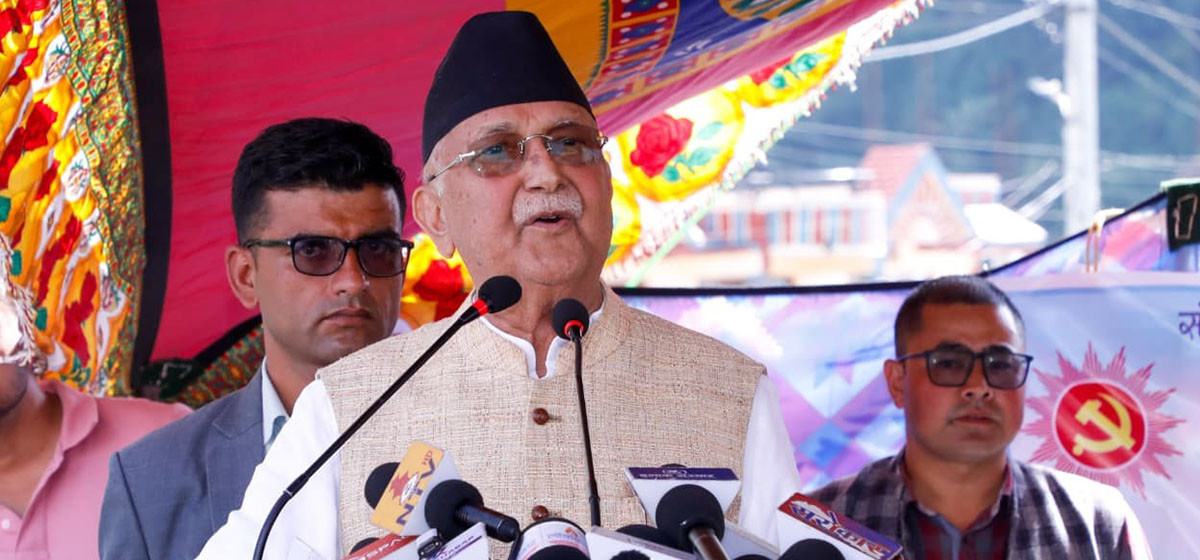
KATHMANDU, Oct 9: CPN-UML Chairman and former Prime Minister KP Sharma Oli has sharply criticised the interim government led by Sushila Karki, accusing it of acting against the constitution and deliberately avoiding timely elections.
Oli, who resigned following the September 8–9 Gen Z protests that resulted in widespread destruction—including the torching of Singha Durbar, the House of Representatives building, courts, and private properties—and left 75 people dead, said the caretaker government is not “the government of Nepal.”
“The appointment of the current prime minister was unconstitutional, with conditions demanding the immediate dissolution of parliament,” Oli said. “Otherwise, they threatened that the Gen Z movement would set the country on fire. Such actions undermine the very foundation of democracy, violate the rule of law and create a climate of state terror.”
No one should dream of going against democracy: PM Deuba

Addressing a program organized by Bhaktapur district chapter of the UML in Gundu, Bhaktapur, Oli also accused the government, formed with the principal mandate of holding elections for the House of Representatives on March 5, 2026, of deliberately avoiding the process. “Election is the mandate of the president, not the prime minister. The current government may be dreaming of a staged victory—jailing political leaders, filing cases against them, seizing polling booths and sidelining opposition candidates,” he said.
In his address, Oli signalled the involvement of foreign elements in the Gen Z protests, arguing that those who sought to destabilise Nepal had repeatedly failed. He criticised the Karki-led government for creating “a climate of intimidation” by detaining political leaders and attempting to marginalise parties. He also questioned the impartiality of the probe committee led by Gauri Bahadur Karki, set up to investigate human and property damage during the protests, noting that Karki had publicly demanded action against senior leaders, including Oli, prior to his appointment.
While condemning the violence and destruction during the protests, Oli maintained that accountability must follow proper legal and constitutional channels. However, he did not acknowledge the failure of his government to manage the initial day of protests, when police firing left 20 youths dead, which subsequently escalated unrest across the capital.
Oli also warned of potential international repercussions, including visa restrictions, damage to the tourism sector, and a decline in foreign investment. Appealing directly to young Nepalis, Oli urged them to act with restraint, stressing that the country’s future is at stake. He called on democratic forces to unite in restoring constitutional governance, social justice and the rule of law and reiterated his demand for the restoration of parliament dissolved in what he described as an unconstitutional manner.
“The acceptance of unconstitutional practices as normal will push the country toward ruin,” Oli said, asserting that his party would not allow the constitution or parliament to be trampled and expressing confidence that other mainstream parties would join in demanding the restoration of democratic order.