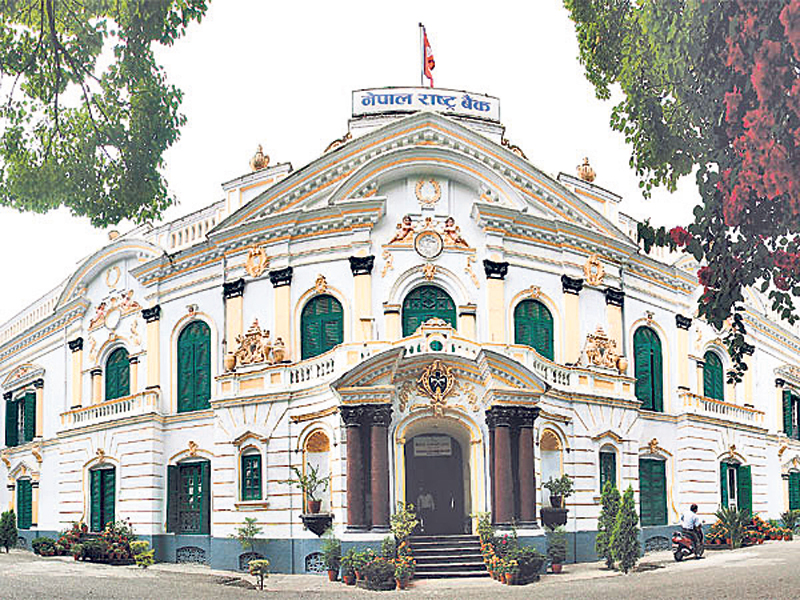
KATHMANDU, Dec 2: With banks holding surplus liquidity and interest rates at historic lows, Nepal Rastra Bank (NRB) has moved to relax several provisions to encourage greater credit flow into the economy. The central bank’s first review of the Monetary Policy 2025/26 announced on Monday signals a more flexible stance on personal and small-scale lending—measures intended to unlock idle capital and stimulate investment.
Despite a policy target of increasing private-sector lending by 12 per cent this Fiscal Year (FY), credit growth has risen by only 2 per cent in the first four months. Bankers attribute this sluggish uptake to abundant liquidity and subdued business confidence.
In a key change, NRB has doubled the ceiling for personal overdraft loans to Rs 10 million, up from Rs 5 million. Experts suggest this could encourage individuals to invest in the stock market or purchase assets. “This measure gives borrowers more room to act on investment opportunities,” said a senior banker.
Revised interest rate corridor system introduced
Microfinance institutions, crucial providers of capital to rural and small-scale enterprises, have also been given a significant boost. Their credit limit has been raised from Rs 700,000 to Rs 1.5 million, allowing them to lend more to agriculture, livestock, cottage industries and other grassroots ventures. Policymakers hope the move will energise rural economies and aid poverty alleviation.
The review also adjusts monetary instruments to narrow the gap within the interest rate corridor. The Standing Liquidity Facility (SLF) rate has been cut by 0.25 percentage points to 5.75 per cent, while the policy rate has been lowered to 4.25 per cent from 4.5 per cent. The deposit collection rate remains unchanged at 2.75 per cent. “The adjustments aim to gradually reduce the spread between the corridor’s upper and lower bounds while keeping the policy rate centred,” the review notes.
NRB emphasised that the overall direction of monetary policy remains appropriate, noting that real interest rates continue to be positive despite declining weighted deposit and lending rates. Excess liquidity makes further tightening unnecessary.
Reflecting the increasing shift to digital transactions, NRB has also permitted banks and financial institutions (BFIs) to merge their outlets in metropolitan areas, helping reduce operating costs.
For businesses affected by recent natural disasters in Ilam and other districts, NRB has introduced relief measures. BFIs may now reschedule loans for affected enterprises, accepting interest payments as low as 10 per cent of outstanding dues for restructuring purposes.
Taken together, the review indicates a central bank leaning towards stimulus, aiming to encourage credit uptake, support small businesses, and provide greater flexibility amid an economy grappling with abundant liquidity and cautious investment.