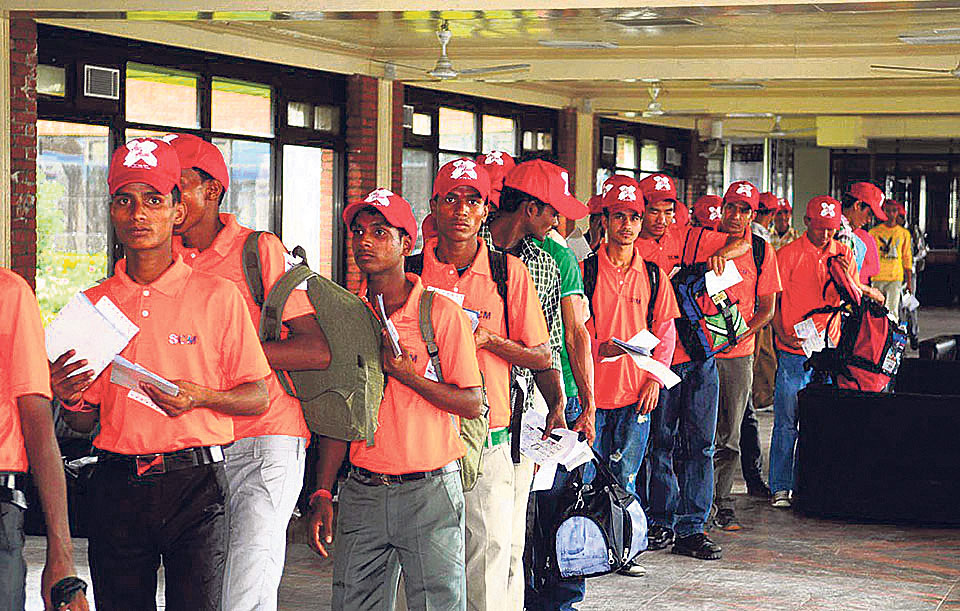
KATHMANDU, Sept 6: A recent perception survey has revealed strong support among Nepali migrant workers for the right to vote from abroad. The study, jointly conducted by the Law and Policy Forum for Social Justice (LAPSOJ) and Shramik Sanjal Kathmandu, surveyed 6,485 Nepali workers across seven major labor destinations. It found that approximately 1.4 million eligible voters were excluded from the 2022 General and Local elections, despite constitutional guarantees of equality and representation under Nepal’s 2015 constitution.
Dr Anuj Tiwari, an independent researcher, led the project from conception to execution, with data collection coordinated by Bhim Shrestha and support from Shramik Sanjal. The survey, prompted by a writ petition filed by Anurag Devkota and his team, was conducted using a bilingual Google Form distributed both online and in person between July 14 and September 7, 2024. Researchers noted a potential selection bias due to convenience sampling and limited internet access among some workers.
The findings show that awareness of out-of-country voting (OCV) was lower among women (66%) than men (80%), though interest in participating remained high across genders, with 68% of women and 61% of men expressing a desire to vote. Age also influenced awareness, with 18–24-year-olds showing the highest voter registration rates (63%) but substantial unawareness of the Supreme Court’s OCV decision (67%), while the 25–31 age group showed the greatest lack of awareness (71%). Despite this, interest in voting remained strong across all age groups.
Voting Rights for NRNs

Education was positively correlated with voter registration, OCV awareness, and participation interest. Migrants with lower education levels reported uncertainty about OCV’s benefits and feasibility.
Preferred Voting Methods and Challenges
Electronic voting emerged as the most favored option, with 93% of men and 91% of women supporting it, followed by in-person voting at embassies. Postal and proxy voting were the least preferred methods. The study also highlighted challenges, including legal barriers, lack of awareness, and technical difficulties—particularly among younger workers, women, and migrants from Karnali and Sudurpaschim provinces, as well as those in the Construction and Electronics/Manufacturing sectors.
Policy Recommendations
The survey notes that the Election Commission of Nepal (ECN) has drafted the ‘Election Management Act, 2080’, which includes provisions for OCV, such as data collection on citizens abroad and voting from diplomatic missions for Proportional Representation elections.
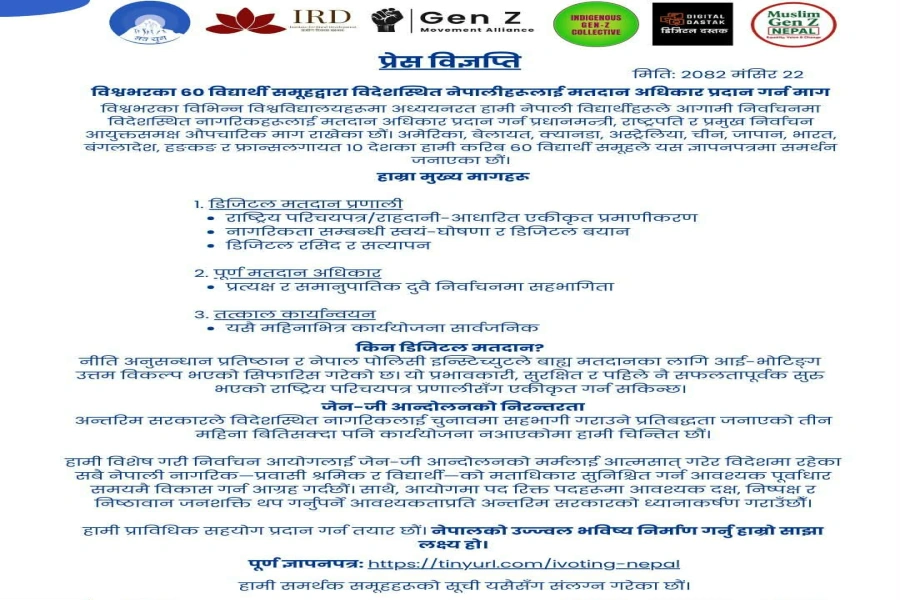
The report urges policymakers to expedite the passage of the election law amendment, allocate resources for implementation, and promote secure e-voting systems. Civil society is encouraged to facilitate dialogue between migrants and the government, while citizens, including migrants, are called on to actively demand their voting rights and hold authorities accountable.









-1779842101.webp)