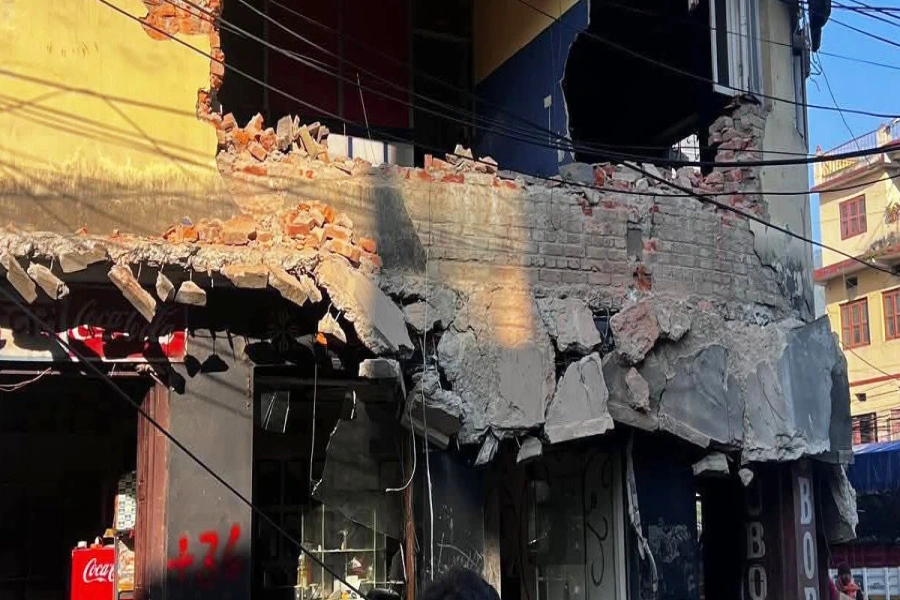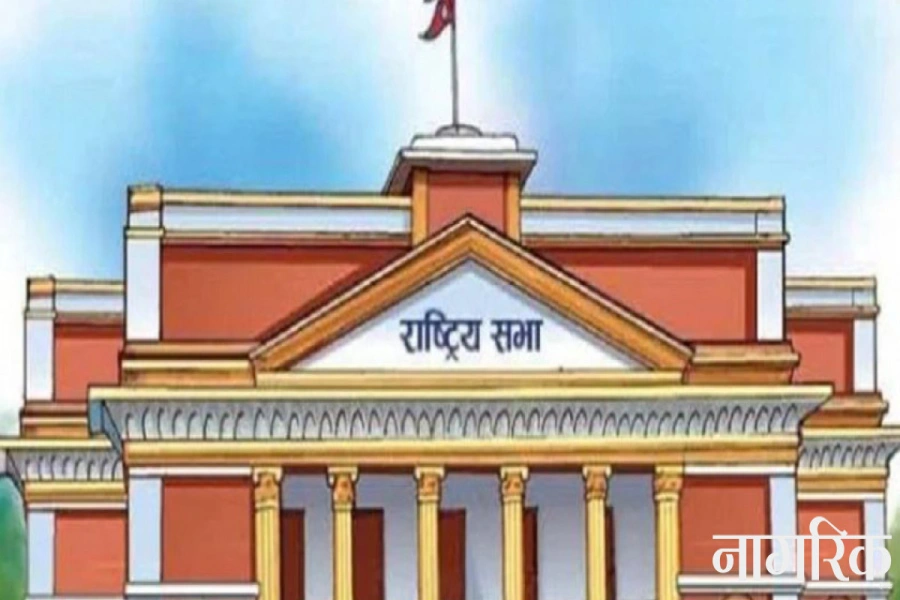
KATHMANDU, Dec 23: The functioning of the National Assembly of the Federal Parliament has slipped into uncertainty following arson at the Birendra International Convention Centre in New Baneshwor during the Gen Z movement.
With the construction of the permanent parliament building dragging on for years, authorities are now scrambling to set up a temporary hall inside the Parliament Secretariat at Singha Durbar ahead of the National Assembly’s upcoming winter session.
The Federal Parliament Secretariat is expanding the meeting hall of the Agriculture, Cooperative and Natural Resources Committee at Singha Durbar to host National Assembly sittings. Work has been accelerated to rearrange furniture, repaint the space, and bring in microphones and equipment from various committees to create a makeshift setup. According to Federal Parliament Secretariat spokesperson Ekram Giri, the goal is to make the hall operational with minimum infrastructure within a week.
Revised interest rate corridor system introduced
“The under-construction building was supposed to be handed over by December 31, but that now seems unlikely,” Giri said. “So we are preparing to be ready for any situation in which the government may convene the session. We are keeping costs low by using existing equipment from different committees and setting up everything temporarily.” Although the federal parliament building inside the Singha Durbar complex was slated for handover by December 31, that prospect is increasingly fading.
Meanwhile, the National Assembly faces no shortage of business. Five bills are already at the discussion stage, while reports of constitutional commissions, issues of public concern, and attention motions remain pending. On March 4, the tenure of one-third of the members will expire. Yet even after new members are inducted, there is uncertainty over seating arrangements.
Since the last meeting on September 8—before the Gen Z movement—the National Assembly has effectively remained stalled. Prime Minister Sushila Karki’s press coordinator, Ram Rawal, said there has been no formal discussion on convening a session.
Constitutionally, however, the gap between two sessions cannot exceed six months. With the House of Representatives (HoR) already dissolved, the National Assembly was expected to shoulder greater responsibility. Constitutional experts argue that the government’s indifference and failure to convene the session amount to a blatant disregard for democratic norms.
The National Assembly is not a ceremonial body. It is a constitutional institution tasked with holding the government accountable—a forum to question decisions, actions, and policies. In the absence of the HoR, it is the government’s duty to keep democratic practice alive by activating the National Assembly. Instead, both the government and the state machinery appear to be shirking that responsibility.