In my two previous articles, I explored some hows and whys behind government failure in Nepal (see "Story of failure," Jan 30; and "Why governments fail," Feb 15). This piece seeks to discuss ways to make government more accountable and functional.How can we make government functional? There is no dearth of recommendations. There are books and scholarly articles on it. But I want to present here prescriptions of the common people. Most people I approached with the question had this to say: Politicians should give up their lust for wealth and power; they should not indulge in nepotism and favoritism; they should live within their means; and they should think of people first, so on and so forth.
It sounds like asking for too much, for politicians as human beings are susceptible to fallibilities. But common notions like politicians are chor (thieves) and they are khattam (useless people) manifest in public spheres when such meaningful expectations are not met. Public expectations like these, more than big political theories, provide us cues as to how the government can be made functional and accountable.
The public cynicism of politicians can be unwarranted in some cases but they cannot be dismissed out of hand. People have seen for themselves how their leaders make fortunes within no time, while they struggle to meet their basic needs throughout their lives.
Observing daily activities and conduct of political leaders offers some insight. They are the ones who run the institution called government, after all.
It was right after second Constituent Assembly elections. I, along with a Republica colleague, had reached a house of one reputed Nepali Congress leader. He was surrounded by his cadres and supporters. He made us take our seats at the distance and then we waited.
We overheard the conversation between him and his audience. "Many congratulations to you. I always knew you would make it," one said. The other took the leader aside and said something we did not hear. But leader's response was audible enough. "I can't do this for you," he almost roared, "never come to me with such requests again."
Visibly irritated, he tried to avoid them. "Give me a break, I have journalists waiting," he told them. He ushered us to his chamber and said, "Look how difficult politics is. They come with issues I cannot address, but I cannot say no. They are my voters."
Visit the house of any politician (exceptions apart) and this scene is repeated, more so if they are among serving ministers, former ministers or leaders of influence. There are fawning cadres surrounding them and telling them things they want to hear. In exchange they want their goods stranded in customs points to be cleared or get their relatives imprisoned on smuggling charges released, or get lucrative contracts. Invariably all requests include exchange (or promise thereof) of commissions, kickbacks or some illegal conduct, or all three.
The tragedy is that an overwhelming majority of politicians in Nepal say "yes" to all illegitimate demands of their cadres. If they said "no" half of the governance-related problems would be solved.
Extravagance and ostentations (both maintained through foul means) define life of politicians. If they maintained some modesty it would salvage their image. A politician living within his means inspires optimism. I think of Jose Mujica, the president of Uruguay from 2010 to 2015. Mujica gave up state palace in favor of a farmhouse, would donate bulk of his salary to social projects and flied economy class. He decried excess consumption. "The poorest is the one who needs a lot to live... there have been years when I would have been happy just to have a mattress," he told The Guardian in 2013. "If we lived within our means—by being prudent—the 7 billion people in the world could have everything they needed."
In a greed-ridden politics of Nepal, Mujica is an oxymoron. But studies have shown how wealth and luxury makes you insensitive to pains of the people below your status. American researchers Michael W Kraus and Bennett Callaghan found "high status individuals would be more likely to support economic inequality in their legislative behavior relative to their low status counterparts." They argue that if the rich are in power they are less likely to implement policies that favor the poor and the marginalized.
In another study, researchers from the University of California, Berkeley, and the University of Toronto conclude that upper-class individuals behave more unethically than lower-class individuals. Upper-class individuals are more likely to break the law and more likely to exhibit unethical decision-making tendencies, they argue.
The implied meaning of 'government of the people by the people' is that those who need the government the most must also run it, so that they benefit from the government the most.
One problem of our democracy is that people who need the government the most hardly ever run it or end up becoming lumpenbourgeoisie when they do. The degeneration of Maoist party, which energized and led grassroots movements, is a case in point.
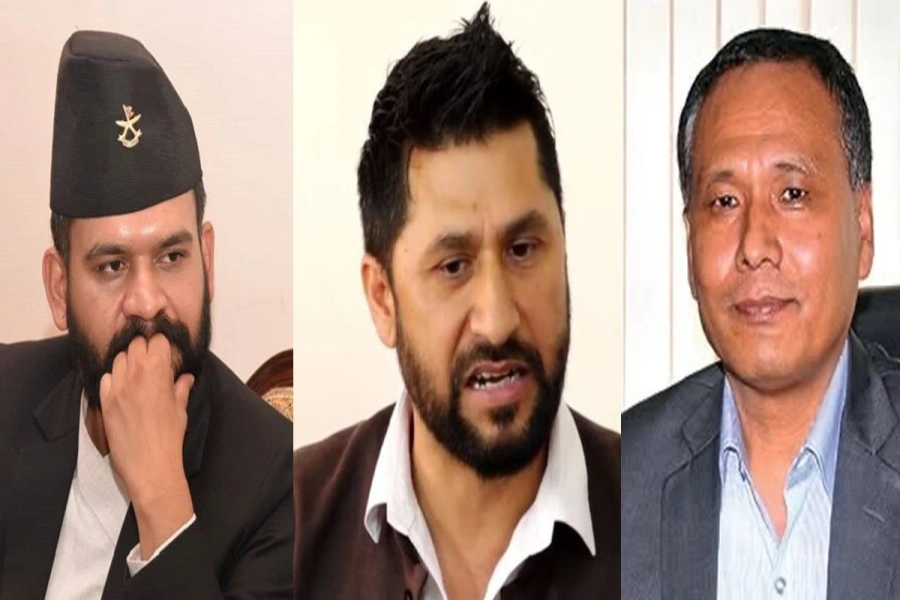
Politicians with limited means, on the other hand, are humble and more accessible. Consider Lal Babu Pandit, the former minister of General Administrations, whom anyone could contact over the phone and who exercised austerity both in his ministry and household.
This is not to suggest that politicians must be poor. They don't have to be. But if they shunned foul means to earn wealth, most politicians in Nepal would live like Lal Babu. It is another thing that in a world ruled by the criminal-political nexus, those like Lal Babu becomes butts of jokes.
Good governance is the agenda of political parties only until they are outside government. They often misuse it as a tool for regime change. During 1990s we deplored how corrupt the royal regime had become and how dethroning it would herald good governance. We repeated the same thing in 2007. But all available statistics point to the fact that bad governance still rules. Madheshi Morcha could have made a difference if they had made governance an agenda of their agitation but separating entire Tarai plains from hills and mountains became their priority. So what should be done?
Notwithstanding their propensity to earn illegally, human beings also possess a unique craving: to do some good. It is for this reason that even corrupt leaders, bureaucrats and smugglers educate their children in the most expensive schools. It is because they don't want their children to grow up to be smugglers and corrupt politicians. If the same spirit also guided people running the government, it would make a lot of difference. Another human attribute common to all is the desire to be praised. Which politician would want to be remembered as corrupt?
Nepal is a country where a single good deed will earn you lasting fame, even after you die. The woe of this country is, ask people to name one politician who had an impact on their life during their time in the government and they will tell you: "Are there any?" A few, however, will mention the likes of Man Mohan Adhikari, Lal Babu Pandit and Gokarna Bista (incidentally, they all come from CPN-UML).
We have tried a number of legislations for governance reform. Hope remains in consistent media watch and debate on governance (disclosure: the author intends to generate fresh debate on why government fails and how it can be made meaningful through these articles), consistent shaming of black sheep and exploring every possible way by talking about it, writing about it.
Politicians are happy with the status quo. They have nothing to lose. But we in media, intelligentsia and civil society cannot remain complacent because of the risks involved—the scariest of them all being, as former secretary of government of Nepal Bhojraj Pokharel told me early this month, "state failure."
mahabirpaudyal@gmail.com
Related story
Possibility of work-from-home in Nepal