Three years out of 4-year deadline already elapsed
Excavation work of Myagdi Khola hydropower tunnel begins

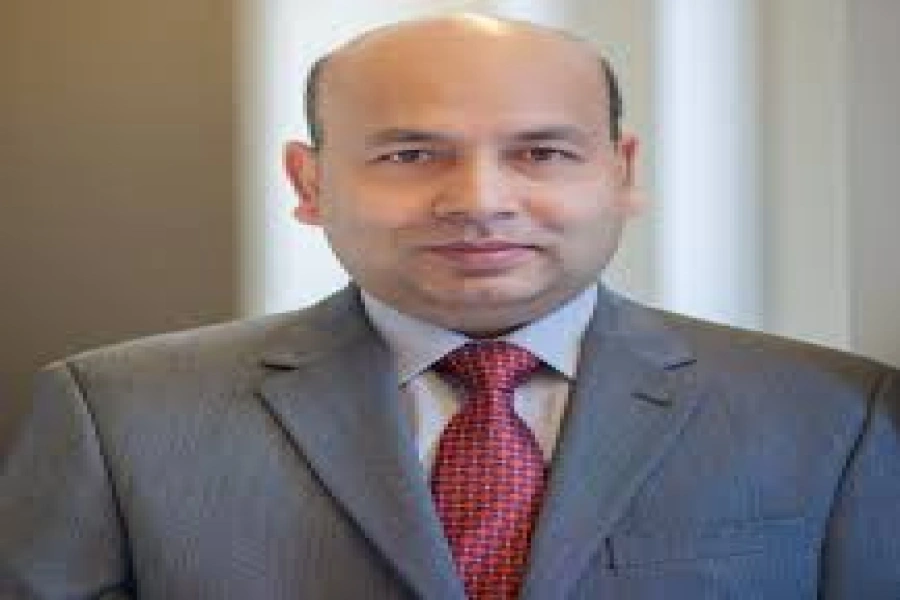
KATHMANDU, Feb 1: Former president of the Federation of Nepalese Chambers of Commerce and Industry Kush Kumar Joshi has resigned as board chairman of Nepal Purwadhar Bikash Company Limited (NPBCL) after failing to mobilize investments for the Kathmandu-Kulekhani-Hetauda Tunnel Highway. However, Joshi has cited personal reasons for his resignation, according to sources.
A struggle committee led by former board member Rajuman Maharjan had launched a series of protests demanding Joshi’s resignation. Most of the board members allege that Joshi’s highhandedness and lack of transparency in financial matters were behind the dismal state of affairs at the project. The 58 km project envisages an alternative link with the tarai. The project cost was estimated at Rs 34.87 billion in 2013.
Joshi confirmed his resignation but said he would leave the post only after a new person will come to take the responsibility. “The next board meeting that will take place on February 10 will take a decision about my resignation,” Joshi said. Joshi complained that some board members forced him to resign by threatening him of picketing his home if he didn’t do so.
Besides local and national-level industrialists, members of the general public and farmers in the Hetauda and Kulekhani areas and VDCs through which the proposed road would pass had put their money in the project. A total of 1,800 people have invested Rs 300 million and pledged to invest more.
But the struggle committee led by Maharjan had been questioning lack of transparency at the company and even submitted a memorandum to Prime Minister KP Sharma Oli.
Protestors also called on UCPN (Maoist) Chairman Pushpa Kamal Dahal. Oli and Dahal have recently spoken about the project separately. At a function in Hetauda last week Dahal said the government should invest in the project if need be.
Talking to Republica, Maharjan, who is also former chairman of Kulekhani VDC, said, “Joshi neither garnered support and financing for the project from local industrialists and district chapters of the FNCCI nor brought in any foreign investment.” Political pressure is also cited as one of the reasons for Joshi’s resignation.
Maharjan further said the project management could have run its offices with the interest on the investment amounts to the tune of Rs 300 million deposited in various banks. “But most of the capital has been spent on regular expenditures,” he lamented. Joshi has invested only Rs 1 million in the project.
Maharjan, along with two others, had vacated their positions on the board to make way for Chairman of TBI Group Bhawan Bhatta, who had made an investment commitment of Rs 1 billion. A board meeting held two weeks ago also piled pressure on Joshi to quit.
One of the board members, who sought not to be named, confirmed Joshi’s resignation on Sunday and said the next board meeting would be held soon to select a new leadership from the board itself. “The company’s technical director, Lal Krishna KC, is likely to be the next chairman, but his will be a short term until a large scale investor comes along,” said another board member.
The government had issued a license to the team led by Joshi on May 14, 2013 to develop the project on a BOOT (build, own, operate and transfer) basis. The developer was to hand over the project to the government in an appropriate condition after operating it for 30 years.
Commuters on the toll highway were be charged a fixed rate by the government, which had relaxed or waived several of the taxes and fees for the project. It had also provisioned that sources of income for investments in the project would not be sought. Government officials say these facilities were announced to encourage the private sector but now they complain that the private sector leaders did not keep their part of the bargain.
Joshi and his team had an ambitious plan of collecting funds from people from all walks of life and using domestic technology, but he kept changing his statement. Later, he visited various countries to mobilize investments, saying Nepalese were not interested in investing and/or legal bottlenecks hampered the collection of more funds from the general public.
In the last three years, several press briefings were organized on the project and the media was told that they would soon start work in the field.
After returning from his visits abroad, Joshi had told a press meet about the closure of a financial deal with a Canadian company, Infrabanx Corporation, in August, 2014 to bring in US $280 million. But this turned out to be not a financial closure but merely a memorandum of understanding which did not proceed any further.
According to company officials, the detailed project report is ready and the environmental impact assessment is in the final stages of approval by the government. Likewise, forest clearance has been achieved and work on land acquisition as well as tender documents, detailed surveys and other investigations were about to be completed.