The National Planning Commission (NPC) has been formulating plans, policies and programs for speedy reconstruction after the Great Earthquake of April 25, 2015. The government advisory body responsible for formulation of development plans and policies is deliberating modalities and technicalities for a high-powered mechanism to carry out reconstruction works at the moment.
Related story
Making a great first impression at an interview

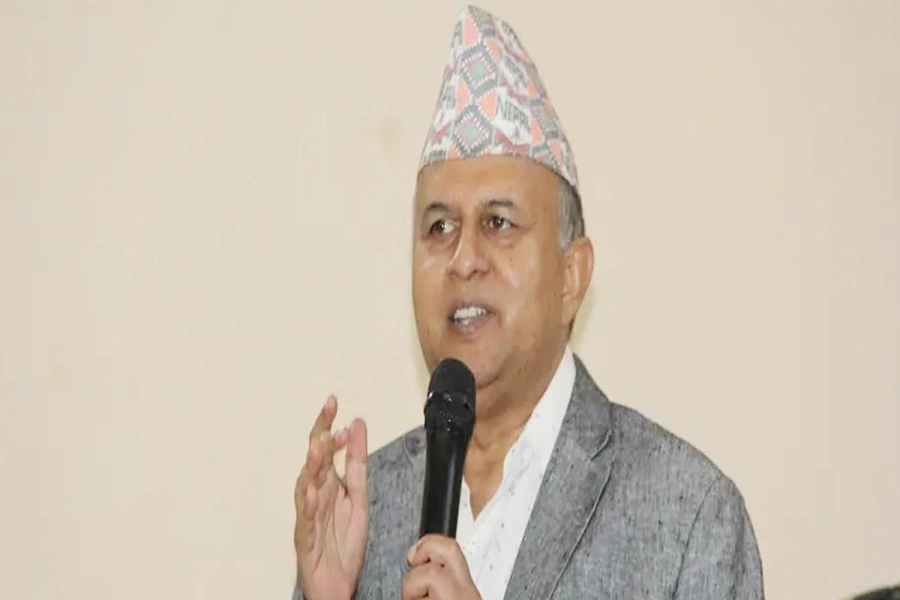
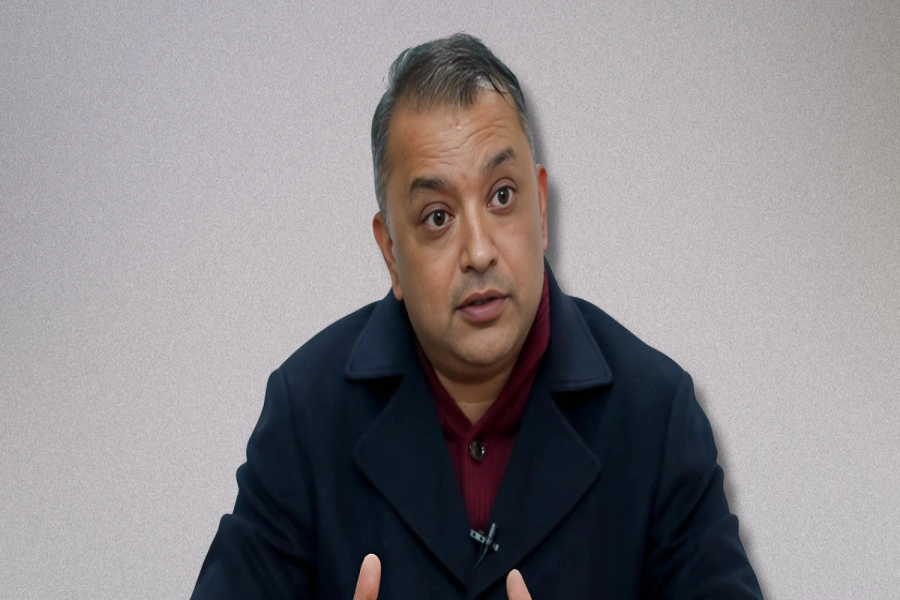
What is the progress so far? What will the NPC bring to ease the suffering of the displaced and expedite reconstruction process? Bimal Gautam and Mahabir Paudyal caught up with the NPC Vice-Chairman and the Coordinator of Prime Minister's Relief Fund Dr Govind Raj Pokhrel Wednesday afternoon.
What is the idea behind the so-called high-powered reconstruction mechanism?Nepal has been facing natural disasters on a regular basis. Koshi, Bagmati, Far-west floods and Myanglun fire are just few of the tragedies. We have responded to such tragedies either by forming a separate mechanism or through existing government bodies. Some of these have become a success, while others have not done very well. But drawing from the experiences of countries like India, Pakistan and Indonesia, it is clear that reconstruction efforts carried through a separate autonomous entity are more successful. The same thing assigned to a not-so powerful authority has failed. Besides, there is international practice of forming a high-powered body to respond to reconstruction needs. Such bodies take decisions on their own. The proposed reconstruction body or mechanism, you name it, will be no different. We will finalize the modalities by today and submit it to the Government of Nepal.
What will be the modalities of proposed reconstruction mechanism?
Given that our development spending is low and there is an urgent need to speed up reconstruction, we have envisioned a powerful and autonomous body that takes ahead reconstruction works very differently. This body will be powerful enough to take decisions regarding public procurement, land acquisition and various environment related issues. It will be entitled to supersede existing acts and laws for the time being. This may sound like we are creating an extra-legal body, but that's not the case. The body will be empowered to take hard decisions only for a certain period of time, five years in our context.
Five years sounds like a long time, given the reconstruction urgency.
It will take a long time because the scale of damage and destruction caused by the earthquake is huge. It is beyond the parameter of our budget. We are not able to manage resources from internal sources because our revenue collection has gone down after the tragedy. Besides, this body will also have to work on resource mobilization at district and local levels. It will also have to enrich capacities of the local bodies so that we do not have to form a new mechanism every time there is a disaster. This is a tough task. We won't be able to accomplish it without foreign loan, aid and investment.
Donors have contributed little to the Prime Minister's Disaster Relief Fund. Will they contribute generously for reconstruction?
Reconstruction Fund is different from the Relief Fund. The latter was meant for immediate relief and rescue, not reconstruction. While we may not have received hard cash from the donors as expected, but they also generously contributed in kind. Donors used their own helicopters, distributed food and other supplies to the victims, provided medical treatment, and rescued those trapped under the debris at their own costs. If we convert this all this into cash, their contribution will be much bigger than what it seems.
That may be true, but there still is a lack of trust among donors on the government.
This is not true. Some social media platforms portrayed the government in negative light initially. This shaped public opinion as well. Most criticisms against the government are misplaced. The government had to treat thousands of earthquake patients for free, but did not have shortage of medicine. The government was not perfect in responding to the crisis. Due to lack of coordination, absence of local bodies and not-so efficient bureaucratic channels, we could not provide relief materials to the victims on time. But our police, army and civil servants worked around the clock to help the people in need.
Yet donors seem to have reservations regarding transparency.
There are several factors why donors do not easily trust us. Our position in global corruption index is bad. The CIAA's action against corrupt officials may have contributed in shaping our image as a corrupt country. They should understand that the CIAA's actions have curbed graft to a great extent. There are strong laws to punish the wrongdoers. Those who embezzle relief and reconstruction funds will be brought to justice.
There is a concern that reconstruction fund will meet the fate of peace fund.
This is why we need an extraordinarily powerful reconstruction mechanism. Every spending of this mechanism should be transparent. The Civil society will have to monitor the spending. The CIAA will take action against wrongdoers. Representatives of donor agencies can also monitor the fund. What happened to peace fund should not happen with the reconstruction fund.
Since the PM will lead the reconstruction body, how will it be any different from the Relief Fund?
The PM needs to lead this body in order to expedite decision-making process. Besides, the PM alone is not going to do everything. There will be a CEO and a vice-chairman to formulate policies, senior ministers and bureaucrats to execute them, and experts and even the citizens to monitor and supervise the body's work. This will be completely different from our traditional government mechanism. This will have visionary and politically unbiased professionals. There will be a committee comprising of renowned civil society members to watch its work. This mechanism will work in coordination with NGOs, civil society, philanthropists, private sectors, development partners, investors and citizens at large.
Reconstruction has been touted as a 'chance to change' the direction of our country. How do you see that possibility?
Yes, this is a chance to change Nepal. The government has announced relief money for temporary settlements. But if we really want to transform this crisis into a 'chance to change' Nepal, we need to wait for some time. We are working together with the Ministry of Urban Development to formulate new building codes. Many have been studying settlement planning, concentrated settlement and so on. This is not the time to make popular plans. We must restore normalcy by building temporary shelters to run public offices, schools and health posts and individual houses. We will know the real situation perhaps only after this monsoon.
We do not have time to devise plans for permanent settlements. We need to plan in such a way that every house in our villages and towns is earthquake proof. We need to assess and explore every option. If we work this way, it won't be long before we see Nepal follow Gujarat's model.
Government's one-window policy has been criticized. What's your take on this?
There seems to be some misunderstanding regarding one-window policy. It has been propagated as a policy to discourage NGOs and individual donors. This is not the case. This policy is actually meant to avoid duplication and establish coordination among various authorities. Any person or organization that wants to build a school in earthquake affected area can do so. It has to coordinate with the government, and abide by its norms. This is the right time to build the system for planned settlements and make people abide by strict building codes.
Millions of houses have been constructed flouting the building codes. What will the government do?
People who did not follow the building codes will be punished. The degree and intensity of punishment may be different, but both, the officials who allowed houses without abiding by government norms, and the house owners who took approval for two-storied house but added more will also be punished.
Current government does not seem to be assertive enough to do so.
One problem in a democratically elected government is that ministers avoid taking risky decisions due to the fear of public backlash. But there is our bureaucracy. Take the recent prohibitive order not to build more than two-storied houses until July. By then, we will have devised a new system and will ensure compliance of the rule. This is the right time to build the system. If we fail now, we might fail forever.
Earthquake victims have huge expectations from government when it comes to rebuilding. What will they get?
The government is not going to build houses for individuals. Some civil society organizations and NGOs might want to help the desperate victims to rebuild houses. The government won't intervene in such cases. But the victims should make houses themselves. The government will only provide assistance and relief. It has announced Rs 2, 00, 000 per household to rebuild destroyed house. There are concessional loans, soft loans and other incentives might be announced later. The amount is not enough. But this is not compensation money, it's a relief assistance provided by the state. People should start building permanent houses after the monsoon. New building codes will have been finalized then. The government will provide several structural designs to help build earthquake proof houses. Supply of building materials will be smooth. However, a person who has his house destroyed in village but who possesses a standing house in Kathmandu won't be entitled to any of the above support. Besides, they will have to comply with the new building codes. The cabinet has decided that even a person who wants to build a house in rural area must take government permission. Those who fail to do so won't be entitled to above facilities.
Relief and soft loan are often marred by bureaucratic hassles.
That is why we need an extraordinarily powerful reconstruction mechanism to remove such hurdles, and to move things quickly so that the victims do not have to go through red tapes and bureaucratic hassles.
Earthquake has destroyed thousands of houses. What will you prioritize in reconstruction?
Reconstruction mechanism won't define a clear priority as such. In fact, individual houses, public office buildings, schools, health posts and heritage sites, public infrastructures like bridges, water supply, and hydro stations will be reconstructed side by side. All reconstruction works will take place simultaneously.