


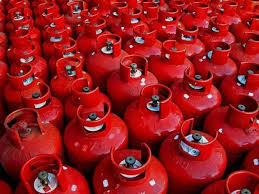
The government’s decision to strengthen market monitoring in the face of the cooking gas shortage in the Kathmandu Valley is a familiar event. We have seen this happen time and time again. Every time the country passes through a critical political phase such as the present one, fuel, gas, and essential commodity shortages seem to crop up. The current shortage is happening at a time when the country is under a caretaker government that is not exactly in a position to take decisions. This is the very phenomenon that we have seen happening around us. The joint teams of the Department of Commerce, Supplies, and Consumer Protection, the Nepal Oil Corporation, and the Nepal Bureau of Standards and Metrology have begun to inspect the market to check for any hoarding. The fines of up to Rs 300,000 may sound draconian. However, the question that comes to mind is, why does the government begin to take measures only when the gas supply is running low? The immediate cause for the shortage is the election season. However, the underlying cause is a different story altogether. Some bureaucrats sense the weaker government’s position and try to take advantage of this, while some unscrupulous middlemen, hoarders and profiteers take advantage of the situation and create a false shortage that hurts the common man.
Sakela Ritual in Rai community

Nepal Oil Corporation has claimed that supply levels have not decreased and, in fact, have increased by 10 percent in terms of purchase delivery orders, which involve lifting gas from Indian Oil Corporation’s depots in India’s Barauni, Mathura, and Haldia. Between these two claims, there lies a consumer who has to wait in a queue for weeks, not knowing who to believe. This is a chronic problem with our market oversight. Our rules are reactive, meaning that we act only when scarcity is visible, not before. We have rules in place, but enforcement is still very relaxed. Information on stock levels, distribution, and consumption does not filter into the public domain in a timely manner. And in this vacuum, rumors tend to travel faster than facts. Short-term fixes are still necessary. Public updates on a daily basis regarding LPG supply, distribution, and stock levels would surely ease people’s minds. Inspection reports must also come out, rather than just announcing raids. Penalties must also follow quickly, rather than months down the line, so that people who are hoarding actually feel the pinch.
Still, these steps only address the symptoms. Real long-term solutions require the political will to see them through elections. What Nepal needs is an institutional mechanism for monitoring the markets that functions regardless of the government in place. Using digital monitoring of LPG imports and sales could help prevent manipulation. Dealerships need to be licensed with stringent guidelines on the disclosure of their stocks. If they violate the rules, their licenses need to be suspended quickly. Most importantly, the government needs to stop treating the shortages as unexpected events. Elections, protests, and government changes are predictable events. Governments need to plan for them as routine events. When the caretaker government takes over, it needs to come with an agenda to keep the supplies coming. Gas shortages are the results of hesitation, poor oversight, profiteering and the middleman culture. If the government does not act soon to change these bad habits, every sensitive political period will bring the threat of empty LPG cylinders in households.





-1200x560-1783083574.webp)




