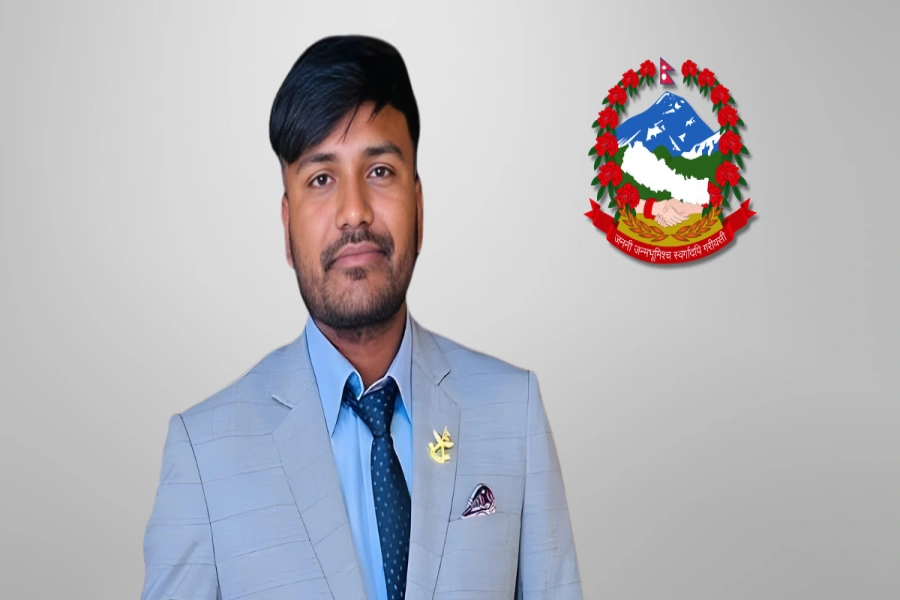
At a meeting of the committee attended by half a dozen secretaries, Minister Gupta was adamant over the bill that proposes 48 percent seats for reservation quotas meant for candidates representing various ethnic groups while recruiting human resources for government services ranging from the civil service to the university.[break]
"This bill must be endorsed by the cabinet committee as now proposed," one of the secretaries participating in the meeting quoted Minister Gupta as saying, adding, "The bill is interlinked with the foundation of the present government and it is a political issue as well. The bill must be endorsed at any cost. I won´t compromise on the 48 percent reservation quotas proposed by my ministry (Ministry of Law and Justice-MoLJ)."
Asked why he has pressed for 48 percent reservation quota, Gupta argued, "There is not much difference between the existing 45 percent and the proposed 48 percent reservation quota. What is the motive behind opposing this bill which aims at ensuring access to posts by the poor?"
Minister Gupta also informed Republica that the proposed bill is likely to be endorsed by the bills committee on Thursday. Both past and incumbent bureaucrats had been strongly criticizing the bill, saying it would set a worse example and discourage qualified manpower from joining the civil service, Nepal Police, Nepal Army or other services.
"Various marginalized groups including Dalits, women and Madhesis have been demanding 60 to 70 percent of seats under reservation quota in the civil service, Nepal Police, Nepal Army and others," the minister told Republica, adding, "How can the cabinet committee endorse the bill bypassing their demand though we have only opted for 48 percent?"
Asked about the long-run ramifications of the reservation quota and its adverse effect on meritocracy, he argued, "The presence of the poor in government services won´t have any adverse effect on meritocracy."
A draft inclusion bill, which was prepared directly by the United Democratic Madhesi Front (UDMF) and later submitted at the Ministry of Law and Justice (MoLJ), proposes 48 percent of seats for marginalized communities and 52 percent for open competition. The MoLJ had forwarded the draft to the cabinet for the latter´s nod.
Existing laws related to various government services such as the Civil Service Act and the Nepal Army Act contain provisions ensuring 55 percent of seats for open competition and 45 percent for reservation quotas.
Initially, the Madhesi leaders had proposed equal percentages----50 percent for reservation quotas and 50 percent for open competition, during recruitment for government services in future.
The bill also proposes that seats allocated for reservation quotas will remain vacant until such time as the candidates keep appearing in the exams and eventually pass.
"As per this provision, if a candidate from an ethnic community attends an exam but fails, the post will not be filled," said Minister Gupta, adding, "Allocating 48 percent for reservation quotas has no meaning if such a provision is to be removed from the new bill."
According to Gupta, seats allocated for reservation quotas will remain vacant until candidates from the ethnic communities pass the exam.
If the bill comes into effect, the government has to recruit 48 percent of its workforce from groups including Madhesis, dalits, women, indigenous and marginalized communities and the differently abled.
Of the 48 percent seats proposed for reservations, 33 percent has been proposed exclusively for women candidates.
However, due to mounting pressure from Madhesi leaders, the Law Ministry has divided the 33 percent into two categories. The government has to recruit 16.5 percent from women who represent various groups such as dalits, the indigenous, Madhesis and other marginalized. The remaining 16.5 percent should be filled from women candidates representing Brahmin, Chettri, etc.
Out of the total 48 percent reservation quota, considering that as 100 percent, 28 percent of seats are proposed for Madhesi candidates, 9 percent for dalits, 5 percent for other marginalized groups, and 4 percent for the differently abled.
Related story
Bablu Gupta secures landslide victory in Siraha-1