KATHMANDU, Jan 30: The government has begun monitoring the lockout imposed at Nepal Republic Media Limited by the Federation of Nepali Journalists (FNJ), the umbrella organisation of journalists across the country.
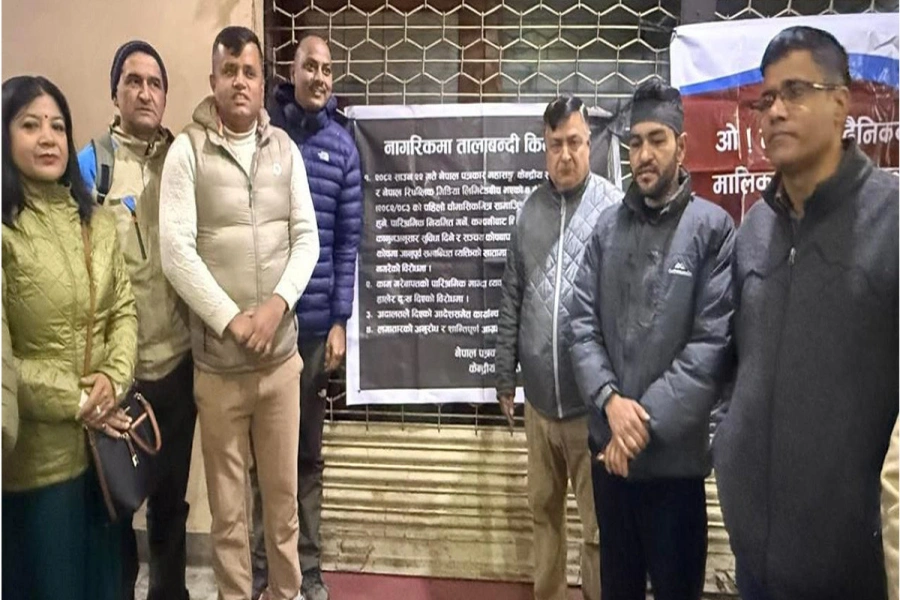
A team led by FNJ Senior Vice-President Deepak Acharya padlocked the central office of Nepal Republic Media at Sundhara on Wednesday morning. In response, the government initiated monitoring from Thursday.
A team comprising representatives from the Minimum Wage Determination Committee, the Press Council Nepal and the Department of Information and Broadcasting carried out an on-site inspection to assess the actual circumstances surrounding the incident.
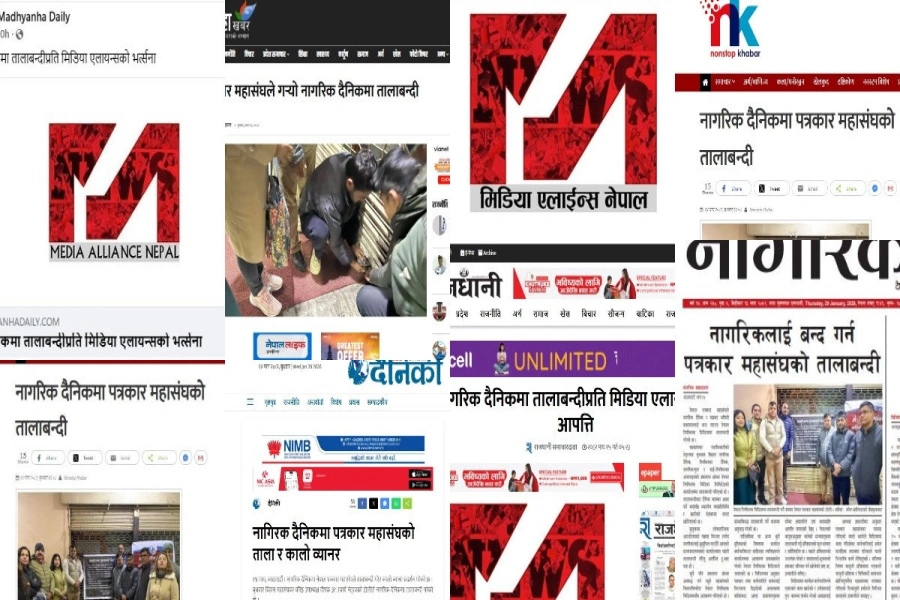
Media Alliance objects to lockout at Nepal Republic Media
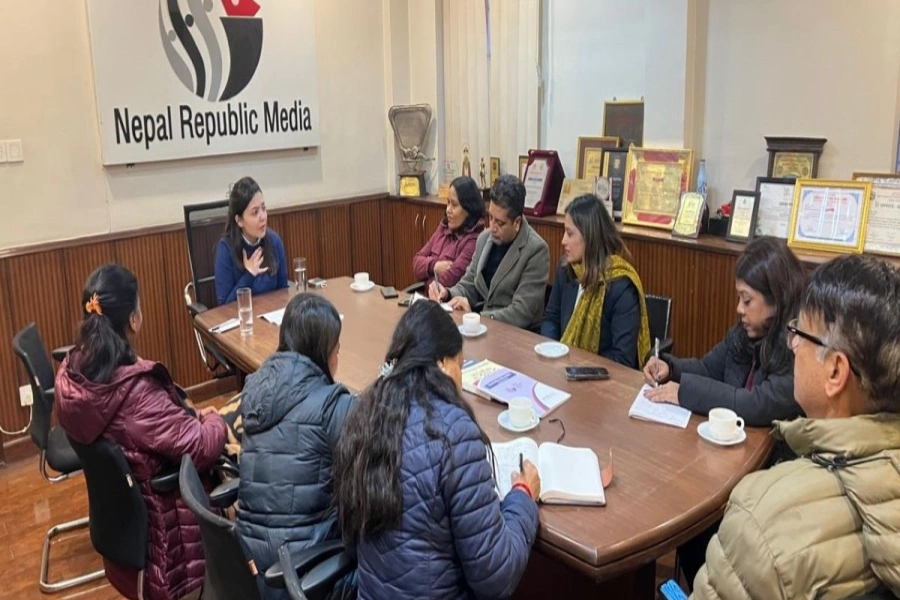
During a two-hour-long discussion with the team led by Kapil Kafle, a board member of the Minimum Wage Determination Committee, Nepal Republic Media Managing Director Sambridhi Gyawali presented the issues and the factual situation in detail.
Gyawali clarified that Nepal Republic Media has not dismissed any employee even during difficult periods, including the COVID-19 pandemic, and has been providing its journalists with the minimum wages fixed by the government, along with services and benefits in accordance with the law. Calling the lockout of a media house by the FNJ extremely condemnable, she said the action—carried out at the instigation of a few employees who left the company without understanding the facts—has raised serious questions about the role of the FNJ itself.
She added that the same rules apply to all employees at Nepal Republic Media, stating that some staff members who worked for only a few hours began protesting after refusing to comply with office-designated working hours and shifts.
“We have no intention whatsoever of dismissing anyone or putting them in difficulty,” she said. “In line with the company’s policy of strengthening digital media and expanding income sources, we merely asked employees to give their full working time to the office. However, they demanded full salaries while working for only one or two hours a day and instead opted for protest and agitation. Without understanding the facts, the FNJ followed them and padlocked the office on Wednesday. How justified is it to call this labour exploitation when we say: work eight hours and there will be no reduction in your benefits?”
Noting that Nepal Republic Media is a public company, Gyawali said that anyone dissatisfied with a media house operating in accordance with the law is free to seek legal remedies. She described the FNJ’s circulation of SMS messages to its branches across the country, sharing the personal mobile numbers of Chairperson Shova Gyawali and Managing Director Sambridhi Gyawali as mental harassment and urged the government to take a clear position on the matter.
Regarding the SMS messages, the chairperson and the managing director filed an application with the Nepal Telecommunications Authority on Thursday, seeking action under Section 47(4) of the Telecommunications Act, 2053 (1997).
During the discussion, Kapil Kafle said the committee firmly believes that no media house should be shut down. He added that efforts are underway to understand in detail the problems at Nepal Republic Media and the lockout imposed by the FNJ and to resolve the issue through dialogue. “It is the duty of employees to comply with the eight-hour office time set by the media house,” he said.
Meanwhile, the Media Alliance Nepal also expressed its objection on Wednesday to the lockout imposed by the FNJ at Nepal Republic Media.