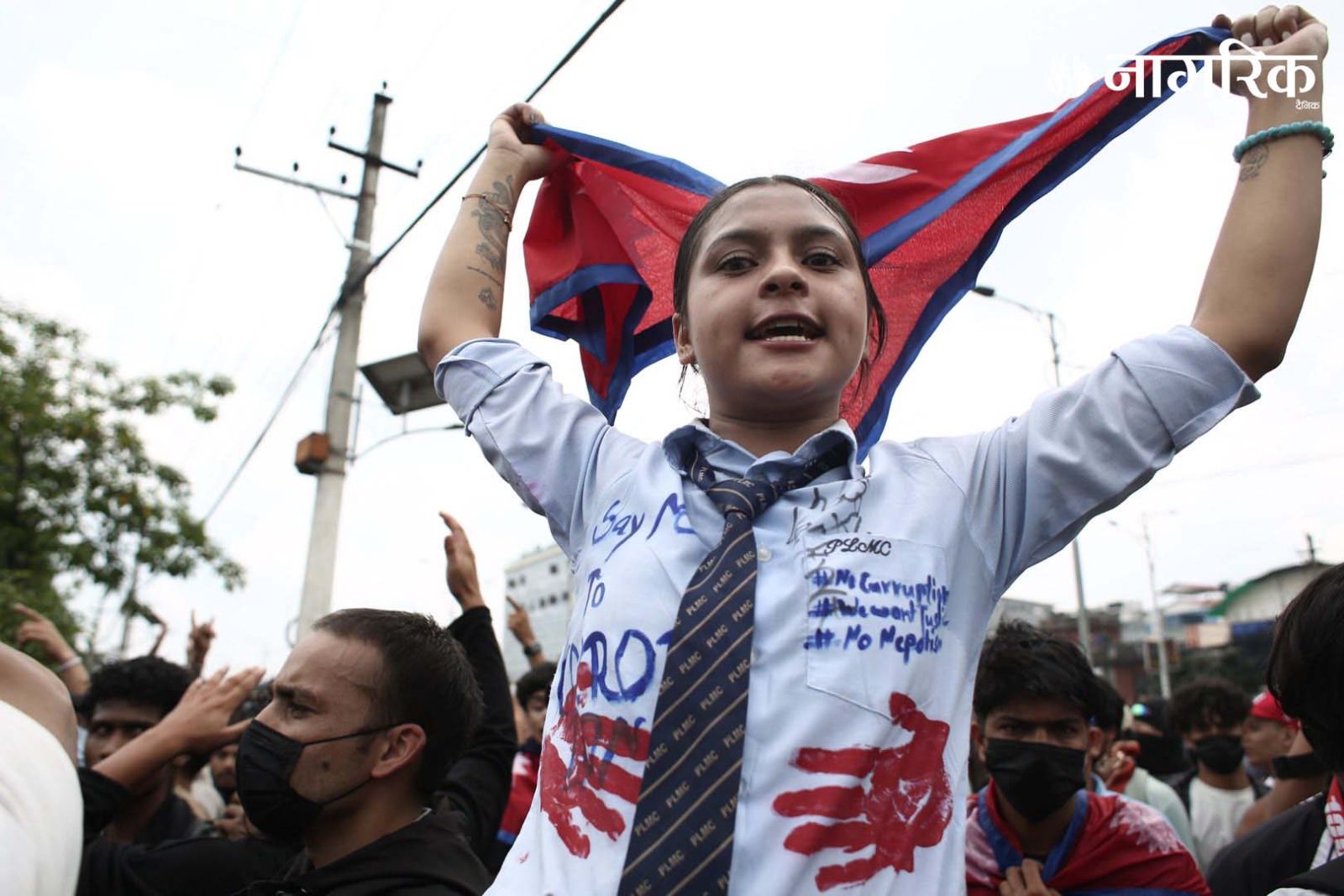
There is a general impression, perhaps even a belief among the public, that the so-called Gen Z movement is losing steam. Much attention has been paid to its divisions in the aftermath of the September Uprising.
What is clear is that complex dynamics are at play, without real, united, and cohesive leadership. There is a loose coalition—or perhaps even something weaker—an informal network with a few prominent figures showing the way. The big question is how to ensure that such a constellation of groups, representing different subsets of the new generations, will maintain cohesion and a sense of purpose.
Despite the odds, they recently submitted a draft memorandum to Interim Prime Minister Sushila Karki, outlining demands to legitimize their struggle and recognize their role in the country’s future. This is a positive step, but it will not be enough.
Isn’t there a risk that they are losing focus on their main goal: transforming the political system? Aren’t they missing the chance to keep the pressure high on political parties to reform?
Very recently, I spoke with a Gen Z member who has been not only closely following events but was also deeply involved in post–September Uprising discussions. She was not overly optimistic about the future.
On the one hand, traditional parties are plotting a comeback. In fact, judging by recent developments, they are already back. Some Gen Z members might be co-opted by them, and this is not necessarily bad—but it will depend on the parties’ intent. If it is merely about masquerading or faking internal reforms, then these overtures are a trap.
But we do not really know, because it is too early to predict what will happen within the major traditional parties. Will reformists prevail, or will the old guard—and with it, the status quo—further consolidate its supremacy?
Politics and Business

These issues are worrisome in the immediate term, but at the same time, I am concerned about another aspect: how to keep the masses who protested on the 8th of September involved and engaged.
Let us not forget that most Gen Z members were propelled to protest that day because the issue at stake directly affected their lives. The ban on social media was the catalyst for the mass rally. Other important issues like corruption and nepotism soon emerged, but the ban remained the main driver of their discontent.
Then something remarkable happened—a generational awakening, a renewed interest in politics. Many young people even began writing op-eds to express not only their outrage but also their hopes for the future. Yet we should not forget that this tide was triggered by a tragedy in which many lives were lost.
In my conversation with the Gen Z activist, there was a palpable fear that politics will not truly change—that the status quo, defined by the dirty practice of politics, will again prevail. If a strong activist who has always been engaged in politics feels this way, then there is a real problem.
You can imagine the millions of youths who are again becoming frustrated.
What are the possible solutions to this situation, and how can we avoid a return to the status quo?
First, the groups leading discussions with the interim government should find common ground to push the old guards of the major three parties out of politics. This is a tangible goal that could rekindle and re-engage the many youths who, in reaction to recent events, showed enthusiasm for politics and civic life.
A common strategy should be agreed upon—one that could even involve the peaceful mobilization of young people to demand the retirement of the older generations of politicians. If Nepal wants real change, it is clear that the old way of doing politics must go. Removing the old guard will not automatically clean up politics, but it would be an important milestone—an indispensable and necessary step.
While such a campaign could bring back thousands of young people into national civic debates, it will not be enough. The vast majority were so alienated from politics that they never felt the need to understand the key provisions of the constitution or how a complex democratic system works. My Gen Z interlocutor stressed that most youths lack political knowledge.
This is not surprising. After all, how many young people spend time reading news? How many invest time in reading op-eds? If they do not take time to become politically literate, how can they form informed opinions on complex issues? It is easy to complain about corruption, but fixing it is far more complex.
Take federalism, for example. It is often the target of criticism, yet many of its benefits remain underappreciated—some still only “potential” because the system has largely failed to deliver so far. But if preserving federalism is crucial, how can that be done without understanding its dynamics and how it functions effectively in many nations around the world?
The answers lie in knowledge and expertise.
Not all youths will choose to join politics, nor must they memorize the constitution word for word. At the same time, I do not think it is wrong, as political commentator Bishal Thapa—a writer I admire—argued in a recent Kathmandu Post op-ed. It would indeed be problematic if everyone decided to run for office, but having more young candidates is undeniably positive.
However, many of those running in the upcoming elections may get their fingers burned, as we are witnessing a proliferation of new parties—many of which will flounder or collapse soon after the election. Some may gain enough traction in the House of Representatives, though there is a high risk of an even more fragmented and ineffective legislature.
In such a stalemate, young new members of parliament could inject vigor, fresh ideas, common sense, and a spirit of compromise. This could make a difference and steer national politics in a positive direction in the years ahead.
Still, perhaps it is time to rethink and broaden the meaning of doing politics. Running for election is not the only way to contribute. Young people could write regular commentaries in newspapers; others could create independent watchdog groups, even informally. Some might establish study circles to learn about federalism and strategies to combat corruption.
Many clouds loom on the horizon, and there is a real risk that the sacrifice of September 8 will be wasted. Youths must remain resilient and committed to learning about civic life. Yes, learning—educating themselves about politics—will make a difference.
As different options lie ahead, what matters most is that they remain engaged, one way or another. Otherwise, the clock will be turned back, and the usual way of doing politics will once again triumph, tainting the republic’s future for years to come.