Empowering the people is the first condition of development. Feudal centralized governments are responsible for underdevelopment and poverty in many countries, and no more so than in Nepal. Both in the US (the biggest economy in the world) and China (the second biggest), people are empowered through decentralization and autonomy. When I was a student in the US, the then mayor of New York City had once said: "I am the mayor of the city who was elected by its people. I together with city people decide what is best for us. Even the state governor cannot interfere, let alone the central government".Even in China, which from the outside looks like a giant centrally controlled communist regime, the people are empowered. Today, China has the most billionaires in the world besides the US. Once I was in a county of Sichuan province with a delegation. The governor of the county told our delegation: "We are now under a big debt, borrowing a lot from the banks to build three micro-hydro projects. We started building them a year ago and they will be completed in next two years. By selling hydro energy to our neighboring counties, we will be able to pay back the bank in five to seven years, and after that we will be making plenty of profit, which in turn will be invested in schools, hospitals, agriculture, industries and roads. We will be a rich county."
At the end of our meeting, he smiled and said: "Well, the central government has given us budget to build 25 km road this year. If we cannot build it by the end of this year, next time when you come here you will not see me and my deputy." What the county governor was telling us had two clear messages: development in China is decentralized the central government holds its officials to account.
On the other hand, over the past seven decades, Nepal has undergone significant political changes, from one party regime to multi-party democracy to multi-party democratic republic. But the governing system remains feudal and centralized, resulting in failure on the economic front. Even today, VDC secretaries are recruited at the centre, and so are school teachers and primary healthcare workers.
Those recruited at the centre cannot be accountable to the people they are deputed to serve; they do not belong there. Governments in Nepal have failed to realize the importance of recruiting and training local manpower. Being locals they would be more accountable and service-oriented compared to outsiders.
Similarly, development sector suffers from centralization and bureaucratic hurdles. The chairman of the micro-hydro company which is building 12.5-MW project in my village of Tukche, Mustang, once told me that it had taken him six years just to get government permission. The project, now in its 13th year, is yet to be completed.
This would have been built within a year or two in China. This is just a tip of the iceberg: there are hundreds of projects in Nepal suffering the same fate. So how we can expect economic prosperity? How can we then expect to create jobs for our youth? This way we will remain among the poorest countries in the world even 50 years down the line.
Our political leaders struggled for the sake of people, but when they reached power they only gave continuity to the old feudal centralization and Chakari Pratha. Instead of giving power to the people, they started controlling people, playing divide and rule to remain in power. Our leaders didn't realize that it is through their empowerment that people of diverse backgrounds, ethnicities, genders, disadvantaged groups, dalits and ethnic minorities can be united for the common cause of nation-building. They rather didn't empower people as they saw it as a threat to their hold on power.
To serve their interest, they wanted big projects/programs run by their sycophants, irrespective of their academic qualifications and professional competency. The net result is delays, failures, mismanagement and corruption, everywhere. At one time my American Professor had told me: "Any organization can crumble if you have an unqualified and incompetent head." This is exactly what has happened in state-controlled service sector and industries of Nepal.
In this context of complete failure in economic development, Naya Shakti aims to empower people first, giving them full responsibility and ownership, and making them accountable for their own destiny. The role of government should be providing conducive policy environment, strong technical backstopping and monitoring. The Naya Shakti thus aims to abolish Chakari Pratha, with more respect given to academic qualification, competency and honesty, and to implement projects and programs in an inclusive, participatory and time-bound manner. It will also ensure good governance with zero-tolerance to corruption, with a strong and visionary monitoring team.
Naya Shakti believes in empowering people for their own economic and social development. It aims to break present bureaucratic hurdles—unnecessary complicated rules and regulations—in order to expedite economic growth and development. It is not going to tolerate a project of 10-km road taking more than 10 years, and a micro- hydropower project of 15 MW taking 15 years. Naya Shakti envisages to complete such projects within two to three years.
Naya Shakti plans to develop practical vision, roadmap and policy for each of the seven provinces to mobilize billions of national capital and remittance into productive sectors, creating millions of jobs. It aims to develop practical models for each province based on its resource endowment and comparative advantage, so as to effectively use local resources by empowering local people, making them accountable to rebuild Nepal. Only then will a prosperous nation emerge, where every Nepali will have the opportunity to own and participate in the development process. In that Nepal each and every one of us will be able to take great pride in being Nepalis.
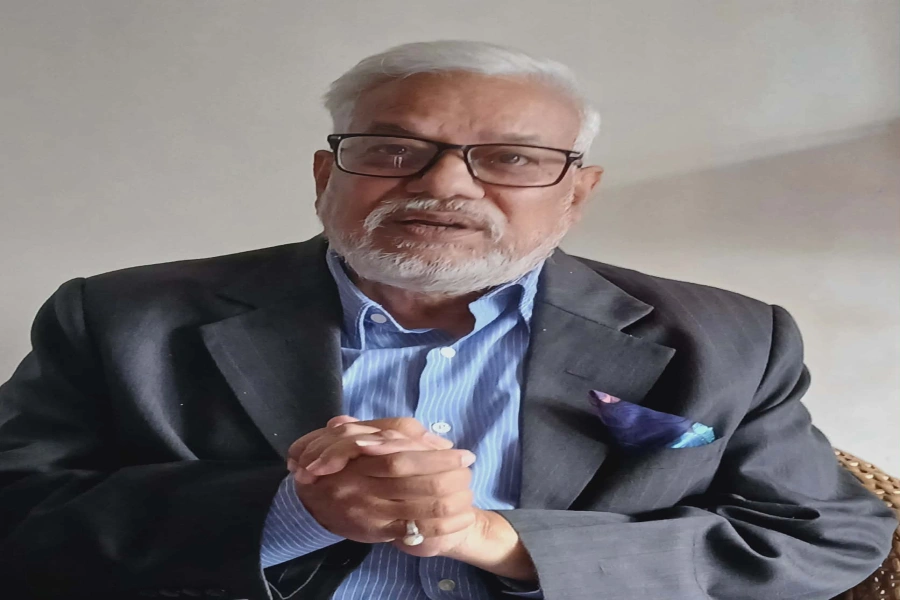
The author holds Ph.D. from Cornell University
Pradeep.tulachan@gmail.com
Related story
Empowering telcos as financial transaction gateway for Nepal