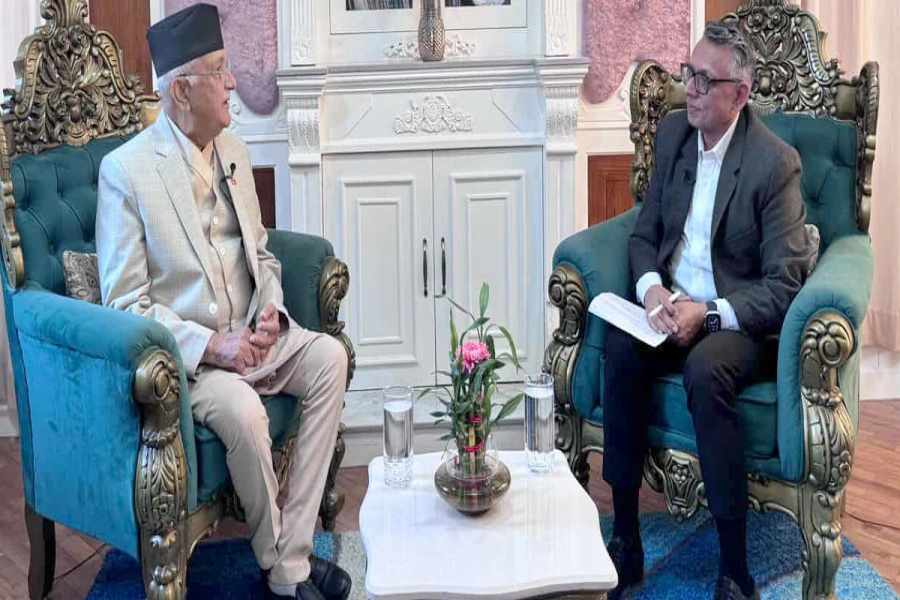
Prime Minister KP Sharma Oli, who embarks on a five-day state visit to China on March 20th, has his task cut out. He needs to convince the sceptical Chinese leadership that Nepal is really keen on long-term agreements. The Chinese leadership is sceptical because Nepali leaders have in the past looked to improve ties with China only when they have felt rebuffed by India, the traditionally dominant power in Nepal. As soon as relations start improving with India, the proverbial 'China card' is quickly discarded. According to Deputy Prime Minister and Foreign Minister Kamal Thapa, six (trade, transit and investment related) MOUs will be signed between Nepal and India during the prime minister's trip. The top priorities will be on finalizing a bilateral trade and transit agreement and on importing a third of the country's fuel needs, as per the earlier agreement between Nepali Oil Corporation and PetroChina.But if the visit is to be a "milestone in taking forward Nepal-China relations," as Thapa put it, PM Oli must be able to offer a clear framework on the utilization of the Chinese aid (something that has long been missing) and on long-term business deals between the two countries (desperately needed to diversify Nepal's trade). If the past is any guide, the Nepali leadership will once again be told by the Chinese that in the long run Nepal has no option but to maintain good relations with India. This is true, to an extent. Nepal's difficult geostrategic location entails that the country always be in the best of terms with India. It also entails that China can, at best, be a secondary power in Nepal. Moreover, China does not want to pick fights with India, with which it enjoyed over US $50 billion of trade surplus, and certainly not over a small prize like Nepal. But while China will once again advise the prime minister to be in good terms with India, that does not, however, mean that China is averse to enhancing relations with Nepal.
Nepali interlocutors will have to get used to parsing the diplomatic language Beijing so cleverly employs to push its geostrategic goals. Following the Indian blockade, the Chinese have dropped subtle hints that if India is determined to alienate Nepal through coercive tactics, they are ready to come to Nepal's rescue. In other words, while China won't overtly give any indication that it is impinging on India's traditional 'sphere of influence', there now appears to be genuine willingness in Beijing to help Nepal. That fits perfectly with its strategy of greater engagement within the SAARC region, partly to offset India's outsized influence in the regional block. But rather than trying to divine what India or China wants, Nepal should rather focus on how best to serve its interests. The recent blockade was the perfect illustration of why it is in Nepal's interest to diversify its trade and end the state of total dependence on India. If Oli and his retinue can take the Chinese leadership into confidence that this is a collective, long-term political goal for Nepal, the trip will indeed be considered a milestone.
Related story
What Nepal can learn from China