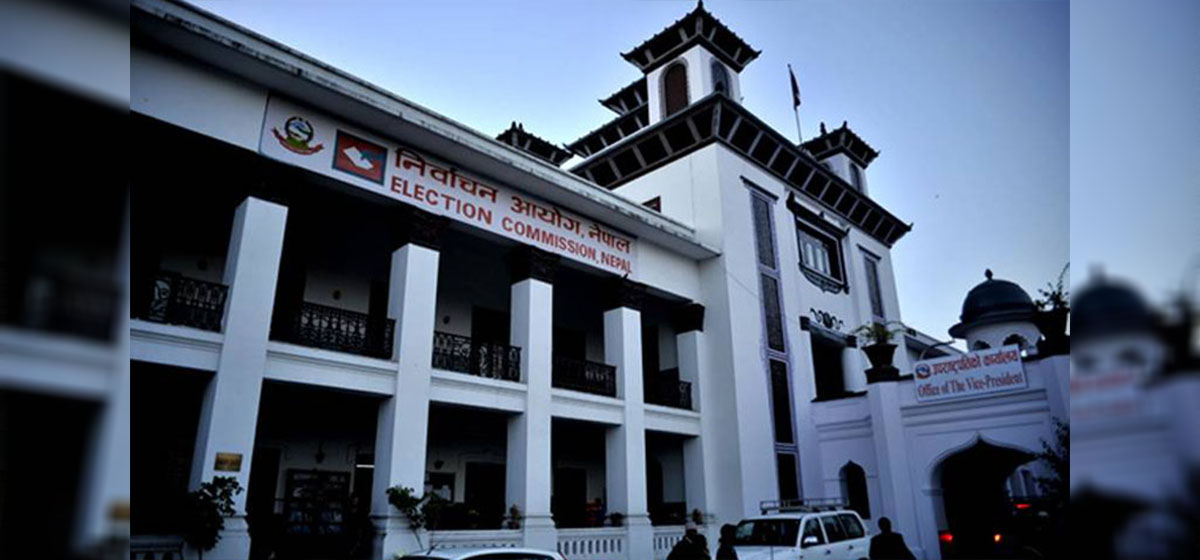
KATHMANDU, Jan 5: The Election Commission (EC) has cracked down on a long-standing concern: the use of children in political campaigns. With the National Assembly elections on February 23 and the House of Representatives elections on March 5 approaching, the newly issued Election Code of Conduct, 2082 BS, leaves no room for compromise—children cannot be involved in any election-related activities.
This move comes after repeated complaints that schoolchildren were being exploited by political parties and candidates during rallies and other promotional events. Paragraph 2 (6) of the Code of Conduct, 2082 BS, makes it clear: children cannot be used—or made to participate—in election campaigns.
But the ban doesn’t stop there. Teachers, staff, and professors of schools, colleges, and universities are also barred from supporting or opposing any political party or candidate. Educational institutions themselves are off-limits for political gatherings, seminars, or campaigns. “No governmental or semi-governmental body, school, or university premises may be used for election-related events,” the Code of Conduct, 2082 BS, emphasizes.
Worth of stories

The rules extend to political symbols as well. Jackets, t-shirts, caps, scarves, masks, badges, stickers, logos, bags, or even tattoos bearing party symbols are strictly forbidden inside or around schools and universities.
Once the Code of Conduct, 2082 BS, takes effect, teachers and staff cannot participate in activities such as inaugurations, foundation stone laying, surveys, or feasibility studies unrelated to the election. Personnel transfers, promotions, postings, allowance increments, or new appointments are also suspended during this period. Any new policy announcements outside the annual budget are banned, except under extraordinary circumstances like pandemics or natural disasters—and only with EC approval.
EC spokesperson Narayan Prasad Bhattarai warned that violators would face strict consequences. “Teachers, students, and professors are strictly prohibited from participating in party campaigns,” he told Republica Daily. “Any breach observed during monitoring will be publicly disclosed, and action will be taken according to the law.”
The Code of Conduct, 2082 BS, also restricts foreign travel for purposes other than representing the country, unless prior approval is granted by the EC.
With these measures, the EC aims to ensure a free, fair, and dignified election—and to keep children out of politics for good.