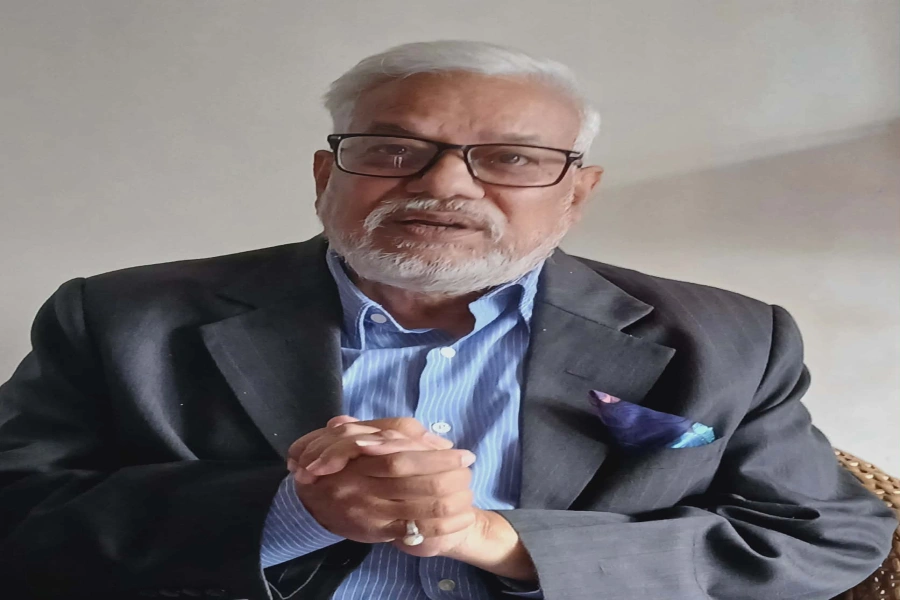
"Nepal has been improving on the aviation safety check-list since 2013. European Union should not only put Nepal on safety list but should help in enhancing Nepal to comply with their standards," Samir Sajet, regional aviation safety officer of UAE, World Food Programme (WFP), said at a program organized in Kathmandu.
Sajet said that WFP had launched the campaign back in 2013 to help Nepal overcome the safety issues. He also praised Nepali pilots for their works in a country with tough terrain, weather and that too with limited infrastructure saying that European pilots cannot fly in the Nepali sky with that limited resources.
A total of 18 airlines and 255 individuals participated in a two and half-day sessions on Safety Management System for Senior Management, Helicopter Safety, Crew's Decision Making and Emergency Response and Crisis Management.
Speaking at the program, Sangam Karki, captain of Civil Aviation Authority of Nepal (CAAN), who participated in Crew's Decision Making session, said that the training session was very effective.
"The things we learnt in Crew Decision Making session will strike our mind and is very helpful for us in case we need to make emergency or any decision while on air," said Luna Pradhan, a captain with Yeti Airlines, adding that the training session should encourage new pilots to participate every year as the practical aspects are very beneficial for them.
Kamalesh Kumar Verma, executive director of Airlines Operators' Association of Nepal (AOAN), said that the campaign is being organized since 2013 with an objective to raise awareness on safety related issues, flight operation, air worthiness and other issues.
"We initiated this campaign 2013 as the number of air accidents increased, Nepal was placed in EU's safety ban, and International Civil aviation Authority (ICAO) raised its concern on Nepal's safety audit," said Verma.
During a session on Emergency Response and Crisis Management, Ziad Haddad, technical advisor of Aviation Technology Solutions and Services, said that airlines should make crisis handling manual and review it every year. "It is also important to handle media tactically and keep them away during accident or any crisis unless concerned authority, family of survivors or deceased are informed," said Haddad.
Pippa Bradford, country director of WFP Nepal, said that they have contributed in this safety campaign in order to foster better solutions to make Nepal's airspace safer by generating robust safety measures which meet international standards even in complex emergencies.
The campaign was initiated by AAON, CAAN and WFP.
Related story
EU positive about Nepal’s aviation safety