The mid-1960s in Calcutta, then known as India’s cultural capital, was a magical time, especially during Durga Puja. The air hummed with anticipation weeks before the festivities—a prelude to the grandest celebration of the year. For children living on streets like 27 Janak Road, the puja wasn’t just a festival; it was an immersive experience—a vibrant tapestry of sounds, sights, and emotions that lingered long after the last idol had been immersed.
The Soul of the Season
The city truly came alive at daybreak on Mahalaya. Birendra Krishna Bhadra’s Mahishasuramardini, a soul-stirring invocation broadcast across All India Radio, resonated in every household, signaling the official start of the puja season. Soon after, loudspeakers at nearly every street corner began to belt out “pujo music.” From timeless classics by legends like Hemanta Mukherjee, Manna Dey, and Sandhya Mukherjee to popular film songs of the era, these melodies formed the quintessential soundtrack of the season.
They seeped into homes and shops, creating an infectious joy and an almost tangible excitement that permeated every corner of the city.
Gai Puja, Goru Puja and Govardhan Puja today

For children, Mahalaya’s thrill was quickly followed by another: shopping for new clothes. This was a cherished ritual, a tangible sign that the puja was truly near. Families flocked to Calcutta’s bustling markets, eager with anticipation. Girls dreamt of new frocks, embroidered ghagra-cholis, and saris, while boys envisioned crisp shirts and trousers. For women, the puja meant an opportunity to flaunt exquisite saris—a different, vibrant one for each day. The streets bustled with shoppers, their colorful bags adding to the festive atmosphere.
A City Transformed
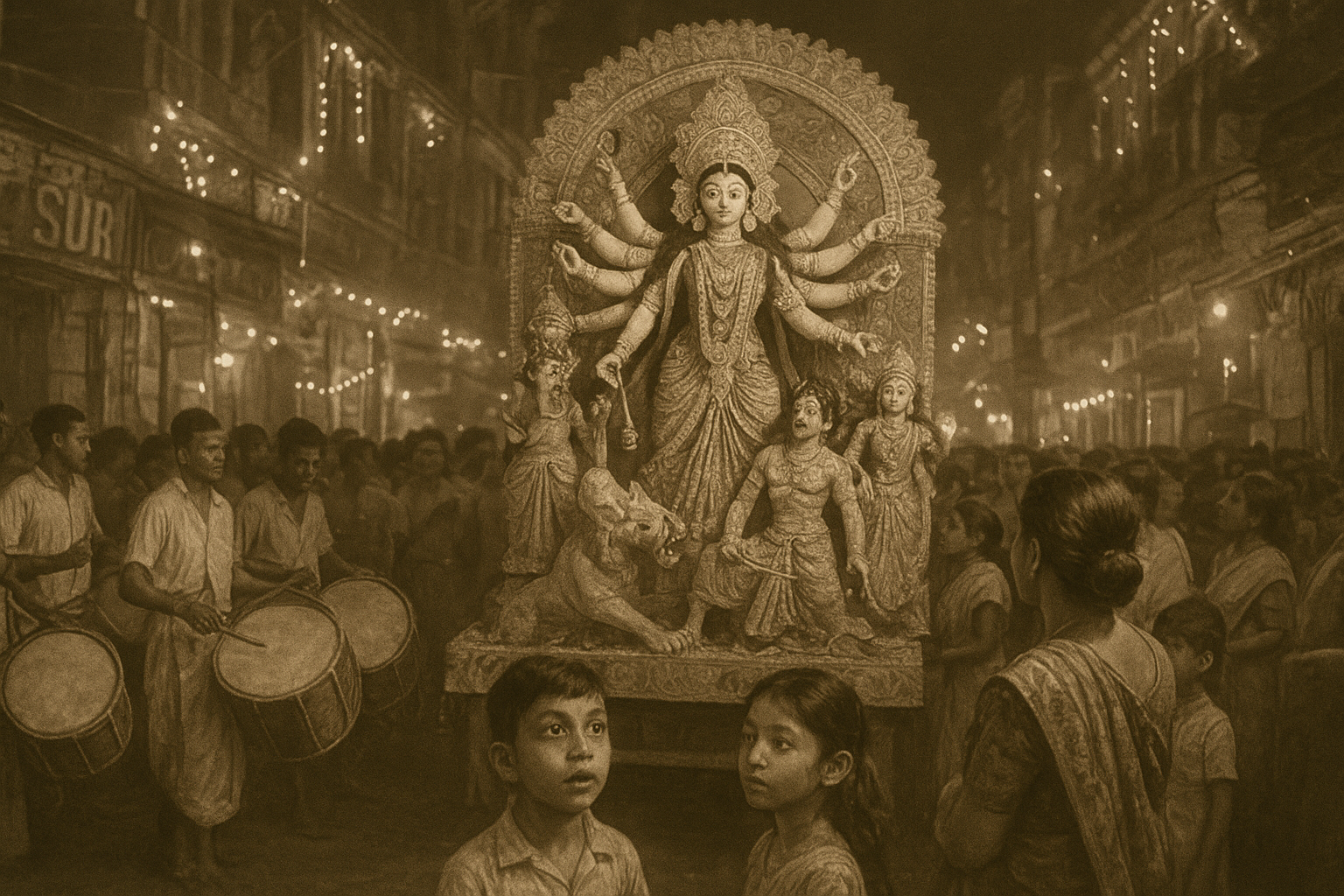
The most enchanting transformation was seen in the pandals. These temporary structures, erected with astonishing speed from bamboo and cloth, became breathtaking architectural marvels. Each neighborhood competed to outdo the others, showcasing unique themes and designs—some mimicking grand temples, others fantastical palaces. Adorned with countless twinkling lights and intricate neon signs, they turned Calcutta nights into dazzling spectacles. Ordinary lanes became glittering avenues, drawing crowds that moved in a slow, mesmerized current. The air was thick with the rich scent of incense and the sweet, earthy aroma of marigolds.
At the heart of these pandals stood the magnificent Durga idols. Crafted with meticulous detail and vibrant colors by skilled artisans, these larger-than-life representations of the goddess, majestic and serene, were flanked by her children: graceful Lakshmi, scholarly Saraswati, valiant Kartik, and benevolent Ganesha. The scale and beauty of this tableau were awe-inspiring, fostering a deep sense of reverence and wonder in devotees and onlookers alike.
The Pulse of Devotion
As dusk deepened, the pandals became hubs of fervent activity, especially during the evening arati. This spiritual and visual highlight drew massive crowds. The rhythmic, intoxicating beats of the dhak, played with incredible energy by drummers from rural Bengal, filled the air. This pulsating backdrop inspired devotees, young and old, to dance with the dhanuchi.
Holding multi-tiered earthen lamps filled with burning camphor and incense, they swayed in synchronized devotion. The flames cast flickering shadows that danced on the faces of the ecstatic crowd, creating a truly mesmerizing spectacle. The sight of people, uninhibited and joyful, twirling with the dhanuchi was a testament to the raw, unbridled devotion that permeated the festival—a communal expression of faith and jubilation.
The Bittersweet Farewell
Then came the tenth day, Dashami—a day of profound and bittersweet emotions. It began with Sindoor Khela, a joyous ritual where married women adorned the goddess with vermilion and then playfully smeared it on each other, signifying marital bliss and prosperity. But beneath this vibrant celebration lay the shadow of departure—Bisarjan. As the idols were carefully lifted from their pandals and carried in grand processions toward the immersion ghats along the Hooghly River, a palpable melancholy descended upon the city.
For the children of 27 Janak Road, the magic of Dashami reached its crescendo on the sidewalks of Rash Behari Avenue. This bustling thoroughfare became their grandstand for the ultimate spectacle. Lining up excitedly, they jostled for the best vantage points to witness the endless stream of magnificent idols being carried toward the river. The air thrummed with the sustained booming of the dhaks and the fervent, echoing chants of “Bolo Durga Maiki Joy!” (Hail Mother Durga!). It was a poignant yet majestic farewell to Ma Durga—a vivid memory etched in their minds, with the grand parade and the promise of her triumphant return the following year.
The mid-1960s Durga Puja in Calcutta was more than just a religious festival; it was a profound societal phenomenon—a grand coming together of communities, a burst of artistic expression, and a deeply emotional experience that defined the city’s spirit. The memories of ubiquitous pujo music, ecstatic dancing with the dhanuchi, dazzling pandals, and the majestic departure of Ma Durga—all intertwined with the carefree joy of children—remain etched as a golden era in the collective consciousness of those who experienced it. It was a time when Calcutta truly shone, illuminated not just by countless lights but by the incandescent spirit of its people.