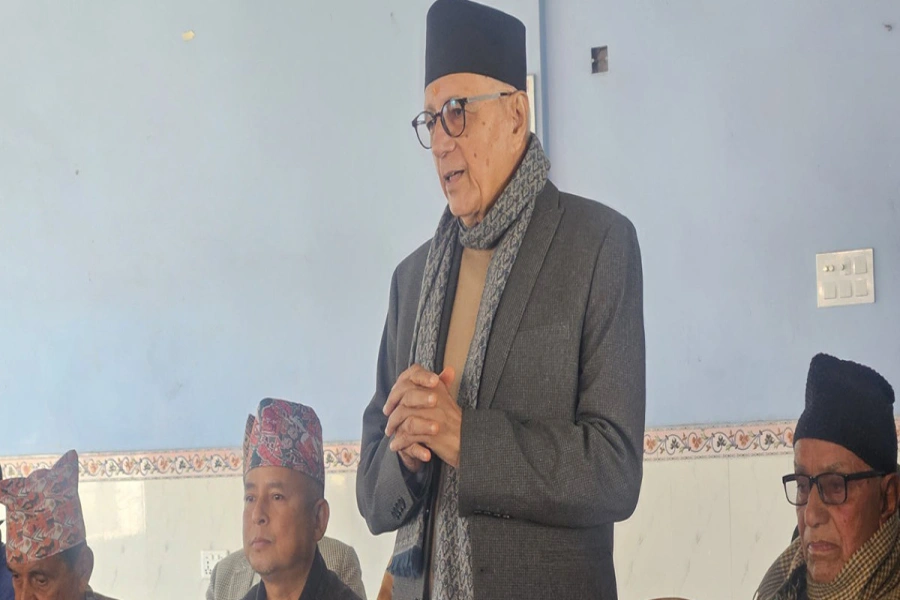
“It´s very poorly implemented. Businesses are just not investing in CSR,” said Mohan Ojha, managing director of Growth Sellers - a human resources company.[break]
Standing for ´corporate social responsibility´, CSR denotes self-regulating policy that internally monitors compliance with the law, ethical standards, and international norms.
While its benefits are familiar to many multinationals - from McDonalds to British American Tobacco to Marks & Spencer - in Nepal the term mostly receives blank stares.
“It´s not common. Too many companies that do practice it in Nepal just do it for marketing purposes but that´s not really true CSR,” said Ojha.
Many critics of CSR agree with Ojha´s assessment of businesses´ motivations. Others argue that a corporation´s responsibility lies solely with profit above self-regulation.
Yet the consequences of non-compliance can be disastrous: from legal action through to international scandal, as seen in the last decade with the Nepalese rug industry´s downfall due to working conditions.
Padma Jyoti, president of the National Business Initiative (NBI), said Nepal´s business sector has “not yet realized the potential to use join self-regulation or sector-wide CSR”. “The traditional drivers for CSR, like export, consumer awareness, consumer protection groups, watchdogs, and environmental NGOS, are comparatively weak.”
Another traditional driver of CSR - labor rights organizations - are not yet using “their potential to achieve mutually beneficial improvements” in the workforce, said Jyoti.
Ojha said government regulation of CSR is also weak. Nepal´s poor economy makes it easy for businesses to prioritize profits over factory conditions.
For one local company, Nepal Pharmaceuticals, the concept of CSR is about encouraging local development while fostering existing employees. For instance, the company grants scholarships to promising pharmacy students across the country and supports Nepalese labs for localized medical testing.
It also works in tandem with NGOs for rural health camps, said Ajay Pradhanang, managing director of Nepal Pharmaceuticals´ herbal subsidiary, Fleur Himalayan.
Pradhanang said the company also prides itself on good wages. Its 195 factory workers receive up to Rs 11,000 per month, inclusive of incentives, as well as subsidized lunch. “We always believe that human resources are the biggest asset for a company,” said Pradhanang of the company´s CSR ethos.
Yet even Pradhanang admits that the company is a far away from its best business practice, with CSR still a lofty goal in Nepal´s developing business climate. “We have been doing CSR in bits and pieces but we still need to put it all together for a larger strategy,” he said.
Pradhanang´s is a sentiment heard widely when talking to business experts about CSR in Nepal. They said implementation is poor compared to the boasts of big business.
“If they invest Rs 20,000 in CSR, they want 20 million smiles in return,” said Growth Sellers´s Mohan Ojha.
Yet using CSR as purely marketing disregards other benefits - from minimizing conflict with workers, reducing transaction costs, and building a better reputation with customers.
Motivated and generally happier staff - whether they are factory workers or head office staff - can also increase productivity and innovation while lowering staff turnover.
Businesses need to look within to implement CSR, said NBI´s Jyoti, by using it “as a strategic tool starting from immediate stakeholders and then only extending it to others”.
Companies also need to focus on mutually beneficial initiatives, such as waste management or workforce investment, over glamorous publicity drivers like charity balls.
NBI suggests businesses look at little steps like workforce literacy training, financial literary, or investing in neighboring communities.
“If a company just starts by investing even one percent of its net profit then that´s a really good sign,” said Ojha.
Related story
Himalaya Airlines releases its CSR Report for the pandemic year...