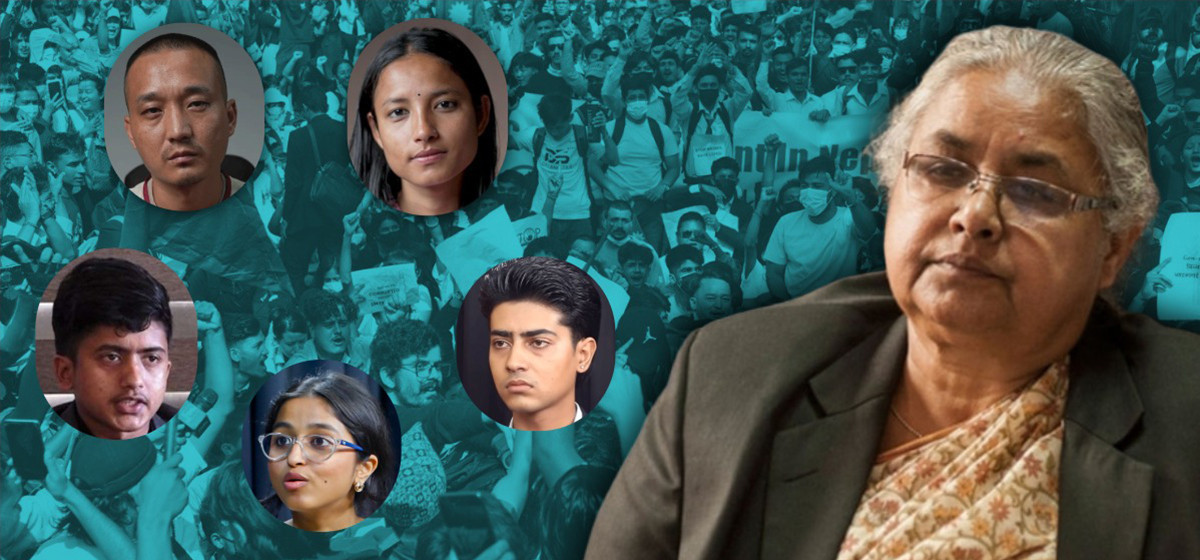
KATHMANDU, Oct 11: Signs of internal rifts have surfaced within the Gen Z movement as Prime Minister Sushila Karki prepares to expand her cabinet with new ministerial appointments purportedly representing the youth-led uprising.
Influential Gen Z activist Miraj Dhungana has publicly questioned the legitimacy of the proposed names, accusing the government of sidelining genuine representatives of the movement.
“Who among these people is actually Gen Z and which Gen Z group recommended them?” Dhungana asked, voicing frustration over what many activists see as political co-option and lack of consultation.
Cracks emerge within Gen Z as PM Karki moves to expand cabinet

According to sources, the government is preparing to induct Ramji Ram, Ganapati Lal Shrestha, Bablu Gupta and Tashi Lhazom as ministers representing the Gen Z movement.
Ramji Ram, a medical doctor from Rautahat and the first from the Chamar community, is reportedly being considered for the Ministry of Health and Population. He had earlier come to public attention during a college fee dispute that underscored issues of social inequality in education.
Ganapati Lal Shrestha, a well-known activist for heritage preservation in Kathmandu, is tipped to lead the Ministry of Culture, Tourism and Civil Aviation. Shrestha has long campaigned against the commercialisation of cultural sites such as Ranipokhari, the Pashupatinath area and Khulamanch during the post-earthquake reconstruction period.
Youth activist Bablu Gupta, recognised for his community work during the COVID-19 pandemic, is being considered for the Ministry of Youth and Sports. Through his “Hundred Group” initiative, Gupta organised free food campaigns and taught over 100 underprivileged students. He has also been involved in blood donation and relief drives.
Similarly, Tashi Lhazom, a youth from Limi Valley in Humla, is likely to be appointed Minister for Women, Children and Senior Citizens. A graduate of Hindu College, Delhi University, Lhazom has represented Himalayan communities in international forums and spoken extensively about the impact of climate change in mountain regions.
Despite their social credentials, several Gen Z activists including Dhungana, have expressed scepticism about the process. “These names came from the government, not from within the Gen Z movement,” said one activist addressing the media outside the President’s residence on Saturday.
As the Karki administration attempts to incorporate representatives of the Gen Z movement into formal politics, tensions appear to be growing within Gen Z ranks. Many fear the government’s move could fracture the unity that fuelled the youth-led protests, deepening the divide between the street-led movement and the state.