Professor Donald Savoie’s best-seller Power: Where is It? presents a candid analysis of where power is located in a democracy. The book studies major western democracies—the United States and the Westminster models in the United Kingdom, New Zealand, Australia and Canada—to find out where power is concentrated in the world’s best democracies. He concludes that it certainly does not lie with the voter, not even with the institutions of Parliament, or the majority of the politicians or political parties. He says if it does reside anywhere in a democracy, it is with a small number of leaders.
The book offers an insightful critique of shifting power dynamics in the world’s major democracies. Similarly, power in Nepal’s malfunctioning democracy is concentrated among a small group of politicians who let the Constituent Assembly (CA) perish without completing the mandated task. Now they claim they also have the powers to revive it. The functioning of the CA showed how the sanctity of this institution was overtly undermined by a handful of politicians. Even minutes before the CA’s term expired at midnight of May 27 this year, hundreds of CA members anxiously waited outside the CA building expecting a last-minute consensus, while a group of senior leaders let the CA breathe its last without doing much to avert the constitutional crisis.
The CA was relegated to becoming a showpiece because a coterie of senior leaders from major parties often frolicked in faraway resorts for ‘talks’, recording the highest number of days of absenteeism during sessions in the past four years. In two decades of parliamentary history, the CA had met for less than 95 minutes in a year. This is reflective of how the legislative productivity of the CA was undermined and precious time wasted in adjournments, disruptions and walkouts by people’s representatives themselves.
Around Rs 1.50 billion of tax-payer’s money was spent on salaries and perks of CA members and other Rs 10 billion for financing the polls. Still fresh in our mind is the loss of six months just to elect the prime minister and the waste of more than three months to pursue an elusive ‘consensus’ after the CA’s demise. As politicians don’t have courage to face people’s wrath, they are strategically trying to resurrect the CA now.
Popular frustration against the polity has never been more intense than today. Democracy never functions or delivers well without ‘downward’ accountability. Its severe deficit has led our power-savvy politicians to renege and misuse people’s mandate time and again. Last four years serve as a stark reminder of how people’s long-held aspirations to write the constitution through the CA were dashed. This current vicious cycle of political unaccountability, incompetence and underperformance has brought to the fore some questions for debate. Can we ever improve our democratic system and governance without removing these incompetent leaders? If not, what would be the best democratic mechanism to deal with these corrupt and inefficient politicians at the level of people?

Some advanced democracies have adopted legal mechanisms for controlling politicians. The ‘right to recall’ is one such mechanism that gives voters some power over elected representatives even beyond elections. Recalling is a process designed to enable voters who are dissatisfied with an elected official to replace him/her before the expiry of his/her term in office. Some countries, either legally or constitutionally, have recognized this as a fundamental democratic right.
According to online portal www.righttorecall.co.uk, the concept first originated in Switzerland and became popular in several states in America since 1903. Nineteen states in the US today allow recall of state officials by their citizens. Colorado, Louisiana, Michigan, Montana, North Dakota, Oregon, Washington DC and Wisconsin have separate recall laws whereas other states like New Jersey have constitutional provisions for recall. California, since 1903, and most recently Minnesota, since 1996, have guaranteed the right to recall as a democratic right.
If an elected representative secures less than a specified percentage, usually 50 percent of votes, in the ensuing poll, he/she is removed from office before the end of term and a fresh election is called. North Dakota’s Lynn J Frazier in 1921 was recalled over a dispute about state owned industries and California governor Gray Davis was recalled in 2003 over mismanagement of the state’s budget. Fifty-five percent of the electorate had voted to recall Gray Davis. Similarly, British Columbia,––western-most province of Canada––enacted the right to recall law in 1995. The voters in that province can petition the government to have a sitting representative removed from office. Canada initiated 22 recall efforts in January 2003 alone.
Similarly, right to recall laws are also applicable to local bodies in some states of India. In August 2011, the government of Bihar amended its Right to Recall Act for local bodies, giving unlimited powers to citizens in recalling their mukhiyas, village chairmen, district board chairmen and members of three-tier local bodies for their underperformance. Indian social activist Anna Hazare and other activists are also campaigning for making this law applicable to members of Parliament.
Indian online portal www.righttorecallindia.com mentions that Palavika Patel, a former president of Anuppur municipality in Madhya Pradesh, was recalled in 2002 by her constituents for underperformance. The voters of extremely poor Anuppur municipality in 2002 and the voters of extremely rich California in 2003 successfully exercised a similar constitutional right to recall elected representatives to punish them for reneging. These anecdotes tell us that underperformance and incompetence at the level of elected representatives can seldom be excused in a democracy.
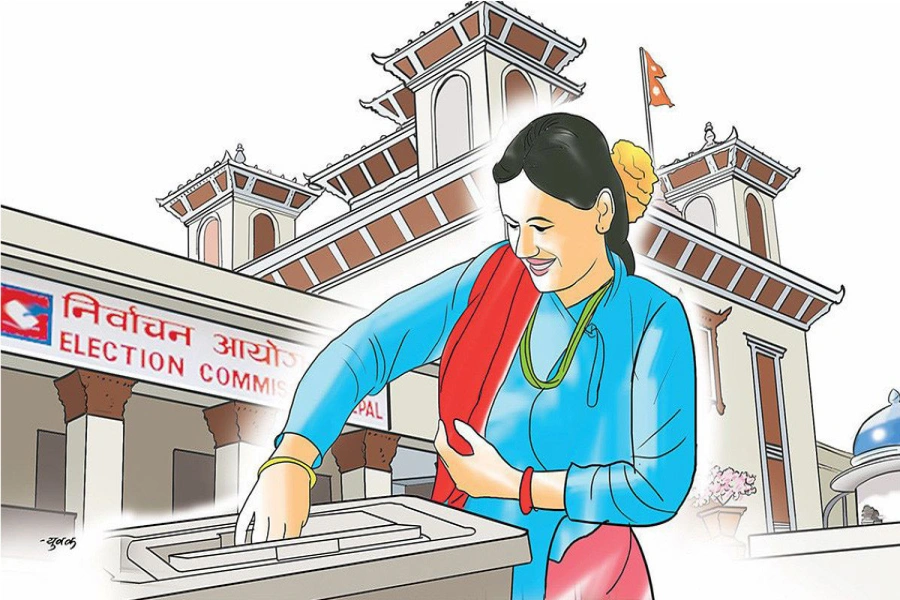
Another electoral reform that we must consider is giving voters the ‘right to reject’. It means ballot papers or voting machines should have an option which says ‘none of the above’. It will give people the option to not vote for any of the candidates during elections if they feel none of them is deserving. If the ‘none of the above’ option gets the maximum votes, it means all the contesting candidates have been rejected by the voters. If this happens, a re-election is mandatory where none of the previous candidates are allowed to fight elections again.
Over a decade, social activists across India have mounted pressure on the government and the Election Commission to grant a negative voting right to voters. A public interest litigation seeking the right to ‘negative voting’ was referred to a constitutional bench by the Supreme Court of India in 2009. If citizens are granted such rights, it would enhance political accountability.
The main cause of our political degeneration today is the ineptness of our electoral and democratic system which fails to debar criminal, corrupt, callous, incompetent and selfish politicians from dominating the political scene and contesting elections. Granting of recalling and rejecting rights to voters will ensure that our politicians no longer think they can get away with their inefficiency and ineptness. Without opting for these crucial electoral reforms sooner or later, we can’t expect to clean up our polity. Else, no matter how fairly or freely elections are held, the same tainted and incompetent leaders will be elected each time, allowing our country to bleed dry.
pbhattarai2001@gmail.com
Related story
A doorstep solution to clean your decors






_20230513123701.JPG)