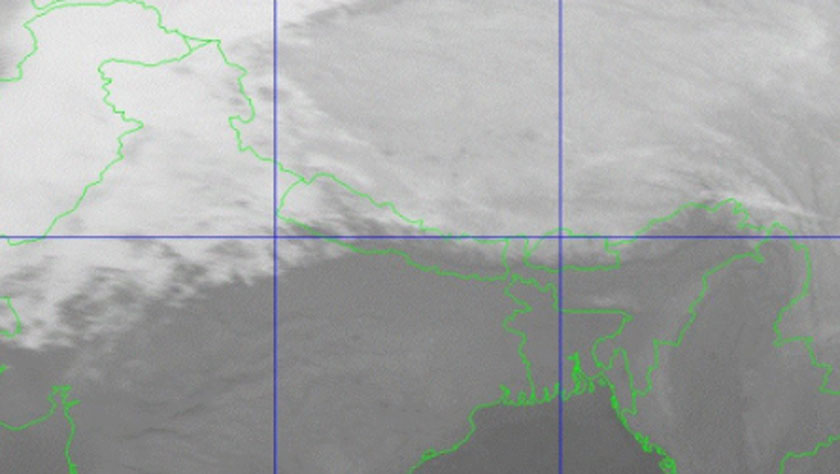
Republica spoke with some of the participants on their perception of climate change in their region and what the youth should do to combat climate change. [break]
Fatema Tuz Zohra
Bangladesh, Deputy Area Coordianator, Plan Bangladesh
Over generations the people of Bangladesh have adapted to the risk of floods, droughts and cyclones. In areas where inundation is a risk, they raise their houses on mounds, above flood level and adjust their cropping patterns to take advantage of the flood waters. But the combination of frequent natural disasters, high population density, poor infrastructure and low resilience to economic shocks makes Bangladesh especially vulnerable to climatic risks. Moreover, increased river bank erosion and saline water intrusion in coastal areas are likely to displace thousands of people who will be forced to migrate, often to slums in Dhaka and other large cities.
 Cities like Dhaka are already saturated with a large population and people are still migrating in pursuit of safe homes, security and livelihoods. Environmental migrants will increase conflicts over scarce resources, livelihoods will be threatened, and unplanned slums will increase, health and hygiene conditions will deteriorate, involvement with hazardous/risky jobs like child labour will increase and overall, huge pressure over basic rights in big cities will be a demand in the near future. Though Bangladesh is a highly populated country, we have a great human resource and almost one third is youth.
 Youth is power so we can use this power to educate our people, create awareness on climate change issues and we can create pressure on the government to address the problem and take appropriate measures to minimize risks.
Darpan Vaishnav,
MSc in Climate Change Impacts Management, India
 Climate change is a grave concern for a growing economy like India. It has to face a lot of adaptation and mitigation measures in order to cope up with various impacts of climate change. India has a huge coastline as well as the Himalayas. A very huge part of its population is dependent on both these geographical factors, directly or indirectly, for their basic necessities.
 This calls for a nationwide awakening and vigorous action by the youth of the country. Formation of one singular youth network on climate change which can attend simultaneously to different issues like knowledge building, awareness creating, field projects conducting, etc is necessary. Such a group can make a mark in many sectors including policy making, data collection, adaptation, and mitigation.
Sushila Pandit
International Climate Champion 2009, Voice/Action/Vision (VAV), Nepal
 Undoubtedly, youth is power - the power for change, the power of hope and the power for revolution. Climate change is a reality we are facing now and in the days to come. The most talked about and the most easily predicted changes are in the Himalayas, the glacier lake melting, the GLOF, adaptation issues in the mountain community, biodiversity, and water scarcity. Nepal is one of the richest countries in water and biodiversity. The gift we have acquired from nature is now being destroyed by us.
 We need to know the details in order to fight. Research is the most important evidence for action and to make predictions. Youth can act on a variety of ideas as they are innovative and energetic. From mitigation to adaptation, and action to influencing policy, youth have a role everywhere and the power should be recognized by the people and the nation.
Mohammad Reza Ebrahim
student, Afghanistan
 Climate change affects us on all levels-the social, cultural, physical and environmental. It causes destruction of our infrastructures and death of people due to dangers like floods and landslides. It also impacts the livelihood of people particularity the poor who are highly dependant on natural resources.
 There is also loss of environmental beauty. Youth are the energetic members of society and so we can give awareness on national, regional and local levels through campaigning, trainings and workshops. Another important responsibility is to equip the youth with knowledge of mitigation, adaptation and measuring the impacts.
Dechen Yeshey
WWF Bhutan, Bhutan
 In Bhutan, climate change is an emerging issue, we can see the impact in our day-to-day lives. The landslides occurring on highways, disrupting the entire road is an example of the impact of Climate Change. GLOF (Glacial Lake outburst Flood) is the immediate impact of Climate Change.
 Deforestation is also yet another issue and this is affecting the overall habitat. In Bhutan there is a youth network called the Bhutan Youth for Climate Action which involves all the youth in the region and takes action against Climate Change. According to me, forming such networks can be used as a powerful tool to combat this issue, be it through awareness campaigns or sensitizing the local community on the adaptation measures on Climate Change.
Li Liu,
PhD candidate in Chinese Academy of Sciences, Major in Management Science and Engineering, China
 The most important climate change-related problems in China are probably the often extreme events and ocean acidification. The extreme events, such as storms, floods, earthquakes, fires and droughts are manifestations of the climate system with immediate and obvious impacts on people, infrastructure and ecosystems. In fact, extreme events in China have been increasing over the past several decades, especially recently, having serious implications for food security as they affect the production chain.
 The effects of the increased acidity in the ocean driven directly by rising atmospheric CO2 concentrations can already be observed in some regions in China. As young scholars, we should cooperate with each other from different regions to help the community to enhance their understanding and knowledge of climate change and the mitigation and adaptation actions as well.
Kamran Hussain
Range Forest Officer, Pakistan

Pakistan is one of the countries that has been hit severely by climate change. The recent floods along the river Indus in Pakistan (August) has also been attributed to Climate Change which has devastated almost 20 percent of Pakistan and destroyed at least two million houses resulting in 2000 deaths and left two billion people without shelter. Livelihoods are at a high risks, social and cultural norms have been destroyed.
Such climate change effects can be expected in future as well because Pakistan is a fragile and vulnerable country to such climate change effects due to poor economic conditions, unequal distribution of resources, and low capacities of the people to adaptation. Now it´s the time for youth to be empowered and given a chance at all decision-making levels so that new ideas can be incorporated in making new and revised policies.
Akari Phyu Phyu Thet
Demonstrator, University of Forestry, Myanmar
Climate change affects our country seriously such as Cyclone Nargis in Irrawaddy Delta. Impacts of climate change are decreased precipitation and high heat intensity. We, the youth should participate in planting trees on Environment Day, planting festivals and so on to mitigate the impacts of climate change.
Related story
Ministry of Youth and Sports in collaboration with UN in Nepal...


-1778925320.webp)