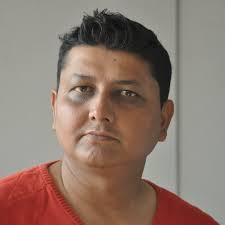
Kishunji was the last surviving stalwart of the triumvirate who filled the void in Nepali Congress leadership after the demise of the legendary BP Koirala, the most prominent Nepali leader of the twentieth century. The others in the triumvirate were the supreme leader Ganesh Man Singh and Girija Babu. While Singh symbolized the party´s ultimate authority in himself, Girija Babu was noted for his organizational ability and dynamism. Kishunji, known for his erudition and shrewdness, had assumed the role of Party´s interim president, during BP´s time itself. He was a humble person who made tremendous contribution for the cause of democracy, and liberal values. This long crusader for democracy was equally known for his pleasant manners, sense of humor and witticism, which remained his trademark.
STRONG WILL POWER
My association with Kishunji spanned for about four decades. Not only as a party cadre who worked closely with him for a long time including as a minister, I had the privilege of being one of his jail mates in 1973-75 in Nakhu. In an earlier occasion in 1971, I was kept in the same cell, along with him and two other Nepali Congress leaders - Daman Nath Dhungana and Kanakman Shakya - in the Central Jail for three months. Therefore, I had the opportunity to know and understand him from close quarters. The most impressive aspect of his personality was the strong will power and self-confidence. He dared King Mahendra by refusing to sign any paper for his release, even after spending eight years in prison, which made him the longest serving Nepali prisoner of conscience. He served the prison much longer than his other jail mates including his mentor BP Koirala and Ganesh Man Singh. Upon release too, he followed his own political conscience, by declining to be part of any of the two political lines prevailing within Nepali Congress at that time. BP had called for armed struggle to overthrow the Panchayat autocracy, while Subarna Shumsher was pursuing the line of negotiation and persuasion with the monarch. He distanced himself from both the lines. He believed negotiation with the king would lead nowhere, while any type of armed struggle would make the party externally dependent. He believed in the Gandhian method of nonviolent satyagraha. In fact, it was this very political line, which Nepali Congress ultimately adopted much later, eventually culminating in the overthrowing of the Panchayat rule in 1990.
PINNACLE OF POLITICAL CAREER
The pinnacle of his political career arrived when he was asked to lead the post Panchayat interim government, with the responsibility of drafting a new constitution and holding general election. He was presiding over a cabinet composed of diehard communists on the one hand, and royal nominees on the other; he held the job successfully. With his disarming charm, wit and humor, together with the moral authority he commanded, he had no difficulty of winning even adversaries to his side. In the process he earned the respect of both sides. Dealing with the monarchy, which had enjoyed absolute authority for three decades, to relinquish power was not an easy job. It was to the credit of this man who through tack, wit and statesmanship made all this happen. He not only institutionalized the monarchy´s transformation to a constitutional head by promulgating a constitution which imbibed all ingredients of a liberal democracy, but also successfully conducted a general election in which he himself lost. This defeat came as a surprise to many as it was at time when his personal popularity was at its peak. But he took the defeat with grace and self control.
MAGNANIMITY
I was sitting by his side at his residence, when the news of the last vote counts of the Kathmandu Constituency 1 by-election was coming. He was losing the election amid allegations of massive intra-party antarghat. He took the news with calm and fortitude. I could not see any discomfort and tension in his face. Following this event, Nepali Congress was mired in deep crisis and the party split seemed imminent. But he rose to the occasion by showing a rare magnanimity not found in normal being. As party president, he forgave and forgot everybody who engineered the defeat. He did not show any bitterness and rancor. The party was saved from a major disaster.
Kishunji was the last surviving stalwart of the triumvirate who filled the void in Nepali Congress leadership after the demise of the legendary BP Koirala. This long crusader for democracy was equally known for his pleasant manners, sense of humor and witticism, which remained his trademark.
One charactistic, which differentiated him from others, was his immense skill of managing crisis. Many of us often complained about him for lacking seriousness in important issues and that he took even grave matters lightly. He had no patience for long debate. He would find simple and prompt solution to thorny and difficult issues. It was this quality and his capacity of balancing acts in difficult circumstances, which helped him to preside over successfully, the largest party for such a long time during its most turbulent phase. The normal tension of political life hardly touched him. He was always at ease with himself.
STOOD FIRM
It is often asked why did a democrat like Kishunji severe his ties with his party when the latter passed a republican agenda. He was a man of conviction and could not be an overnight convert under pressure of circumstances. He was one of the founding fathers of a party, which had accepted constitutional monarchy as one of its cardinal principles. He fought when monarchy became autocratic, and served the longest prison term. After 1990 popular uprising, he presided over a process of transition to constitutional monarchy and parliamentary democracy. He thought the arrangement most appropriate for the country, and any attempt to abolish it could lead to other form of autocracy or country´s destabilization. Following the second popular uprising of 2006 and the beginning of peace process with the Maoists, democratic republic became the popular demand. Nepali Congress could not go against the tidal wave, which was sweeping the country and its rank and file, particularly after King Gyanendra’s takeover. But Kishunji stood firm and stuck to his belief. Only a person with the strength of character and moral authority could do this.
CLASS APART
Rather than being a party to values he did not believe, Kishunji preferred to lead a peaceful lonely life in spiritual pursuit detached from party politics. To me, this did not come as a surprise, knowing his spiritual inclination and love for personal freedom. Any careful observer would have noticed his desire for a liberated personal life freed from political ambition, which he expressed much earlier in his presidential address of Jan 5 1990, in the historic Mahasamiti meeting held in Chaksibari. He found more comfort in his spiritual quest than in the ruthless pursuit of political power. Some consider this as his weakness as a politician, may be. He was guided more by the idealistic side of politics than the real life craving for power, which made him a class apart from other contemporaries and normal politicians.
Always pleasant and jovial, he did not hide his human weaknesses from anybody. He remained unmarried throughout, but easily acknowledged he had girl friends in earlier days. He related us a story that happened in his weekly audience with King Mahendra during his stint as Speaker of the first elected parliament of Nepal. When King Mahendra asked, "You are a bachelor Mr Speaker, is not it? Prompt came the reply, "Unmarried, Your Majesty, not necessarily bachelor." When I asked him why he spoke to the king in that manner, he said, “These people have all the information, why should I lie.” He would publicly confess of his drinking habit and love for good food. There was not a trace of hypocrisy in him that often charactizes normal human beings in such matters. The frankness about personal life and penchant for jokes often landed him into trouble, particularly in electoral politics. But he was not the least bothered.
Related story
Reeccha Sharma wins the best actress award at Titan Film Festiv...