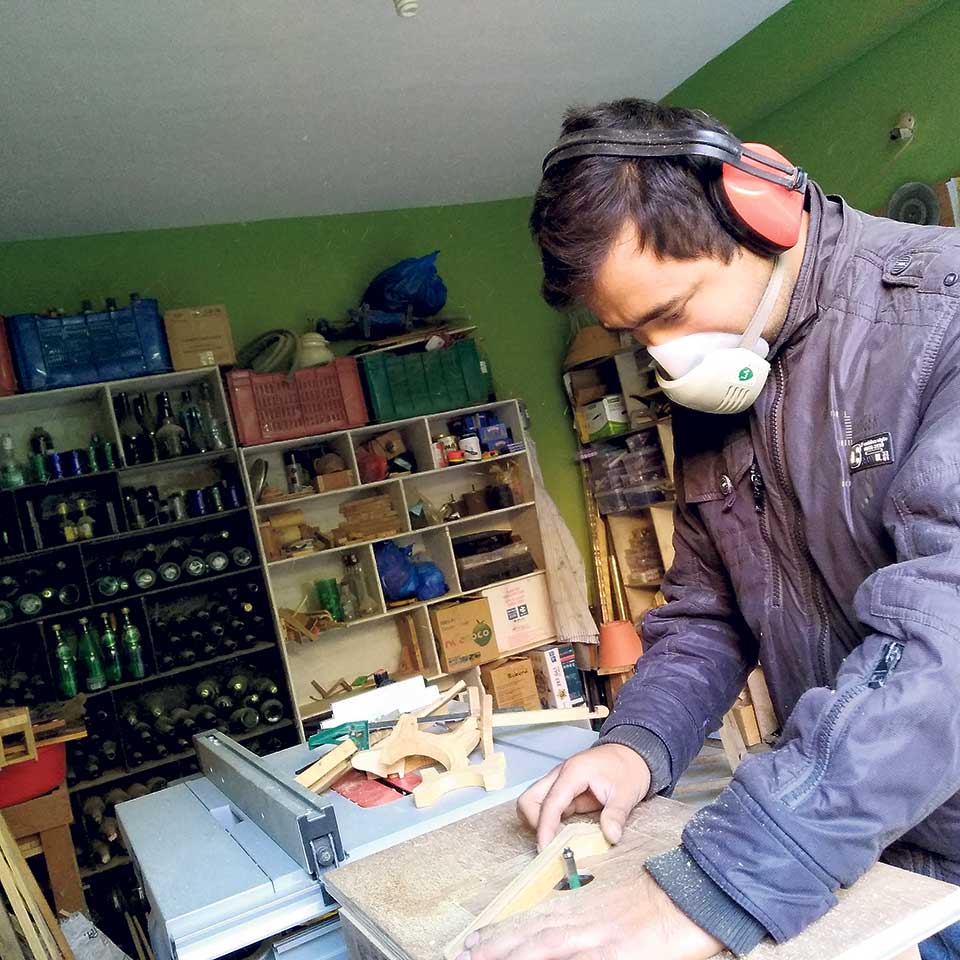
Biocomp Nepal is one such waste-recycling company that will take the food scraps off your streets and turn it into next month's paycheck for the socially marginalized workers that it hires. In doing so, it not only cleans our valley and creates job opportunities but also produces an eco-certified compost that encourages farmers to curb their use of chemical fertilizers. An ideal example for many aspiring companies, Biocomp Nepal proves that significant profit margins can be maintained even as you endorse environmentally and socially responsible actions.
As more and more people come to understand the value that can be created out of waste, many small companies similar to Biocomp Nepal are cropping up everywhere. Some of these companies recycle organic waste into compost while others recycle papers, plastics, and metals. But even with so many hands on deck, such projects have failed to make a significant dent on the gigantic amounts of recyclables that fall, never to be recovered, into the already overtaxed Sisdole landfill.
"Sisdol is already strained beyond its full capacity," says Rabindra Man Shrestha, division chief at Kathmandu Metropolitan City Office. "As a temporary measure we are currently expanding the landfill a little but we need a viable alternative within a year or two."
Banchare Dada was allocated to be the alternative to Sisdol almost six years ago. However, the government has yet to bring the landfill into operation. And experts predict it may still take anywhere between 2 to 8 years more. But even with the completion of this landfill, we need to ensure that we do not end up abusing the Banchare site as we have Sisdol.
The solution, of course, lies in the 3Rs: reducing, reusing and recycling. We, Nepalis, tend to practice these three principles in one way or another. However, given the abysmal state of solid waste management on our government's part, it's clear we need to do a lot more.
For instance, we must promote the habit of collecting and selling not just our paper products but also our plastic bottles, e-wastes (like old CPUs, monitors and mobiles), rubber and metal scraps to the door-to-door collectors instead of throwing it away as trash. If we make this a habit then it is possible to earn anywhere between several hundred to several thousands of rupees each year. It's like getting paid to do a good deed.
On the other hand, if we mix it with organic refuse and send it to our waste collection agency then a very small fraction of our recyclables gets recovered. We do not just lose easy money but we also increase our negative impact on the environment.
A study conducted by Asian Development Bank (ADB) found that households with the highest amounts of monthly expenditure tend to produce more than twice the amount of waste than households with the lowest amount of expenditure. This goes to show that if we spend money on only what we absolutely need and repair or reuse whatever we can, we can lower the amount of wastes we send to the landfills significantly. Frugality and environment consciousness can, definitely, go hand-in-hand.
Another very potent way to help curb our waste production is by composting as almost 70% of the wastes we produce in households are organic in nature. However, although this may be an option for people with their own yards or terraces, it does not apply to most of Kathmandu's population who tend to live in rented rooms. One way to mitigate this problem is for the government to build community composting plants where people can drop off their organic refuse. This would not just be environmentally sustainable but would also help with job security and income generation for such communities.
"If everyone did their part, landfills would receive 40% of the waste they do today", says Shrestha. Studies by ADB are even more positive and approximate that the strain on landfills would reduce by more than 90%. This would not only increase the life of a landfill exponentially but would also prevent nearby groundwater contamination, reduce methane emissions and improve environmental condition in the immediate vicinity of the landfill.
To achieve such results, companies, small businesses and institutions shoul d also be held accountable towards their role in responsible waste management and utilization of green practices. "The government should recognize and reward green companies that prioritize sustainable practices. They should promote an atmosphere that is conducive to the growth of such businesses by subsidizing them and by prioritizing their efforts", states Maarten Gnirrep, managing director at Biocomp Nepal, "This would help environmentally responsible businesses flourish and would also attract international investment in such areas."
He makes a valid point. If the government is serious about taking this problem by its horns, then it has to provide significant incentives to start-ups that utilize green technology and adopt sustainable practices. This can be achieved by giving tax breaks to such companies while imposing higher taxes on institutions that do not show much commitment in the area. If strict policies are implemented that make the cost of polluting more than the cost it takes to curb such pollutions, then every business would eventually turn to sustainable practices.
If the rate at which we are going through our landfills is any indication, then it is safe to say that most of the practices we have today when it comes to solid waste management in Nepal are neither sustainable in the long term nor are they safe for human health and the ecosystem. The Nepal Investment Board is currently working on developing a public private partnership with firms to ensure integrated and responsible solid waste management in a cost-effective way. But until they come up with a feasible proposal (and even when they do), the role of every citizen in responsible solid waste management is integral and undeniable.
sneha.pandey@gmail.com
Related story
Resolving Kathmandu Valley’s solid waste problems