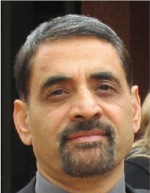
Nirjana Sharma caught up with Menon to find out his take on sanitation and hygiene. [break]
Why do you think it is necessary to talk about sanitation and hygiene?
What Mahatma Gandhi said years ago is equally relevant today - “Sanitation is more important than democracy.” Currently, 2.5 billion people in the world lack improved sanitation with one billion alone in South Asia. A worrisome fact is that around 675 million people in this region defecate in the open. On average, inadequate sanitation costs countries in South Asia six percent of their GDP where diarrhea has killed 750 thousand people since 2003. These are some reasons why sanitation issues need to be paid attention to.
What is your take on the ongoing fifth South Asian Conference on Sanitation in Kathmandu?
Water Aid looks after 23 countries in Africa and Asia where access to improved hygiene practices is still not good compared to the rest of the world. If you compare the scenario between African countries and those in the South Asian region, you’ll find that peoples’ access to toilet and other basic components of sanitation such as pure drinking water and cleanliness is progressive in South Asia. But the concentration of sanitation crisis is also more in this region which is why such conferences to address the issue are important.
Are the efforts satisfactory?
The leadership of the government from each country in the SACOSAN has brought a lot of hope and optimism. There is a sense of ownership in the government and non-government agencies. They are linking the issue of hygiene with dignity and social prestige. At the same time it must be considered that this region is undergoing rapid urbanization and guaranteeing complete sanitation solutions in urban area is a huge challenge.
What steps can the Nepal government take to guarantee improved sanitation in the urban areas?
Urban areas, being crowded areas, are more prone to sanitation crisis resulting in diarrhea and cholera during natural calamities such as flood and earthquake. The municipalities must research and collect data on which part of the city people are going to suffer the most. As the government does not recognize slums and sex workers, the outbreak of disease is more likely to spread from those communities during natural disasters.
And how can they give equal treatment and priority to rural and marginalized people?
In rural areas, a small step like mobilizing the community people is the most effective measure. It develops their confidence and increases their capacity to negotiate with the government and non-government organizations. The timely designing and implementation of small town centric master plans addressing the woes of the marginalized groups with the solution of treatment and transportation of human feces before exposing to water resources also need to be planned soon.
It is often said that developed countries ignore those sector where they don’t see any benefit or return for themselves. How do you negotiate for increasing their contribution in the sanitation sector?
That is true. In such cases we generalize the sanitation issues to convince them that they must donate for total sanitation to protect their own residents, if not the citizens of poor countries. For example, Kathmandu is also a popular tourist destination. People from developed countries visit Kathmandu all year round and their government can’t stop them from doing so. But if he/she takes a communicable disease from Nepal to his country, their entire country will suffer ultimately. In this way, they can be made to allocate a good amount for Nepal’s sanitation. It will be beneficial for them too.
In the sanitation talk, solid waste management seems sidelined, is this achievable without managing solid wastes?
Definitely not. The government needs to involve the private sector to manage solid wastes coming out of households, industries as well as hospitals if it is unable to take care of the matter by itself.
What are the top three challenges in the sanitation sector?
We need more money, identification and use of local resources post the Millennium Development Goal 2015 vision to tackle the issue with the attention and urgency it requires.
After visiting Nepal, what is your opinion on the current Open Defecation Free movement here?
It’s quite impressive that ten districts of Nepal are already ODF and people’s positive sense demonstrated during an event at Bhaktapur was overwhelming. I heard that seven more districts are to be declared ODF shortly. But at the same time, we should not be satisfied only with ODF declaration as just one third of the people have access to all components of sanitation.
Do you think Nepal can achieve its national target of 100 percent coverage of toilets by 2017?
I noticed a very strong interest and engagement of the public in the ODF movement. The top authorities like the president, vice president and the prime minister were attending the ODF programs where they expressed their personal commitment. If the same spirit remains intact, 2017 target is definitely achievable.
Related story
South Asian countries unite to strengthen water and sanitation...