They have institutionalized "plundering" and this tendency has dangerously percolated through the local governance paralyzed by defunct micro-democratic institutions. See how local development is messed up and resources abused consensually. The message out is—be a minister for a couple of months, get your bank accounts inflated and run away with a SUV with ´catch if you can´ mentality.
Our unregulated political market, awash with corruption, commissions and contracts, has aided and abetted their ascent to power repeatedly. These very leaders are spending millions of rupees to win the elections. Who securitizes their electoral expenses and sources of funding? Who dares to make them transparent? They act like little kings. The difference is that they get elected but are not accountable to people. Blinkered by power, they have lost senses to hear afflictions of the destitute.
Good leadership must fulfill collective aspirations of the majority of its people. National policies and programs ought to cater to the needs of the majority rather than add millions to the coffers of the well-to-do. But our decision-making processes, program designs and allocations are often tailored to suit partisan interests.
Magnitude of corruption in local development, infrastructure projects and business dealings is indicative of siphoning off monies actually meant for the benefit of the poor into the hands of parties and their associates through political influence on award of contracts and tenders. Proceeds of corruption do reach all corridors of power. That is why political parties can´t muster courage to toss few politically-anointed "dons" behind the bars. Politics has been an impregnable shield for impunity against corruption and crime in new Nepal.
MANIA FOR MISUSE
Much of the development and a significant portion of welfare allocations are getting lost due to corruption and unethical activities. Poor quality infrastructure and basic services in the rural areas are in part fuelled by bribery, influence peddling, political extortion and abuse of power by the local Robin Hood prototypes. Whichever party leads the government, it thinks the state exchequer solely belongs to it. This mentality has reigned supreme and parties view their ascent to power as a key to legitimize the misuse of public purse.
The government led by (UCPN) Maoist Chairman Pushpa Kamal Dahal unilaterally disbursed some 1 billion rupees through consumer and cooperatives. The money must have gone to the wallets of party cadres. No less spendthrift was Madhav Kumar Nepal´s government which disbursed Rs 80 million to appease its cadres through various programs.
Good leadership must fulfill collective aspirations of the majority of its people. National policies and programs ought to cater to the needs of the majority rather than add millions to the coffers of the well-to-do. But our decision-making processes, program designs and allocations are often tailored to suit partisan interests.
Every leader after assuming office turns out to be Robin Hood in one way or the other. Former prime ministers of the last three successive governments distributed around Rs 290 million to their party cadres including opposition leaders. Even affluent politicians have benefited from financial assistance fund at the prime minister´s office (PMO). Former Prime Minister Jhalanath Khanal doled out Rs 5 million to close associates and party stalwarts from the state coffers over a period of five months. The fund at PMO office is set-up for the poor and for those in dire financial straits. But real beneficiaries are the party cadres.
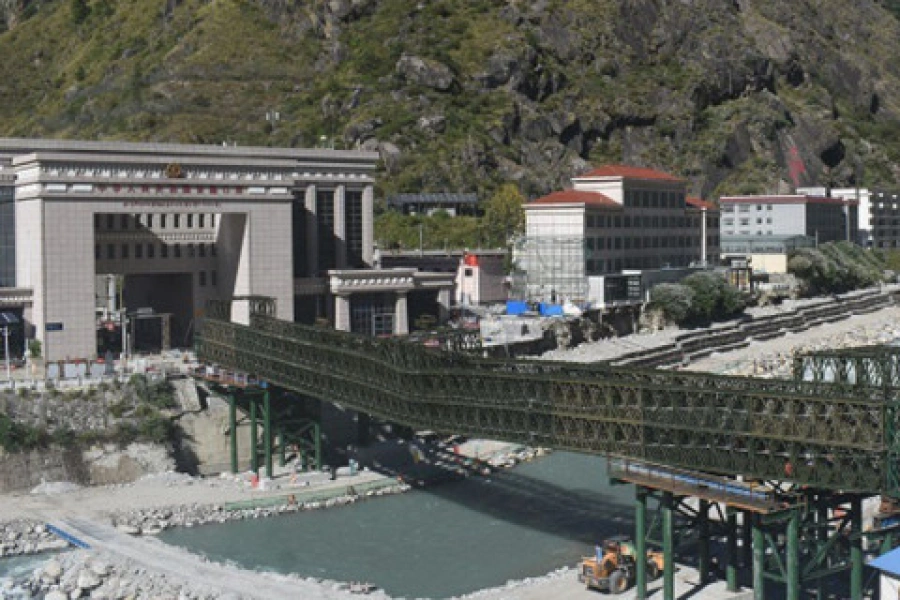
Khanal is no exception as Nepal and Dahal including their predecessors as well doled out hefty sums to appease their loyal cadres including kith and kin during their premierships. Former premier Nepal doled out Rs 75 million to relatives and party cadres from the government treasury during his 15 months of tenure. His predecessor Dahal spent Rs 10 million in nine months. This money could have built scores of suspension bridges in remote areas of Nepal and saved dozens of people from annually falling into rivers during rainy seasons.
One of the distinct features of our politicians has been their irresistible longing for extravagant foreign visits. From heads of State to the heads of government and their ministers, all of them extremely love going abroad. Last year, Vice-President Paramanada Jha made a sudden trip to South Korea without cabinet clearance and in breach of state protocol. More adventurist was the former premier Nepal who squandered Rs 42 million from the state coffers visiting US, India, Denmark, China, Egypt and Bhutan accompanied by a coterie.
His penchant was so intense that he exhausted Rs 85 million allocations just in few months and incurred additional 22 million of tax-paid money for other "fruitless" foreign entourages. He took 20 people with him to participate in the 64th United Nations General Assembly at the cost of Rs 16 million. Taxpayer´s money is being lavishly misused to finance junkets of prime minister´s relatives and personal aides.
We taxpayers must be proud of leaders like Sujata Koirala, a former deputy prime minister and foreign minister, who stayed at a presidential suite of a deluxe hotel in Singapore during medical treatment of her late father Girija Prasad Koirala. The presidential suite cost US$1,400 each day. Not just the hotel but the Limousine, a luxury vehicle, she hired had cost 2,000 Singapore dollars daily. Her expenses for food and beverages were exorbitant. Newspapers quoted Sujata as saying "I need a hotel that suits a deputy prime minster of my status."
Deluxe hotel surroundings must have made her oblivious of her real status as a leader of one of the world’s poorest countries whose 65 percent citizens survive on less than two dollars a day. She was also prodigious in gifting sliver plates to her Indian, Portuguese and Egyptian counterparts which cost half a million rupees apiece. When she tried to get clearance of the expenses, the cabinet meeting was taken aback.
SUV-SAVVY SYNDROME
Other typical identity of Nepali politicians is SUV-savvy syndrome. From Dahal to Nepal to Khanal, none of them morally felt down as leaders of the "proletariat and subaltern" while taking away the SUVs that the state provided them for official use. It is the state responsibility to provide them a vehicle and a security motorcade for certain years after demitting office. But how ethical is it to forcibly take away the same vehicle that they used as premiers, and buy another SUV for a new prime minister every time incurring millions of rupees to the state treasury?
Similar is the syndrome among some of the former home ministers. Most of all, the exigency is that such misuse of state resources and "looting tendency" must be controlled. For this, a clear policy and mechanism needs to put in place to check the misuse by the former prime ministers and ministers. It is a gross misappropriation and injustice to the taxpayers for letting them to enjoy state facilities and resources for unlimited time.
As a break from a political trend nurtured by extravagant indulgences of former premiers and ministers, newly elected Premier Dr Baburam Bhattarai´s austerity measures and frugality plans have made people more optimistic. Starting with a domestic brand, he has stood out from his precursors who fanatically preferred high-powered SUVs to enjoy smooth ride along potholes-ridden roads in Kathmandu. Maybe Dr Bhattarai is next to late former prime minister Krishna Prasad Bhattarai to receive such huge popular support and appreciation in the post-1990s because of his financial probity, simplicity and high moral standards.
Either with a decision to fly on economic class or downsizing foreign entourage or with guidelines to limit budgetary ceiling for purchase of government vehicles, he has done more than just a publicity stunt. If his austerity measures are owned by all in years ahead, ruling political class will be free of this chronic Robin Hood syndrome. Dr Bhattarai has at least initiated small messianic efforts into the right direction. But he must be cautious over his own coalition partners because the recent transfer of home secretary Leela Mani Paudyal, a bureaucrat known for his integrity and hard work, proves that Madhesi allies can be a nail in the government´s coffin.
pbhattarai2001@gmail.com
Related story
Protests, Power and the Price of Neglect