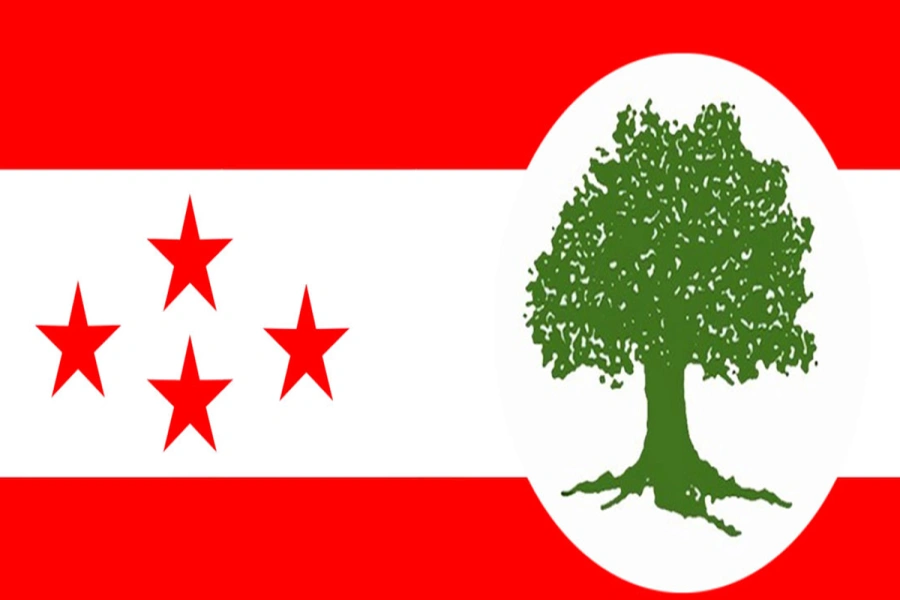
When the CPN-UML took the reins of the government, which eventually only lasted for nine months, things cooled down a little. Still, despite UML’s occasional growling against privatization of the public enterprises, they were too meek to act against free market policy. Having said that, there’s no arguing that they succeeded in slowing down the pace of reforms and liberalization. When NC took over from the UML vouching once again to expedite economic growth, the situation had already changed. Economic issues had taken a backseat. The business of killing people and creating hurdles in all development activities took center stage after Maoist insurgency began in 1996. And this transformation of the society also transformed our firebrand pro-market business leaders into a different breed.
No matter how deeply global recession has tarnished the image of capitalism, the welfare of the majority of the people is possible only through free market policies.
The might of the gun was so strong that business leaders who never tired of complaining of slow reforms were suddenly competing to become ‘nationalist businessmen’ (ones who would not believe in hire and fire, would not question the government’s supremacy in business, would not say no to donate huge sums to the parties and would not ask questions about the economic policies of the parties, especially that of the Maoists). Top leaders vied in surrendering to the Maoists and by 2006, the businessmen stopped uttering even a single word about free market economy.
Once mighty business leaders like Padma Jyoti, Binod Chaudhary, Diwakar Golchha, Rajendra Khetan and others found themselves so weak that they sought refuge in the shadows of political parties. Jyoti beat them all by grabbing a berth in the Constituent Assembly (CA) representing the Maoists. Chaudhary held the hands of the UML – maybe he was under the false impression that they would emerge as the largest party. Golchha got NC’s blessing and Khetan rushed to CP Mainali’s CPN (ML). These are only a few prominent names who earned a berth in the CA. All others associated themselves with one or the other political party – people say that these businessmen bought their berths in the CA. However, that is beside the point. The point here is: What happens to the market now when market leaders have gone into hibernation?
Are these business leaders convinced that there is no need for economic reforms in Nepal? Is free market economy unsuitable for our country? Looking at their association toward parties that have announced socialist economic policies, it seems our top businessmen have attained nirvana and wish to become proletariats after donating all their money. If not, why don’t we get to hear any word from them about market liberalization, economic reforms, etc.? Economists, academicians and others may need yet another project like Adam Smith Institute to create and awareness about these things. But the business community needs it for their survival. If they are worried only about safeguarding their existing property by surrendering to the left tide in the country, they are wrong. If they care about the future generation, running away from free market is not the solution. If Nepal falls in the trap of regulated economy and planned development, it will not be able to grow. Growing population coupled with poverty and deprivation will not let anyone live peacefully. The property that we now see as indestructible will be tattered into pieces when hungry people go berserk. It can be protected only if we provide opportunities to the people to work, to invest and compete in the market.
Unfortunately, our political parties are least bothered about economic policies. Their only concern seems to be political such as the system of governance that we need in this newly-born republic. It has become a ubiquitous topic that everyone from CA members to the crowds at village tea stalls seem to be deeply worried about. Parties are divided on whether to go for a presidential system, a parliamentary system or a prime ministerial system, with each defending their model strongly. Is the system of governance all that is important for Nepal? In fact, whatever the type of government, it is not going to help the country if it is not properly backed by apt economic policies.
On the one hand, if the parties’ stand on their political system is strong, on the other hand, their economic policies are weak, vague, confusing, and, for the most part, cannot be implemented. They write one thing in the manifesto but present completely opposite views to the donors and end up executing policies that is a cross-breed of both. At such a critical juncture in our nation’s history, business leaders have to come out strongly in favor of a free market economy, liberalization and privatization. No matter how deeply global recession has tarnished the image of capitalism, the welfare of the majority of the people is possible only through free market policies. Let’s hope that our business leaders will realize this before it is too late.
prateek@myrepublica.com
Related story
Understanding Stock Market