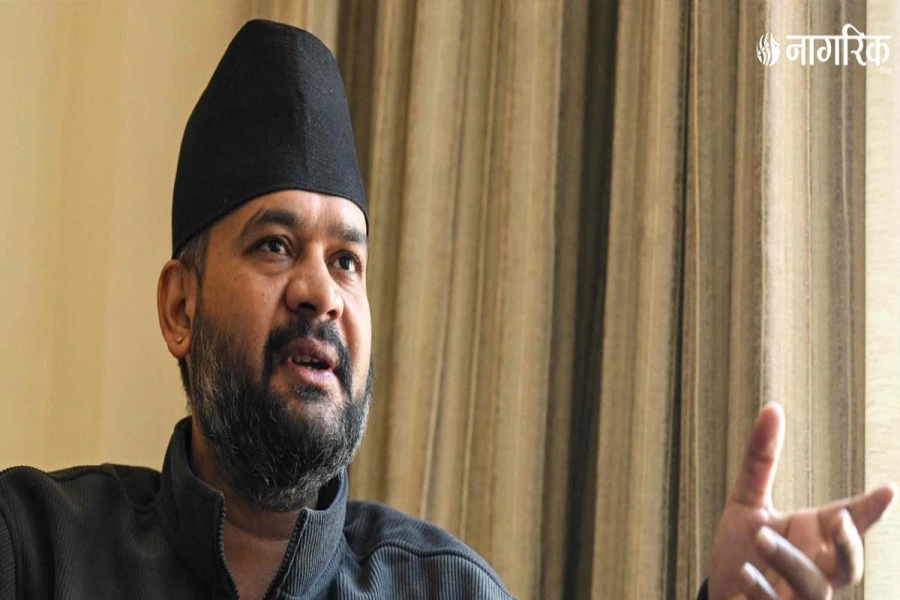
If Chairman Dahal’s recent diatribe is any indication, then the party seems to have taken a tough stance against intellectuals. This is exactly what the Chinese communist policy was during the early 50s.
CCP at first courted the intellectuals, but when the intellectuals criticized the authoritarian style of the party, they were imprisoned, killed or sent to remote labor camps in a campaign called the “anti-rightist” campaign (1957-1958 AD). It is believed that during the two years of the campaign, some 550,000 intellectuals including China´s finest writers, social scientists, scientists and economists paid dearly for their real and supposed criticism of Mao and the party. Just as Mao in his 1942 Yanan speech gave a hint of what was to come later, Dahal did the same last Saturday at Khula Manch. For example, Mao in 1942 said: “If our writers and artists who come from the intelligentsia want their works to be well-received by the masses, they must change and remold their thinking and their feelings. Without such a change, without such remolding, they can do nothing well and will be misfits.” Or in other words, the writers and the artists were asked to support the Maoists. Now compare this to what Dahal said last Saturday: “These neat and clean intellectuals will now have to decide whether they want peace or war. Nepali people have maintained a diary on who wrote what and will not spare them.” Mao said it politely while Dahal put it rather bluntly, but the message is the same.
In the 1960s, Chairman Mao was sidelined in the party because of his ultra-left policies of collectivization and the failure of Great Leap Forward (1958-1961 AD)—a movement to catch up with the West in industrialization and steel production that led to the death of millions of people. However, Mao, along with his sycophants kept on making ultra-left plans for China, which the soft-liners – who then had a stronghold in the politburo – kept on rejecting. Then to prove that he still had command over the masses, he started the Cultural Revolution (1966-1976 AD) despite the repeated calls from the soft-liners not to do so. The ultra-left movement to satisfy one man’s ego again resulted in the death of millions of people, and the 10 years of the campaign stalled China’s development. Today, the Cultural Revolution is rightly referred to as 10 years of chaos in China.
If Chairman Dahal’s recent diatribe is any indication, then the party seems to have taken a tough stance against intellectuals. This is exactly what the Chinese communist policy was during the early 50s.
Now compare this to today’s Nepal. If analysts are to be believed, the soft-liners in the party were against the indefinite strike after the failure of earlier rounds of strikes and protests, but the hardliners didn’t listen to them (Please refer to “The Game of Chicken” by Post Bahadur Basnet, Republica, April 22). Just as the Cultural Revolution didn’t do any good to either China or the image of Mao, the indefinite strike called by the hardliners of the UCPN (Maoist) did nothing good to Nepal, the party and its chairman. (Some may find comparing 10 years with seven days a bit odd, but time is not important. The point is similarities in the motives.) And just as Zhou Enlai, a soft-liner and the premier of China from 1949-1976 AD, was forced to support the Cultural Revolution despite his deep contempt for it, soft-liners in Nepal’s Maoist party were made to support the indefinite strike. What’s more amazing is that just as Zhou was sidelined or ignored when Mao met with the Red Guards (youths who came to Beijing to stage the revolution to smash all things old) in the fall of 1966 in Beijing’s Tiananmen Square, Baburam Bhattarai was not allowed to speak to the cadres gathered in Kathmandu’s Khula Manch on May 1. People were surprised to find Bhattarai quiet. Again, if the analysts are to be believed, Bhattarai, one of the influential leaders of Nepal ‘s Maoist movement and one of the three vice-chairmen of the party, was not allowed to speak because he was not for the indefinite strike at this time. This has led many people to believe that there’s a rift growing in the UCPN (Maoist) between the soft-liners and the hardliners. If it is true, then it is neither good for the party nor the country.
Although I personally do not believe in Maoism and communism in any name or disguise, there are many in Nepal who believe in it and have pinned their hopes on the party. They want the party leaders to stick together and work for the development of the country and not follow the failed Maoist policy of continuing revolution. But when the revolutionary party that has to be credited for making the vast majority of peasantry politically aware is in itself divided and becoming dogmatic by the day, these people’s hopes are shattered. Therefore, it would make a lot of sense for the hardliners of the party to be pragmatic instead of dogmatic, and work with the soft-liners to fulfill the aspirations of its supporters. Maybe the party would then have more converts among the sukila-mukila (neat and clean) intellectuals of the valley.
In China, Mao is assessed in 7:3 ratio, ie, Mao was right 70 percent of the time, but terribly mistaken (or made the wrong decisions) 30 percent of the time. This has mainly to do with the Chinese culture of giving—and/or saving—face (gei renjia mianzi), and partly because the ruling party in the past drew its legitimacy from the 1949 revolution, which was accomplished under the leadership of Mao. These days the CCP draws its legitimacy from the economic reforms initiated by a soft-liner, Deng Xiaoping, who was punished for his dissenting voice during the Cultural Revolution. In China today, the leadership is slowly disassociating itself from Mao’s “bitter” legacy, evident by the fact that during the opening ceremony of the Beijing Olympics in 2008, Mao or any mention of him was absent while showcasing the achievements of China from 221 BC to 2008 AD.
The UCPN (Maoist) has to realize that Nepal is not China and our cultures are very different. We are for a wholesale criticism of everyone and anyone as evident by the widespread bashing of King Prithvi Narayan Shah who united the country. Therefore the sooner the Maoist party stops following Mao’s footsteps and realizes that the Nepali people are not so kind in assessing, and that the culture encourages wholesale criticism, the better it is for the party and the party leaders’ image. Dahal surely does not want history to forget him or worse, go down in history books as a leader who only made mistakes, does he?
trailokyaa@yahoo.com
Related story
Father's Day: Following in my Dad's Footsteps, Together