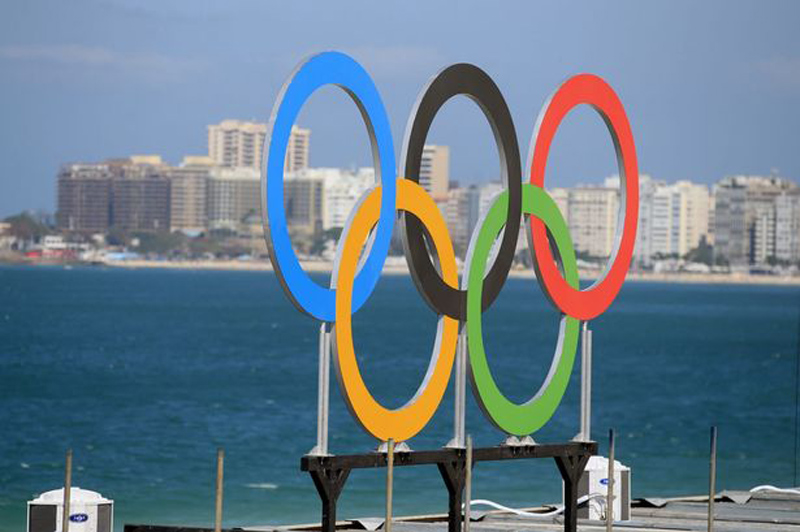
Just how much money will the 2016 Summer Games bring in for Rio de Janeiro? It´s not an easy puzzle. The economic benefit of an Olympic Games - if there is one - depends entirely on whom you ask and how they decide to calculate the numbers.
How much does it cost to put on an Olympics?
With a projected cost of $14.4 billion, Rio de Janeiro had the highest budget of any of the four cities.
But Olympic budget projections, made before the games are awarded by the IOC, are often eclipsed once construction begins and expenses mount.
"It´s an enormous undertaking," said David Carter, a professor at the University of Southern California. "Even when these cities are thoroughly prepared and have a compelling bid, the logistics of pulling it off is no easy task."
Is there an economic benefit that comes with all those costs?
Predicting how much money the games will make for a city, a region and even a nation is an inexact art, but there is a method to it.
Economists, organizers and forecasts use complex calculations to predict everything from how many people will visit to how much money they´ll spend on food and souvenirs. An Olympics-sized event is even more complicated, because it also includes spending on big construction projects. Unlike a Super Bowl where the impact is generally concentrated in several days, the effect of an Olympic games can last years.
An estimate by the University Of Sao Paulo Institute of Administration that´s cited by the Rio de Janeiro Olympic committee pegs the economic boost at about $57 billion.
How are those figures compiled?
Calculating economic impact starts with the premise that a certain number of people will likely visit, and that they´ll spend a certain amount of money each day.
Using those figures, economists then factor in what´s called a multiplier - because every dollar spent creates a domino effect that ripples through the rest of an economy.
That means if more visitors are in Rio de Janeiro and taking more cab rides, taxi drivers presumably will earn more tips. The more tip money in their pockets means more money they can spend on themselves or their family, which in turn stimulates everything from sales of groceries to electronic gadgets.
When Rio officials made their $57 billion estimate, they said every dollar spent could generate more than three more by 2027.
Why aren´t the estimates trustworthy?
There´s so much wiggle room because there are so many variables. Three big factors tend to get overestimated when events of this scope are held:
-Many locals simply get out of town.
-Much of the money spent during an Olympics might have been spent anyway.
Meanwhile, even as tourists spend money in Rio de Janeiro, the Olympics might drive locals away to avoid the headaches and even some tourists who would have normally visited the city were the games not being held.
-Much of the money that´s spent doesn´t necessarily get plowed back into a community. Hotels will be able to raise the prices, but unless the hotel´s owner is a local, the spending might not do much for the local economy.
What has history shown?
A year before the 1996 Summer Games in Atlanta, experts said the event could generate $5.1 billion for the region. Afterward, some said the actual figure was about 20 percent less, because so many visitors stayed with friends and family.
Organizers predicted those games would create more than 77,000 jobs. Most studies after the fact showed the new jobs created were less than half that.
Montreal had a billion-dollar deficit from the summer games it hosted in 1976. It finally paid off that tab just three years ago.
But not every impact can be broken down into dollars and cents, right?
Sure. One of the biggest benefits of an Olympics - or a similar event - is civic pride.
Chinese residents overwhelmingly said hosting the 2008 games would improve their image around the globe, despite its eye-popping $40 billion price tag.
After Germany poured millions into hosting the World Cup in 2006, data showed there wasn´t much economic impact. But research also showed Germans were much happier afterward.
What it comes down to: Winning an Olympic games will make Rio de Janeiro an even more exciting city. But it might not make Brazilians rich.
Related story
Citroën announces ‘New Year Bonanza’ for 2024