

The commission, which was mandated to offer suggestions to the CA on issues of state restructuring, has proposed that preferential political rights be ensured only to autonomous regions -- not at the provincial level -- to be formed of some ethnic clusters under special arrangement. break]
The CA thematic committee through a majority vote had recommended that preferential political rights be ensured to a dominant community for the top post of a particular province for two terms.
As per the provision, only leader of the largest ethnic community from a specific province would be eligible to run for the post of chief minister for two terms whereas citizens from other communities would not at all be allowed to run for the post. The provision proposed by the CA thematic committee was widely criticized for being “completely against basic democratic principles”.
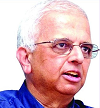
“The CA committee itself was divided over the proposed provision. Lawmakers participating in the deliberations at the CA´s full House over the provision fiercely criticized this provision. We also found that the provision has been widely criticized in public circles,” Dr Krishna Hacchhethu, a member of the commission, told Republica.
He said they proposed preferential political rights only at the autonomous regions formed of tiny communities that comprise less than one percent of total population of the country.
Moreover, three members of the commission -- Dr Ramesh Dhungel, Dr Sarbaraj Khadka and Savitri Gurung -- who have registered differing views on various issues have stated in their separate report that there is no need for granting preferential political rights to any community at any level.
The principal report prepared by majority (six) members of the commission -- Dr Madan Pariyar, Dr Krishna Hacchhethu, Dr Bhogendra Jha, Malla K Sundar, Stella Tamang and Surendra Mahato -- stated that they proposed preferential political rights for the top post of the autonomous regions formed under a special arrangement for one term to historically oppressed communities. But the other report prepared by the minority group has removed it saying “it is against the basic principles and values of a democratic system”.
Among other issues, majority and minority groups have fundamental differences over the number of provinces to be drawn in the federal map. While a majority of members proposed 10 provinces and one non-territorial province, minority groups proposed a six-province model.
On the right to self-determination, majority members of the commission have proposed that “indigenous, ethnic, Madhesi and Dalit communities be granted right to self-determination on political, cultural, religious, linguistic, educational and economic activities as well as on information, communication, health, habitat, employment, social security, commerce, land, environment and mobilization of resources at the internal and local levels”. But the minority group removed it altogether. “We didn´t incorporate it because it is unnecessary,” Khadka told Republica.
Though both the reports have recommended three tiers of federal units -- central, provincial and local -- Khadka claimed that the report prepared by majority members has tried to curtail the rights and role of local bodies. “Because they have explicitly stated that the local bodies will be under the provincial jurisdiction.”
The majority-report states, “there shall be federation, provinces and local bodies under the province.” whereas the minority-report has stated “there shall be three tiers comprising federation, provinces and local bodies”.
According to Khadka, they also differed over the issue of incorporating a concurrent list of rights. He said while the minority group was for incorporating such a list, the majority groups stood against it.
Hacchhethu said the commission made value addition to the CA´s thematic report primarily on three issues -- the number of provinces, issue of preferential political rights and formation of autonomous regions. "We chose these issues because the CA thematic committee was divided mainly over these issues," said Hacchhethu.
According to him, they reduced the number of provinces from 14 to 10 as they found that there was strong voice saying the number of provinces was too many and some of the proposed provinces were not economically viable. "Therefore, we removed four of the provinces proposed by the thematic committee," he said. "Similarly we removed the proposal for preferential political rights at the provincial level because it was widely criticized."
He said they have recommended that a high-level commission be formed to study the tiny minority ethnic and the indigenous groups on the verge of extinction. “The provincial government will then take a decision on forming autonomous regions based on the report of such a commission,” said Hacchhethu.
Related story
Preferential rights sought in river products







-1782125987.webp)


