Nepali Congress, CPN-UML and UCPN (Maoist) are talking again seriously after three months of bitter differences. They have decided to send agreed issues to the CA's Drafting Committee while also continuing deliberations on state restructuring. What brought them together? How will constitution-writing go ahead from this point?
Related story
Making a great first impression at an interview

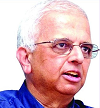
Mahabir Paudyal and Thira L Bhusal caught up with Bishnu Paudel, UML Deputy-General Secretary and a key member of inter-party negotiations Wednesday afternoon.
What is the substance of Monday's three-party understanding?We are heading towards resolution of outstanding issues. There are certain factors behind this. We have all realized that this CA should not be allowed to fail. If it does, it will not only be the failure of political parties; the whole nation will suffer. UML believes that this CA must be a success. But we are not in favor of just about any constitution. We want a constitution that honors democratic values, addresses people's aspirations and leads the country on the path of peace, prosperity and development. Save for these fundamentals, UML is open to compromise.
But isn't UML considered rigid on constitutional issues like federalism and electoral system?
It's true that we have had rigid stands on some disputed issues but we have also backtracked for the sake of consensus. Take the judicial system. We are in favor of Supreme Court interpreting the constitution. We are against separate Constitutional Court. In principle, we stand by this position even today. But since there was no consensus in its favor, we took a step back and agreed to a Constitutional Court under Chief Justice for a certain period. Likewise, we are for directly-elected Lower House, while adopting a fully Proportional Representation system for the Upper House. This is the only way to ensure stability of government. But for the sake of consensus, we took one step back even on this and agreed to mixed system for Lower House. We have compromised on government form as well.
What about state restructuring, the major bone of contention?
We discussed a number of options regarding name, number and boundaries of future federal provinces. We are opposed to separating Tarai plains from hills. We are not flexible on this; we won't ever be. This is because we are a multilingual, multicultural, multi-religious and multi-ethnic country. By the same token, every state is bound to be multilingual, multicultural, multi-religious and multi-ethnic however way we carve it. We cannot have a state under the name of one ethnic group, language or culture. You cannot adopt multiple ethnic names either because you cannot accommodate all ethnicities. Besides, not a single ethnic community will have a majority (not even 50 percent) in any state. We stand firm on these principles. We are in favor of seven states at most, but we still believe there should be no more than five. We have only become flexible on the ways to settle outstanding disputes.
Colleagues from the Maoist party have been long insisting that arithmetic strength should not be a major basis for settling disputes. So we came to a new understanding that since we are near consensus on electoral system, judiciary and government form we will send these issues to CA via Dialogue Committee and then to Drafting Committee. We have also revived consensus efforts for state restructuring. I have found Maoist colleagues very positive. We have all learned from the past. We all have realized that delaying statute could invite a national crisis.
But the parties had reached a similar deal on January 19. What's different this time?
In a way, the recent understanding echoes the proposal floated by Madheshi leader Bijay Kumar Gachchadar back in January. We, Congress and UML, instantly agreed. Maoists were also positive, even though they later backtracked. This widened the rift between parties and contributed to the deadlock. This was then. Now we have returned to January 19. But the differences are narrowing and we are committed to start consensus process afresh. We have a long way to go but recent understanding has certainly cleared the way for a breakthrough.
UML was a strong proponent of constitution through voting. What changed?
Even when we talked about voting we were not opposed to consensus. But something went wrong. Opposition alliance took to the streets for constitution, which was wrong. We were in favor of voting. We were poles apart. This would not help constitution process. We could have ignored opposition threat and gone ahead with voting. But that would not be right, especially after opposition alliance called off its protests. Now we have come together to give consensus another chance. Opposition parties have also become ready to renew consensus efforts. We have found a meeting point. It will be faster to bring constitution on time through consensus than through the voting process.
How do you expect federalism dispute to be resolved?
I cannot tell you how at the moment. But one thing is clear. All the parties will have to concede some ground. We all have our positions on federalism. We should reach an understanding by revisiting our old stands.
The CA chair has given parties until Thursday (today) to arrive at consensus.
It is up to the CA chair to decide how much time is needed for consensus. But we are going to send the agreed issues to Drafting Committee through CA. It is also true that we cannot wait indefinitely for consensus. We have had enough deliberations. We now need to take decisions for which we must not take long.
Opposition leaders like Upendra Yadav and Rajendra Mahato are opposed to your current path.
I don't think they are. After all, we have had tentative agreements with them on three disputed issues. As for federalism, nobody is for constitution by putting federalism on hold.
What if the consensus efforts fail? Will NC-UML coalition revive the voting option?
We have not discussed plan B yet. We have only decided to send agreed issues to drafting process while intensifying efforts on consensus on federalism. We will decide what to do during future deliberations.
How likely is constitution by May 29, the Republic Day?
After we failed to deliver the statute on January 15, all of us were in favor of completing it by May 29. Republic Day would be the best occasion for this. But as of now, this possibility is slim. We can still aim for sometime within June. Some leaders seem to have taken liberty and said that there are three more years for new constitution. But it would be a mistake to feel at ease. Yes, CA has three more years. But this time period is not just for promulgating the constitution. It is also for charting post-constitution course. We will have a lot to do even after we have a constitution.
It is said the three parties have a secret deal on power sharing post-constitution.
It's vital for all stakeholders in the CA to own new constitution. Thus we need to forge consensus on disputed issues. Once we have constitution, we can convert the current government into national consensus government with the participation of all parties in the CA. If we can have this arrangement, it would do us a world of good. Regarding power sharing post-constitution, it will largely be determined by new constitution. But we are flexible. But this is not what Maoist party is really concerned about. They seek other assurances.
Could you elaborate on that?
They seem to have genuine qualms about the remaining part of peace process, one dealing with Truth and Reconciliation Commission and Commission of Inquiry on Enforced Disappearances. Their concern is that conflict era cases could be revived to revenge them. We have assured them it won't happen.
Is the power-sharing deal that UML signed with NC now dead?
Not so. The reason this impression has been built is that Congress and UML are in the government together. Thus it is not wise to discuss issues that could potentially disturb camaraderie between coalition partners. But this also does not mean that we have forgotten the deal. But it should be revised in the changed context.