Linked with the myth of martial tribes, outcome of almost all political contestations in places like Butwal, Dharan and Pokhara are decided by community connections. In Bhairahawa and Nepalgunj, calculations of caste have begun to affect electoral prospects of every political party including the Maoists.
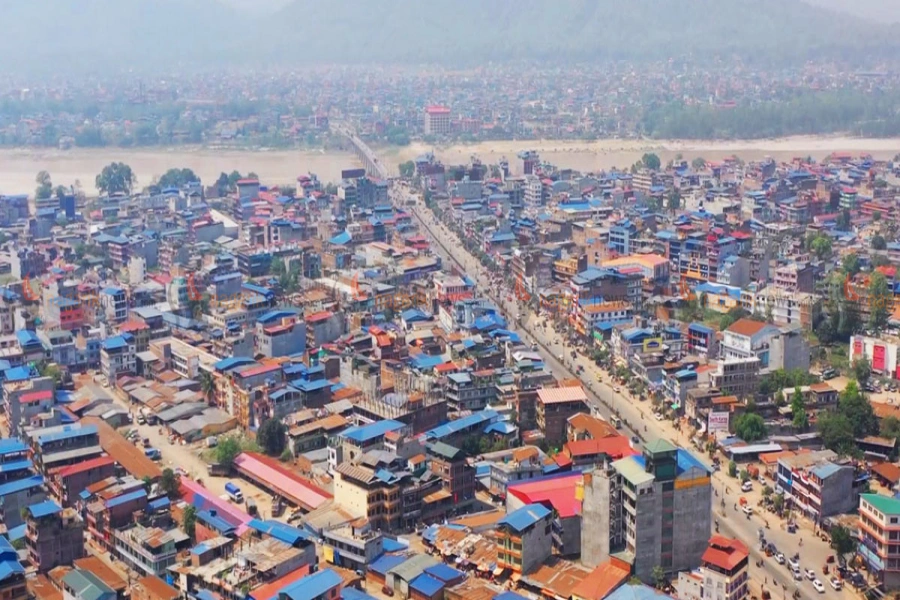
The currency of politics in the industrial city of Biratnagar however is not commerce, crime, community, caste or class but something much more powerful than all that—the hard and cold cash. Money talks so loud in this city that had there been seashore near Jogbani across the border in India, the headquarters of Morang District of Nepal would have been Bombay of this country.
When Yoga guru Ramdev was in town for two hours last week, at least six cabinet ministers, including officiating Prime Minister Bijaya Kumar Gachchhadar, were in attendance to receive the messiah of moneybags, middleclass and middle-aged males with bulging midriffs. The vice president of the youngest republic of the world has been camping in town for few days. Parmanand Jha was there for a photo-op with the roving swami of callisthenics but rushed out of the town fast to avoid being present at a function to mark the memory of pioneering Maithili poet Vidyapati. Even after the oath-taking controversy, apparently he still feels that propagation of Hindi is a better platform for career advancement in Nepali politics than an open attachment to one’s own mother tongue.
The impact of China card in the internal politics of Nepal is also largely dependent upon the India factor—the moment New Delhi responds to it, Beijing connection loses its potency. King Mahendra may have once boasted that communism did not travel in trucks, but Arniko Highway has not been of much use for anything else either for so long. King Birendra realized in 1988, rather too late for his political fate, that importing anti-aircraft guns from the northern neighbor would ultimately extract a very heavy diplomatic and economic price. By the time Royal Chairman Gyanendra understood in 2005 that the People’s Republic was merely a fair-weather friend, the ground beneath his feet had already begun to sink. Proletarian Chairman Pushpa Kamal Dahal’s fascination with the country of his ideological master in 2008 was to prove the enduring significance of Hegel’s famous observation: All we learn from history is that we learn nothing from history.
THE INDIA FACTOR
On the sidelines of Ramdev’s whirlwind tour and Vidyapati Memorial celebrations the next day, the talk of the town in Biratnagar was the possible recall of the envoy from one of India’s largest diplomatic missions in the world—Kathmandu. The language of formal denial from the Ministry of external Affairs in New Delhi was so officious—“Shri Rakesh Sood is a distinguished officer of the Indian Foreign Service who has served with dedication and commitment as India’s Ambassador to Nepal since April 2008…”— that it heightened the speculation that his days at Lainchaur may indeed be numbered. Shri Sood may later be promoted or decorated for his ‘distinguished service’ at a difficult duty station, but for the present, he has clearly become an embarrassment for the establishment in New Delhi that has gained little with his single-minded obsession of checking Chinese influence and countering Maoists at all costs.
A government perceived to be ‘pro-India’ in Colombo, Dhaka or Kathmandu has to constantly attempt to be different from its image and take as many ‘anti-India’ positions as diplomatically possible to prove its autonomy to the skeptical public.
It may have nothing to do with the competence of Indian diplomacy, but the influence of Chinese in internal affairs of Nepal has visibly increased since the ouster of Pushpa Kamal Dahal from Baluwatar. Singha Durbar has become harsher in dealing with Tibetan refugees. Commercial interests of Chinese companies get a more favorable hearing with infrastructure management authorities in Kathmandu.
Perhaps the most discernable decision of perceptibly ‘pro-India’ and anti-Maoist government of caretaker premier Madhav Kumar Nepal has been to direct its diplomatic representatives to stay away from ‘Empty Chair’ Nobel investiture of prisoner of conscience Liu Xiaobo. Along with Pakistan and Sri Lanka, Nepal is one of the three important South Asian countries to line up behind the aggressive anti-West diplomacy of Beijing. Nepal’s accredited envoy to Norway did come up with a plausible diplomatic alibi—he is yet to present his credentials in the host country of official ceremonies. The meek explanation however appears unconvincing in the din that the undiplomatic roar of Chinese Dragon has created with its own Confucius Peace Prize to spite the Nobel.
Caretaker premier Nepal may continue to make his obligatory first call of the day to a certain diplomatic mission to express his undying loyalty and unwavering dependability, but no government official likes to be portrayed in public as a lackey of someone else. The pressure of appearing independent upon an insecure politician is much higher than a popular leader who can afford to take bold policy decisions. A government perceived to be ‘pro-India’ in Colombo, Dhaka or Kathmandu has to constantly attempt to be different from its image and take as many ‘anti-India’ positions as diplomatically possible to prove its autonomy to the skeptical public.
Sadly, political compulsions of the instable coalition in Singha Durbar has unnecessarily put Nepal’s national interests in jeopardy as it collectively tries to run away from the lengthening shadow of New Delhi even as its various public officials privately bend over backwards to court every interloper of the neighboring country. It would be naïve to believe that Swami Ramdev, or any other public figure for that matter, have no political or diplomatic agenda when they hobnob with the high and mighty of another country.
THE BIHAR EFFECT
Tarai towns in general and Biratnagar in particular prospered most during the communist high tide in West Bengal and the spread of caste-based politics in Bihar. Compared to the militancy in Siliguri and dormancy in Saharsa, Itahari bristled with endless opportunity for investors looking for quick returns. Stainless steel, polyester fibres, plastics, vegetable ghee and even rice, flour and daal mills were attractive businesses of earning foreign currency through clever balancing of import and export accounts. For industrialists in the eastern hub of Nepal, it made sense to keep politicians of all hues in Kathmandu in good humor. Militant nationalism was a good cover to hide tax evasion, unauthorized trade avenues and extra-legal transactions. However, the cosy nexus between businesses and politicos that benefited both strained diplomatic relations between neighboring countries. Ground realities across the border in West Bengal and Bihar may complicate the matter further in the coming days.
After decades of industrial stagnation, the Left Alliance at the helms of provincial government in Calcutta wants to woo businesses back to the state. The trouble with the shift in the strategy in West Bengal is that years of political mobilization has made the labor force of the state unfit for exploitation—a necessary condition for luring outside investment. Despite the media hoo-ha over Nitish Kumar being the new poster-person of free-market fundamentalism pioneered in India by Chandrababu Naidu of Andhra Pradesh, the state continues to be a den of shady operators. According to National Election Watch - Association of Democratic Reforms, an alliance of NGOs, at least 141 of the newly elected members of the 243-member Bihar legislative assembly have pending criminal cases against them.
The foul smell of communal polarization and criminal unionism has slowly but surely begun to vitiate Nepali politics. The new occupant of the India House in Kathmandu would do well to reflect whether his or her illustrious predecessor had played any role in checking the slide of a close neighbor toward illegitimate governance and anarchy.
cklal@hotmail.com
Related story
ICC T20 World Cup: England set Nepal a challenging 185-run targ...