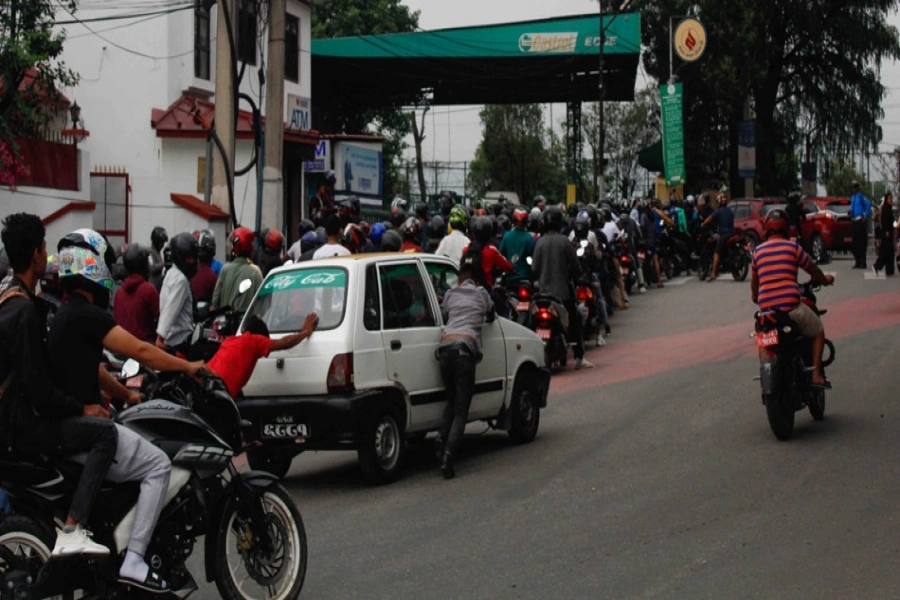
KATHMANDU, April 3: Rising fuel prices driven by tensions in West Asia are putting pressure on both Nepali consumers and the state-owned Nepal Oil Corporation (NOC), which is currently incurring an average daily loss of around Rs 880 million.
Consumers are already paying higher prices at the pump, but officials say the full impact of international price hikes has yet to be passed on. At the same time, NOC continues to absorb mounting losses as global oil prices surge.
The increase in petroleum prices comes amid disruptions in global supply. Instability in West Asia, including issues at the Strait of Hormuz and attacks on oil facilities in the Gulf region, has pushed crude oil prices upward. The impact has now reached Nepal, where high government taxes on fuel have further added to the burden.
According to NOC Spokesperson Manoj Thakur, the corporation is expected to incur a loss of Rs 13.21 billion over 15 days based on the latest rates from the Indian Oil Corporation (IOC). “Petroleum prices have been rising in the international market over the past month due to the ongoing conflict in West Asia,” Thakur said. “As we have not adjusted domestic prices in line with IOC rates, losses have continued to widen.”
He added that NOC recorded losses of around Rs 5 billion between March 16 and March 31 alone.
NEA incurs Rs six million loss as mentally unstable man climbs...

The latest IOC price list, received on March 31, shows a sharp increase across fuel categories. Petrol prices rose by Rs 41.60 per liter, diesel by Rs 94.93, aviation fuel by Rs 123.08, and LPG by Rs 190.36 per cylinder. Despite this, NOC has not adjusted the prices of petrol, diesel, and cooking gas. “We were already selling at a loss, and the gap has widened further,” Thakur said.
Currently, NOC is losing Rs 47.12 per liter on petrol, Rs 133.45 on diesel, and Rs 416.37 per cylinder of LPG. Only aviation fuel prices have been revised upward. Domestic aviation fuel has nearly doubled, increasing from Rs 127 to Rs 251 per liter, while international aviation fuel in Kathmandu now stands at USD 1,785 per kiloliter after a significant hike.
The corporation has been using its price stabilization fund—currently holding around Rs 19 billion—to cover the losses. However, officials warn the fund may not last long. “If prices are not adjusted, the entire fund could be exhausted within the next 15 days,” Thakur said.
Although NOC raised petrol prices by Rs 15 per liter and diesel by Rs 10 last week, current rates in the Kathmandu Valley stand at Rs 172 per liter for petrol and Rs 152 for diesel—levels that still fall short of cost recovery.
A major factor behind the high prices is taxation. The government collects around Rs 62 per liter on petrol and Rs 43 per liter on diesel through various taxes, including customs duty, road maintenance charges, pollution tax, infrastructure tax, VAT, and contributions to the stabilization fund.
Consumer rights activists argue that reducing these taxes could provide immediate relief. “People can no longer bear the rising fuel prices,” said Madhav Timalsina, president of the Consumer Rights Research Forum. “The government must lower taxes to ease the burden.”
NOC officials, however, warn that without price adjustments or tax revisions, sustaining supply could become difficult. Managing Director Chandika Bhatta said that reducing infrastructure and road maintenance taxes could help balance the situation. “We have relied on the stabilization fund so far, but it will soon be difficult to continue,” he said.
Officials suggest that the burden should be shared among consumers, the corporation, and government support mechanisms to maintain stability. Otherwise, fuel supply disruptions cannot be ruled out. NOC has also urged consumers to limit consumption, as global prices are expected to rise further.
Meanwhile, India has also increased fuel-related costs. In Delhi, the price of a 19-kg commercial LPG cylinder has risen by INR 195.50 to INR 2,078, while a 5-kg cylinder now costs INR 549 after a hike of INR 51.
Airfares rise sharply
The increase in aviation fuel prices has already affected the aviation sector, with airlines revising ticket prices across major routes. Domestic aviation fuel prices have nearly doubled, prompting carriers to adjust fares accordingly.
“Airfares are automatically adjusted with changes in fuel prices,” said Muralidhar Joshi, spokesperson for the Airline Operators Association of Nepal.
As a result, ticket prices have climbed across routes. Fares on the Kathmandu–Dhangadhi route now range from Rs 14,457 to Rs 23,059. Kathmandu–Nepalgunj flights cost between Rs 10,800 and Rs 17,148, while Kathmandu–Bhadrapur fares range from Rs 9,989 to Rs 15,837.
Similarly, fares for Kathmandu–Biratnagar range from Rs 8,088 to Rs 12,765, Kathmandu–Janakpur from Rs 5,565 to Rs 7,070, Kathmandu–Pokhara from Rs 5,015 to Rs 8,605, and Kathmandu–Bhairahawa from Rs 7,006 to Rs 11,016.