

It has been eight years since “Chhaupadi Pratha” was declared illegal. It is a tragedy that despite such a progressive step, Chhaupadi is still prevalent in western Nepal.
In Far West Nepal, menstruating and post-natal women are isolated from their homes and forced to live in cowsheds. Women are deemed impure and untouchable. [break]
They are not allowed to touch anything in the house, including furniture, foods, utensils and taps. When they are the most in need of nutritious food, care and hygiene, women are compelled to live like animals.

give2asia.org
This custom of treating women as animals based on some superstitious Hindu belief is popularly known as Chhaupadi Pratha. Women stay in cowsheds or abandoned houses from the beginning of their menstrual cycle to the fifth day, and return home the sixth day after ‘purifying’ themselves by bathing with ash water. They fear that their ancient Gods might be irked if they do not follow the purifying process.
Every woman is entitled to a dignified life without discrimination. Chhaupadi is an example of a practice that violates this principle of non-discrimination. Article 1 of Convention on Elimination of all Forms of Discrimination Against Women (1979) guarantees non-discrimination on any facet of human rights and fundamental freedom.
The right to health has also been guaranteed by the same international treaty, which has also been ratified by Nepal. Confining a girl child to a cowshed is against the Convention on Rights of Child 1989, which requires children to be protected from all forms of violence, and the guarantee of right to health and adequate standard of living.
Despite Nepal being signatory to various international human rights treaties, the state is unable to stop the violations of rights of women in the name of culture.
Domestically, the Interim Constitution provides various rights to women, including the right to sexual and reproductive health, right to live with dignity, right to education, and condemns any violence against them. Moreover, the constitution clearly states in Article 29 “No person shall be exploited in the name of custom, tradition, and practice, or in any other way.” Despite this, Nepali women are being subjected to violence in the name of culture.
In 2005, Dil Bahadur Bishwokarma filed a writ petition to do away with this custom which restricts women from living a dignified life. The Supreme Court declared this practice illegal, which is a progressive development. Following the decision of the Supreme Court, Chhaupadi Practice Elimination Directive 2007 was formulated by Women, Children and Social Welfare Ministry. Moreover, local bodies of Far Western region were also directed to conduct awareness programs.
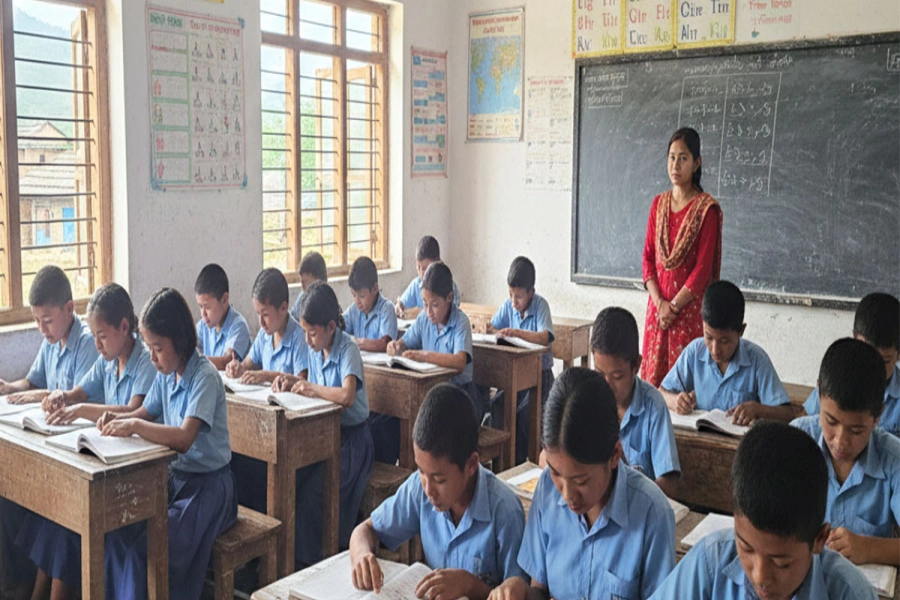
In Sambhusunanda School located at Jukot, female students and teachers are barred from entering school premises during their menstruation. There is a temple within the school premise, and women are restricted from coming to school due to the stereotypical belief that their touch will make the temple impure.
Sharmila Bhul of Achham was only 15 when she died alone in a cow barn. During her menstrual period, she was abandoned in the unventilated room. Similarly, 16-year-old Laxmi Buda of Dhakari VDC died while she was sleeping in the Chhaupadi shed. The deceased was an epilepsy patient.
Her life could have been saved if she was at home with her family, but unfortunately, Chhaupadi took away that opportunity. Likewise, Jhuma Devi Shahi of Barala VDC-6 also died in sleep inside the Chaupadhi shed. There are many instances of women dying in the sheds, out of myriad reasons like cold, snakebite, etc.
Being left alone in the cow shed subjects women to other forms of violence as well. As there is no one to protect them, people may take advantage of the situation as in the cases of Kali Devi Raule, Bina Kumari Raule, and Dhali Kumari Raule of Bajura district. Dammar Bahadur Thapa, a teacher of the local Khinnai Satyadevi Pre-primary School, attempted to rape them in cow shed.
Discriminating women during their menstruation is not limited to the rural areas of Far West Nepal. The “educated” people in big cities of Nepal, including the capital, are no different when it comes to traditional superstitious beliefs. During monthly periods, women are not allowed to touch kitchen utensils. The explanation provided is that this will allow them to rest as they are physically weak during menstruation, though the real reason is superstition. Some women are not allowed to sleep in beds.
Reena Upadhyaya belongs to a well-educated family in Kathmandu. She is educated and does not believe in superstition, but is restricted from the kitchen during her periods. When she was asked about this, she said, “I do not believe in these things, but my parents do. They do not allow me to enter the kitchen and dining area. I eat my meal separately. Of course I feel humiliated and mistreated. But I can do nothing, as my parents are not going to change their beliefs. They are scared that if they allow their girl child to roam everywhere during menstruation, God might punish them.”
Rita Basnet is another educated woman working in a commercial bank. Her family places great value on religious beliefs. Every month she and her mother are barred from normal household work and kitchen during their menstruation. Now she is married, and her in-laws do not believe in superstition. For the first few months of her marriage, she was really uncomfortable going into the kitchen during her menstruation. She says, “I was scared that the Gods might be angry. But then, after a few months, I adapted to the culture followed in my in-laws’ house.”
Culture indeed gives identity to a human being. But culture that derogates human rights cannot be entertained. Article 5 of CEDAW prescribes modification or elimination of cultures based on inferiority of either sex. Hence, there should be zero tolerance on issues like Chhaupadi. The above mentioned cases indicate that just changing laws is not enough, change in the mindset of people is more essential.
The author is an
advocate and a graduate from Kathmandu School of Law, Purbanchal University
gkc.ankita15@gmail.com
Related story
16-day Campaign against VAW: 80 percent of GBV includes domesti...









-1200x560-1774606010.webp)


