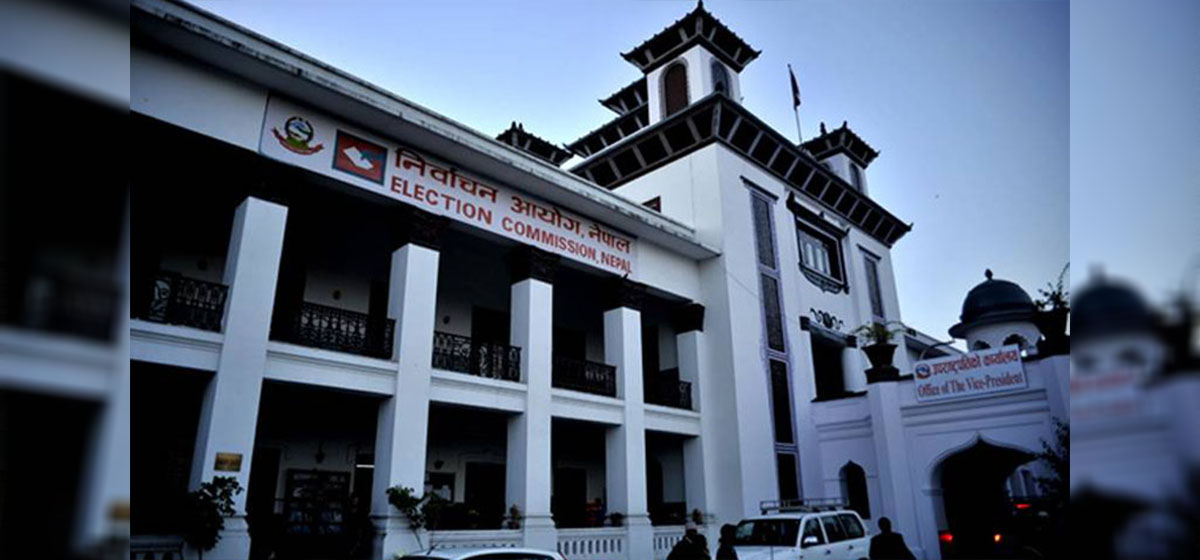
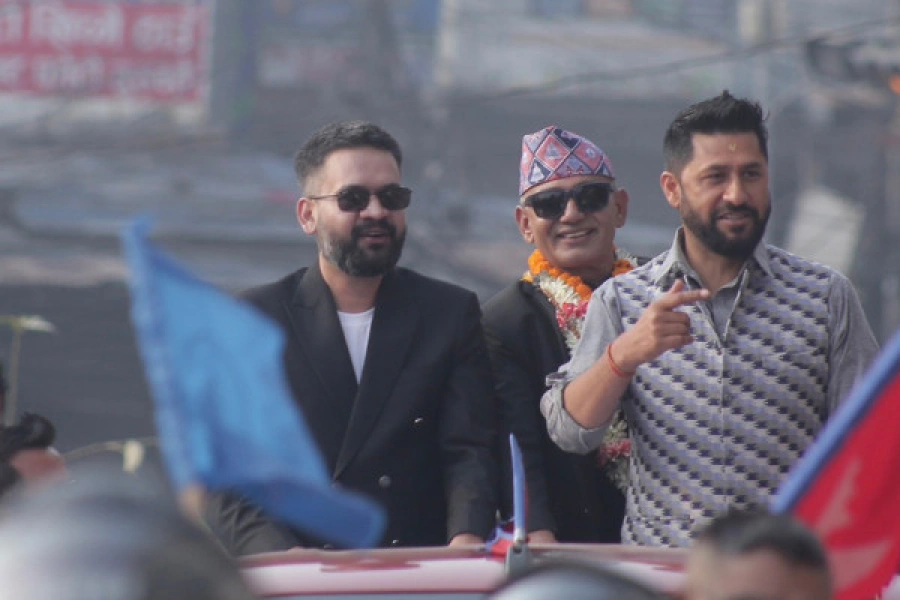
The election activities taking place across the country on Thursday instilled hope that the Constituent Assembly (CA) elections scheduled for November 19 would take place against all odds. As all the 75 district headquarters and other towns saw rallies and mass gatherings at district offices of Election Commission (EC), public skepticism over the possibility of polls has been cleared to some extent. [break]
Until a few days ago, political parties and other sections of the society were divided over whether the election should be held on November 19 or be deferred so as to convince the agitating Mohan Baidya-led CPN-Maoist and the 33-party alliance into joining the election process.
Many had believed that even major political parties were not fully prepared for polls on the scheduled date. The suspicion was fuelled by the fact that some key leaders, including Narayankaji Shrestha of UCPN (Maoist) and Pradeep Giri of Nepali Congress, among others, were lobbying hard for bringing the Baidya-led alliance on board the election process.
But a politburo meeting of the CPN-Maoist on Wednesday concluded that the major political parties have shut the doors for talks. “We now have no option other than to intensify our poll boycott campaign,” said a statement issued by the party on Wednesday.
“Nationwide scenes on Thursday showed that election fever has now gripped the country,” political analyst Shyam Shrestha told Republica.
He, however, said that election without participation of a strong force like CPN-Maoist does not give him much reason to be happy. He believed that boycott by Baidya-led former rebel group has both immediate and long-term consequences. “Their boycott may pose impact voters´ turnout on the election day. Baidya-led alliance shouldn´t be taken lightly as his party comprises some of the key leaders who led ten-year-long Maoist insurgency,” said Shrestha.
Shrestha said he is worried about the post-election scenario as he believes that elections alone wouldn´t ensure a better political course. “The boycott of the Baidya-led party would always pose a danger of another conflict in the country, which would be very unfortunate,” he said.
Political analyst Bishnu Sapkota sees a very slim chance of deferral of the elections. Even the 2008 election was held after being deferred for two times. But the deferrals were prior to filing of candidacies. Sapkota said a large number of people have participated enthusiastically as political leaders filed their candidacies on Thursday.
“It is undeniable that election without the participation of the Baidya-led party is imperfect but it wouldn´t be wise to further defer the polls just to bring the confused agitating force on board the election process,” said Sapkota. “Election is a must and it now seems to be happening.”
Sapkota isn´t quite pessimistic as he believes that the concerns of the Baidya-led alliance can be addressed by the new CA. He argued that the mainstream political parties to be represented in the new CA and other groups, including the agitating Maoist party, can reach a political agreement even after the election.
“Such a political agreement can be incorporated in the new constitution through new CA,” he said, adding that such practices were exercised in Nepal in the immediate past as well. “The political deals reached among the major political forces and the agitating Madhes-based parties were later incorporated into the present interim constitution,” he said.
Like Sapkota, there are many who feel encouraged to see the election process gathering momentum as they believe that fresh polls would break the long-stalled stalemate and pave the way for new political course.
Related story
New documentary 'The Princess' immerses audiences in Diana's st...