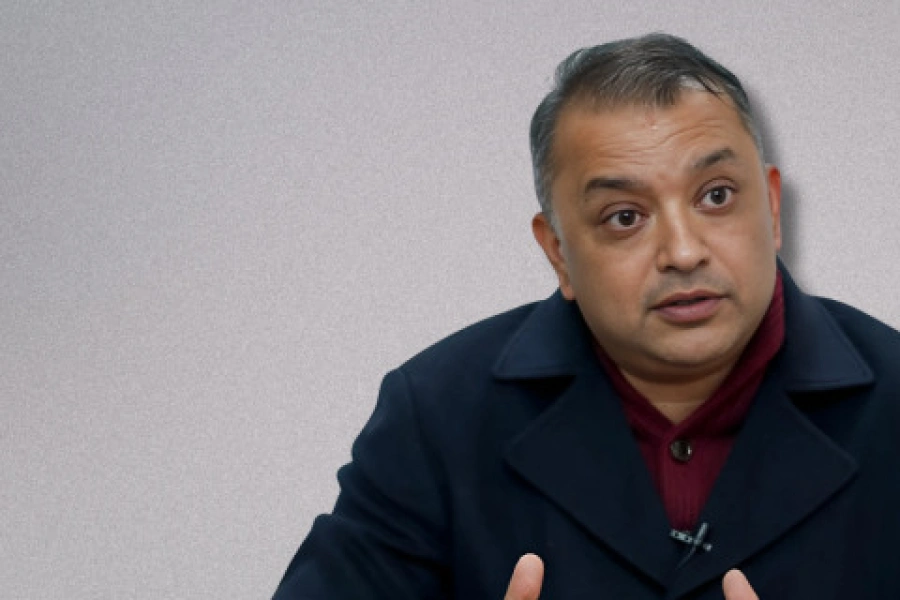
Copies of emails made public by the local agent Shambhu Bharati dispelled long-fuelled speculations and established Rubel Choudhary, a son-in-law of Nepali Congress leader Sujata Koirala, as one of the key accomplices in the notorious deal who used his mother-in-law´s political clout to rake in millions of bucks. Popular anger was that even after having grounds to grill him for his alleged involvement in illegal VOIP operation, he was not even enquired despite being under the scanner of Nepal Police, let alone nabbed. [break]
The CIAA had instructed police department to keep close watch on Rubel. He was pretty aware of the worst eventuality if Shambhu Bharati finally made it to the court for preliminary hearing. Scared of the prospect, he flew to Bangladesh right under the government´s nose leaving the police department and the CIAA agape. This shows how a foreign national trading on familial ties and political backing can easily dupe the government. Otherwise, the son-in-law who often enjoyed staying in in-laws´ country more than in his own homeland would not hastily run away just weeks before his involvement in the graft was further substantiated.
Unlike in the past, the Special Court has been performing exemplary job. At least, alleged police officers are being made to foot the bill by posting hefty bail. But to the surprise of all, the police officers, after posting the bail, did appear all smiles and their grinning faces wore not even a wince of shame. They walked out of Dillibazaar jail as if by accomplishing a heroic job of milking the country dry. Without fail, most of the alleged officers deposited colossal bail as slapped by the court. It raises some moot questions. What is the source of that money? Can a police officer earn that much money and property worth millions legitimately? Thus, Sudan case offers more than meets the eye and compels us to ponder over long overdue reforms.
CORRUPTION VULNERABILITY
Most notoriously, the Sudan scam has brought to the fore a hitherto ignored dimension into public policy debate. Pegged at Rs 290 million swindle, the scam exposes that defense and security sectors have remained one of the least explored areas of anti-corruption and governance reform in Nepal. These sectors are always put behind the veils of official secrecy which is justified on grounds of national interests and security. But independent studies show that official secrecy has favored more to the interest of officials than the public purse or national security at large. Hence, as an exigency, its increasing vulnerability to corruption warrants a policy rethink over the way security logistics are being procured.
The defense and security establishment has historically been one of the least open of any government institutions to public or even to intra-governmental scrutiny. The secrecy that necessarily veils some defense or security activities often extends more widely than can be justified. The Armored Personnel Carrier (APC) and other logistics were procured more than three years ago for Nepali peacekeepers in Sudan but massive corruption was detected only in 2010. As with any form of corruption, abuses of power for personnel enrichment in the security and defense sector are not victimless crimes. Every Nepali rupee misappropriated represents a waste of resources and creates a more dangerous and less trustworthy security environment. The United Nations Peacekeeping Mission nearly repatriated entire Nepali peacekeepers just because sub-standard and non-functional APCs were provided.
Countries have started taking up reform measures to fight corruption in defense and security sectors as they gobble up bulky government expenditures. Governments are less prepared now to turn a blind eye to corruption because they are under increasing pressure from their electorate and civil society to ensure integrity in security and defense procurements. The Transparency International’s Bribe Payer’s Index has ranked defense and security among the top three most corrupt sectors along with oil and construction.
Research by the International Monetary Fund has also indicated that such corruption is associated with higher military spending and defense procurement as measured both in terms of gross domestic product and total government spending. Globally, the defense sector involves sizeable spending exceeding $1 trillion US dollars annually. Although it is difficult to quantify the costs of corruption precisely, the US Department of Commerce has estimated that corruption in arms trade accounts for approximately 50 percent of all transactions globally.
BEST PRACTICES
Corruption adds up to 25 percent of the cost of procurement contracts in developing and least developed countries. Therefore, procurement is one of the areas that could most immediately benefit from greater transparency and openness. Defense and security purchases are not an exception to this scourge as the procurement process has become increasingly complex over the years. The way in which significant purchases are carried out is largely uniform across countries, and weaknesses can be identified in different procedural steps. To mitigate the impact, procurement reform has become a top priority in many countries.
To reduce procurement-related corruption in security and defense sector, countries have adopted different approaches. One of them is to create a unified military/security procurement body- the main advantage it provides is a single point of accountability for procuring equipments by removing it from the undue influence of a single military agency. Shifting procurement from the hands of military or security agency to the hands of an independent civilian body can bring in transparency. A more transparent procurement process through such a unified agency will ensure greater accountability, professionalism and efficiency like in South Korea. It has created a single agency to procure entire defense and security related logistics and equipments to trim down corruption and graft.
A second approach is a periodic external review of the defense and security related procurement process. This can be done by the parliamentary committees or can be done by the Ministry of Defense involving independent civil society organizations. For an instance, the Kinnaird Report of the Defense Procurement Review in Australia in 2003 was catalyst for entire anti-corruption reforms carried out in following years. The most important component of these reforms in Australia was the transfer of the Defense Material Organization, responsible for defense procurements, from a government department to a civilian agency. A third approach will be to apply electronic bidding and procurement process for transparency. This is one of the favored reform tools in many Latin American countries.
Use of Integrity Pact is other anti-corruption tool in procurement that has been used extensively in Latin America. These are enforceable anti-bribery pledges signed by all parties to a defense or security procurement contract and overseen by independent monitors. They lend added credibility to the procurement process through enhanced transparency and accountability in major defense purchases such as in Colombia and Latvia. Countries like India, South Korea and the United Kingdom, among others, are also mulling over implementing integrity pacts even in defense and security procurements. For Nepal too, it can bring probity in procurement process.
Sudan graft, along with the monetary loss, has undermined Nepal´s pride and past glory in peacekeeping mission. It has debased Nepal´s image as one of the most corrupt countries globally. But it has offered us some lessons too. The mega scam has heightened the strategic need to have a policy rethink over existing procurement system and increase civic and parliamentary oversight in security and defense purchases. It has raised the need for the government to put in place internal-control safeguards and strengthen national security integrity through institutional reforms. Security sector reform in Nepal has become too urgent to delay and too important to neglect.
pbhattarai2001@gmail.com
Related story
Sudan's minister of defense dies of heart attack in south Sudan