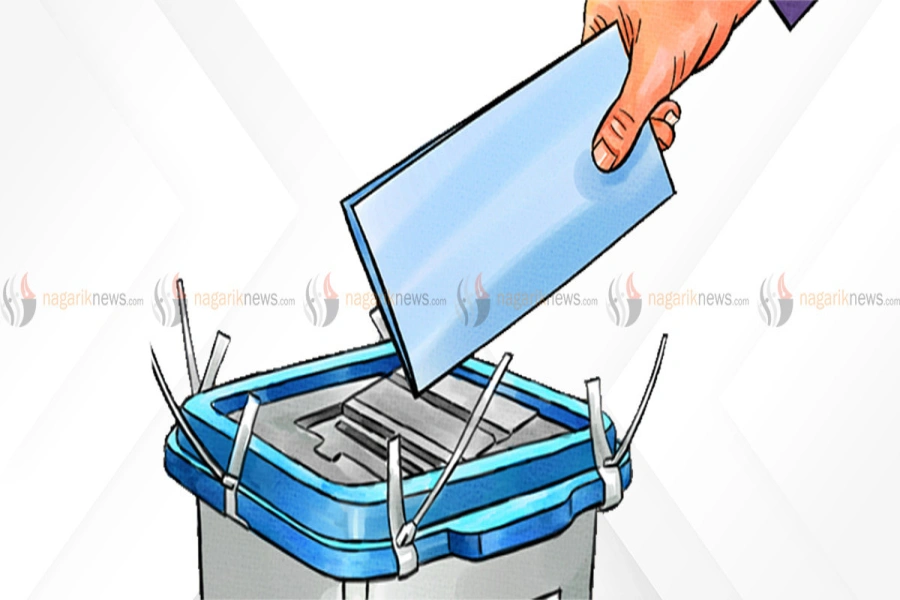
The recent general election in Nepal was more than just a periodic exercise in voting—it was a quiet yet powerful expression of public will. It revealed a deeper shift in how citizens understand democracy, accountability, and their own role within the system. Without noise or confrontation, voters across the country sent a clear message: performance matters, promises must mean something, and ultimately, power rests with the people.
What makes this election remarkable is not only the outcome but the manner in which it unfolded. In a South Asian region where elections are often accompanied by tension, intimidation, or even violence, Nepal once again chose a different path. With a voter turnout of around 60 percent—largely consistent with previous elections—citizens participated with calm resolve. There was no visible anger, no widespread boycott, and no retreat from the process. Instead, there was quiet determination: a belief that change, if needed, must come through the ballot.
A Mandate Against Complacency
For decades, Nepal's political arena has been dominated by familiar forces—the CPN-UML, Nepali Congress, and Maoist parties. These actors have alternated in power, each promising transformation, yet often delivering little to the bottom 50 percent on the economic ladder. Over time, this gap between promise and performance became increasingly difficult for citizens to ignore.
The 2082 election, in many ways, became a referendum on that accumulated disappointment. Voters did not take to the streets in protest; they simply made their decision at the ballot box. This was not just anti-incumbency—it was a more fundamental rejection of the idea that any political force is indispensable.
What stands out is the clarity of the message. Voters are no longer willing to accept legacy, ideology, or organizational strength as substitutes for delivery. They are asking harder questions: Has my life improved? Are opportunities expanding? Is governance becoming more transparent? Issues such as inflation, unemployment, corruption, and the lack of prospects—especially for younger generations—clearly shaped electoral choices.
Democracy Without Drama
Another striking feature of this election was its peaceful conduct. This is particularly noteworthy given the political unrest of September 2025, which ultimately triggered the midterm polls. Despite that backdrop, the election itself remained orderly and credible.
The scale of the operation was immense: over 18.9 million eligible voters, more than 23,000 polling centres, and upwards of 340,000 security personnel deployed across the country. These included the Nepal Police, Armed Police Force, the Nepali Army, and Election Police (temporary). Yet, rather than creating a sense of intimidation, this presence largely reassured voters.
There were minor disruptions in districts such as Dolakha, Sarlahi, and Rautahat, but these incidents were limited and effectively managed. Compared to previous elections, where re-polling had been necessary in several locations, this time the process showed clear improvement.
In many ways, this calm conduct speaks volumes. It reinforces Nepal's democratic identity—not as a system driven by confrontation, but as one sustained by patience, participation, and trust in institutions.
Beyond Ideology: A More Thinking Electorate
EC printing ballots to earlier design, citing time constraint

Perhaps the most significant shift lies in how voters are making their choices. The traditional grip of ideology appears to be loosening. Citizens are no longer bound—emotionally or politically—to any single doctrine or party identity. Instead, they are thinking, comparing, and deciding.
Although Nepal operates under a parliamentary system, this election carried a quasi-presidential feel. Parties projected their leaders as prime ministerial faces, and voters responded to those personalities. Yet, importantly, this did not translate into blind loyalty.
In many constituencies, voters made nuanced decisions—supporting broader political change (in proportional votes) while rejecting individual candidates who did not meet personal merit expectations. This suggests a growing political maturity, where national leadership and local accountability are weighed separately.
The role of younger voters, digital platforms, and urban political movements is also increasingly visible. Figures like Balendra Shah have captured public imagination not through rhetoric but through a perceived focus on delivery and independence from entrenched party systems. His experience as mayor of Kathmandu has, for many, become a symbol of what governance could look like outside traditional structures.
What Drove This Shift?
There is no single explanation for the outcome of the 2082 election. Some point to the influence of social media, others to generational change, and still others to internal weaknesses within established parties. All of these factors likely played a role.
But at a deeper level, the shift appears to be driven by a convergence of everyday realities:
· The pressure of rising living costs
· Limited employment opportunities
· Frustration with bureaucratic inefficiency
· A growing demand for fairness and merit
Above all, there is a gradual erosion of blind trust. Citizens are no longer willing to wait indefinitely for promises to materialise. They are observing, judging, and responding.
The Real Challenge Begins Now
If the election represents a turning point, it is only the beginning. The real test lies in governance. Delivering on expectations—especially in a system as complex as Nepal's—will not be easy.
Reforming the Bureaucracy
Any meaningful change will have to pass through Nepal's administrative machinery, which is often criticised for being slow, politicised, and resistant to reform. Even the most ambitious policies risk stagnation without improvements in how the state functions on a day-to-day basis.
Managing the Economy
Economic stability will be central to maintaining public trust. Issues like revenue leakage, inefficient tax collection, and underutilisation of public funds cannot be ignored. Addressing these requires not just policy intent but disciplined execution and institutional reform.
Balancing Expectations
Perhaps the most delicate challenge is managing expectations. The mandate for change is strong, but expectations can rise faster than results. Without visible progress, public optimism can quickly turn into frustration. Clear communication and early, tangible improvements will be crucial.
Navigating the Upper House
Despite a strong position in the lower house, the government may face constraints in the National Assembly. The upper house cannot permanently block legislation, but it can delay and return bills for reconsideration. This may slow reform efforts and create friction.
In this context, the task is not traditional coalition survival but careful engagement. Building understanding across party lines in the upper house will be essential to avoid unnecessary delays and keep governance moving.
Making Federalism Work
Finally, there is the ongoing challenge of federalism. Coordination between federal, provincial, and local governments remains uneven. Strengthening this system is critical for ensuring that development reaches all parts of the country effectively.
A Defining Democratic Moment
The 2082 election is, in many ways, a reminder of what democracy can look like at its best. It shows that citizens do not always need loud protests or dramatic upheaval to bring change. Sometimes, a quiet, collective decision is enough.
By choosing ballots over disruption and accountability over loyalty, the people of Nepal have set a powerful example—not just for themselves but for the region.
Conclusion
The message from Nepal's voters is clear: governance must deliver, leadership must be accountable, and democracy must improve the lives of ordinary people—especially those at the bottom 50 percent of the economic ladder.
This silent democratic shift is both an opportunity and a warning. It offers a chance to build a more responsive and effective system, but it also signals that patience is not unlimited.
If the new leadership can translate this mandate into action, Nepal stands at the threshold of meaningful progress. If not, the same voters who chose change this time will not hesitate to do so again.
The author is former Inspector General of Nepal Police.