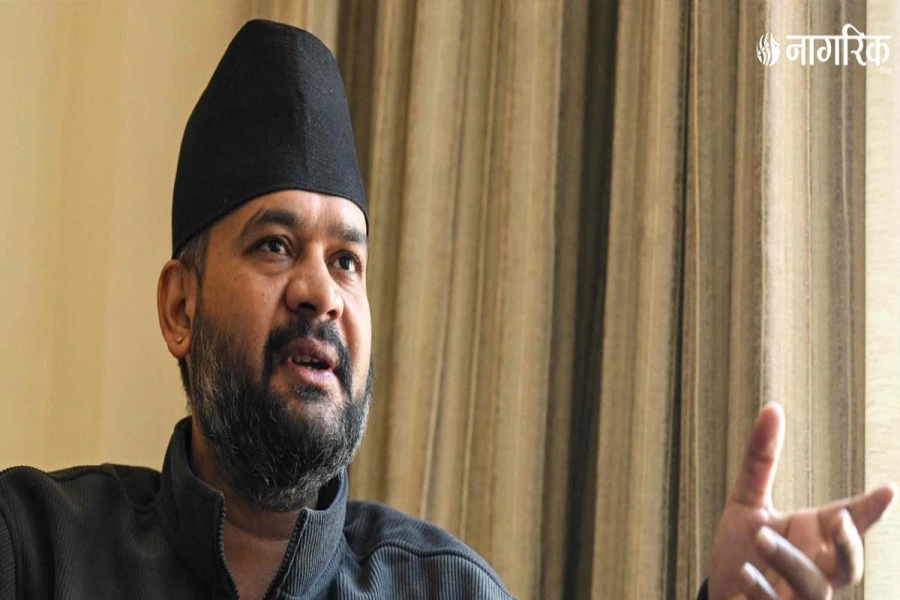
This is Prime Minister Bhattarai’s first bilateral visit, but given the intricacies of Nepal-India relations, what he achieves during this trip-- or fails to achieve -- can have lasting implications for his government and for himself.
Daunting as his agenda is, the prime minister hopes to reenergize the bilateral ties between New Delhi and Kathmandu, clear the misgivings between his party and the Indian establishment, and above all, nurture his personal ties with the ruling elites in New Delhi’s corridors of power, enabling him to play a more assertive role back home in concluding the peace process, writing a new constitution and in future politics. [break]
Though India played a proactive role in the signing of the 12-point agreement between the Maoists and the mainstream parties that opened the doors for Janaandolan-II and everything that followed, ties between New Delhi and Kathmandu have not been at their best in the last five years.
Of the last four prime ministers in Nepal since Janaandolan-II in 2006, New Delhi’s relations “ranged from unsatisfactory to hostile” with three of them, Madhav Kumar Nepal being the exception.
But even Prime Minister Nepal failed to address many of Delhi’s concerns, including signing on to long-pending security arrangements and treaties (such as Extradition Treaty, Mutual Legal Assistance Treaty, Sky Marshal, Bilateral Investment Protection Agreement) and ensuring the safety of Indian business ventures in Nepal.
“We are at great pains since it has become virtually impossible to enter into constructive negotiations with the Nepali side and do business with the chronically divided political parties,” an Indian official told this journalist recently in Kathmandu.
That situation, however, remains largely unchanged in Kathmandu, as was reflected in the warnings from different quarters to Bhattarai not to sign any “controversial agreements” with long-term implications.
Given the visceral divisiveness and complications of transition in Kathmandu, New Delhi had accepted that this government was not in a position to ink an extradition treaty or concede its demand to allow sky marshals on Indian planes flying to Kathmandu. It, however, got furious when Prime Minister Bhattarai started wavering even over signing a Bilateral Investment Protection Agreement (BIPA) during this trip. In the end, India sent a strong message that he had to act on BIPA if he expects to be taken seriously in New Delhi, and it paid off: The cabinet meeting held Wednesday evening endorsed draft agreements on BIPA and Double Taxation Avoidance. India had asked why Nepal cannot sign BIPA with India when it has already signed similar--or more stringent-- treaties with the UK, France, Germany, Netherlands, Finland and Mauritius.
Besides assuring India that things have begun to change gradually on the ground and India can “expect to do business with the Nepali state and Nepali actors”, Prime Minister Bhattarai also has the daunting task of reassuring Delhi about his own party and its policies toward India.
It’s, after all, his party that has mostly fanned anti-India sentiment in Nepal, attacked Indian joint-ventures and tried to play the China-card when Pushpa Kamal Dahal was prime minister. Both sides burnt their fingers and learnt their lessons but both India and Dahal still look on each other with suspicion.
The trust deficit between India and Dahal offers a unique challenge to Bhattarai: It’s in his best interest that this trust deficit persists to some degree, but at the same time, widening of the mistrust could endanger his premiership. So the best case scenario for Bhattarai is both New Delhi and Dahal wanting to see him at the helm at least until the conclusion of the peace process and constitution-writing.
Bhattarai clearly understands that the peace process and constitution-writing remain the twin challenges of his premiership and if he succeeds in them, he will build up political capital that can last him for life. The political capital accruing from successfully managing the transition will be so enormous that Bhattarai can hope to take on any politician, including Dahal, in future. And New Delhi knows all too well that it is in its own interest to prop up Bhattarai as he remains its best bet in the Maoist party.
While in New Delhi, Bhattarai will, therefore, court the Indian establishment to nudge the Nepali Congress, UML and even Dahal to move swiftly toward concluding the peace process.
But Bhattarai also has something else in mind: He wants to bag some meaningful Indian assistance-- some freebies if possible-- to bolster his credentials as a prime minister who cares about and can deliver on the development front.
Accordingly, the Bhattarai government has already sent its “wish-list” to the Indian government-- It includes a US$ one billion credit line for the Kathmandu-Tarai fast track, construction of 53 bridges along the Hulaki road under Indian grant, establishing six premier educational institutes -- two in management, two technical and two polytechnics, construction of an alternative bridge in Tanakpur to give the far-west a gateway of its own to India.
Not everything in the “wish-list” will be granted but India remains acutely aware that Bhattarai needs its support to bolster his domestic base and it will be in India’s interest as well to strengthen him.
There were concerns what message India wanted to convey when it sent its chief of protocol to receive Bhattarai at Indira Gandhi International Airport on Thursday as against the standard practice of sending at least a state minister to receive a foreign head of government. Officials downplayed the reception protocol and urged one to see the visit in terms of substance. In the next 24 hours, a joint communiqué is expected – how far it will meet Bhattarai’s expectations remains the question for now.
Related story
President, public and precedence






-1200x560-1774606010.webp)
-1200x560-1783685616.webp)