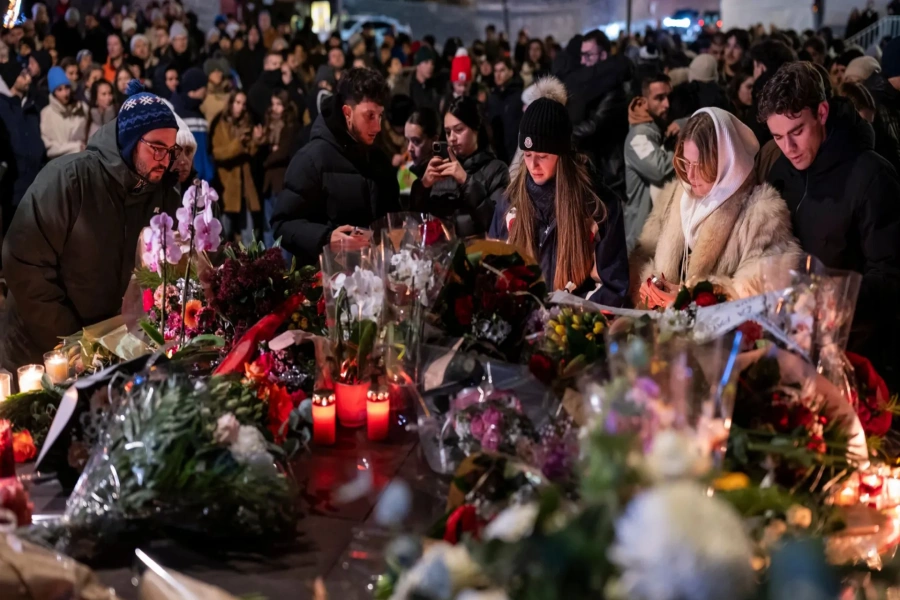
"Take care that you don't damage the things inside," says a woman watching from the ground. She is Mandevi Tuladhar, a resident of Bungmati, advising her neighbor to save the old utensils in the box. After the devastating earthquake on April 25, the process of recovering possessions from destroyed homes takes center stage in the outskirts of Kathmandu (for those of them who have the remains of a house to go back to). The search is now relaxed and people come at their leisure to recover what they can. But in the first few days after the earthquake, the search could be a very desperate one indeed, at least for those who were not searching for human lives or remains.For women, naturally the first priority was to get out some food, and then something to cook it in. "We ran in and got out the gas and the cookers and karahis," says Jankesari Maharjan, 36, of Khokana, for whom the first priority was to feed her school-going children aged 16 and 9. But she is fast running out of gas and has no money to buy any more. She has never cooked with firewood, but now she does so every day on a makeshift chulo made of bricks.
Whatever she was able to save that day has made a great difference to her life now. At least she has some solid gagris to carry water in, her neighbors in the tents beside her have to do with leaking plastic gallons because they were not able to get their utensils. And those who managed to get out some blankets and mattresses fared better than those who did not, muddy though the mattresses and blankets may be.
The other desperate search at the point was for jewelry. At Sankhu on April 29, three days after the earthquake, a woman desperately tried to climb into the second story of her collapsed house and was stopped with difficulty by security forces. "Tell us what to look for, and we will find it for you," the Nepali army personnel told her again and again, and again and again she tried to evade them and get inside the house. She yelled something about important documents when she was deterred for the last time. But later she was heard confiding to her relatives about some jewelry that she had in the house, and how she did not trust anyone with it.
Jankesari also remembers looking for her jewelry soon after the quake. Those pieces could decide how earthquake survivors start to rebuild their life: With some confidence on their own, or waiting for assistance from the government. And soon enough, there were rumors of thieves in Khokana, making Jankesari hand her jewelry over to her sister who still has a house.
As the days passed, the search for things to rebuild lives with went on, but at a slower pace. The certificates of his school and college were very important for 18 years old Sarju Maharjan of Bhaktapur to continue his educational journey. But he knew no one would come after them, so he was looking for them several days after the earthquake. "I was ready to depart to the US," he said glumly, knee deep in dust, "and now I don't know when I will be able to do so."
Unlike Sarju who knows his priority, the books of many children are lying around ignored, as people prioritize things more necessary. "Schools are going to open soon, and the children's books are either buried or dirty," said Nanichhori Maharjan, 30, of Khokana, the mother of a school going child. "Our children will not be able to study for a while, we know. But right now we have other things to do." She was sorting through a pile of potatoes, mostly rotten, that someone had just unearthed from her home.
For a farming community, a pantry is much more than the storehouse for daily sustenance. It also means their livelihood. Nanichhori, along with many others in Khokana, had lost all the rice grains she had planned to plant this year as her store broke open and spilled its contents on the ground. Her last-ditch effort to save the potatoes could mean an income, even if a small one, for her family in the coming months.
Future was also on Jankesari's mind when she retrieved the utensils to make raksi from her home before the rest of the house collapsed. No one was going to make raksi or even drink it for a few days, but she knew there would come a day when she would need it to rebuild her life.
Everywhere it seemed that survivors had left behind objects with sentimental attachment for more practical objects. Photos of family members, posters of film stars, and statues of gods can be found strewn around most wrecks. And if survivors do manage to retrieve some items with sentimental attachment, the objects are but a sad reminder of what was before.
To an outsider, the mangled photo frame without a photo was just a piece of trash. But it was enough to send Laxmi Maharjan of Harisiddhi into a fresh bout of tears. "It was my mother's photo," she sobbed as she held on to pieces of cardboard.
At Bungmati, Buddha Ratna Shakya stared at a big, obsolete radio that had survived the crash and was sitting proudly on some drums. "It does not even work, it has been useless for years," he said with bitterness. He had not been able to save much from his house apart from a shoe rack and a bed, and the survival of the radio was not likely to lift his spirits.
Survivors cling to their old homes to rebuild their new lives brick by brick, sometimes literally. In Khokana, a joint family of three previously nuclear families was coming together to build a new temporary shelter for themselves. Krishna Bhakta Maharjan, 42, was assisting his family members in bringing the bricks from his old house to their piece of empty land. "We have no cement, no bricks," said Krishna, "but what we have, we will make full use of to make ourselves safe in the monsoon." Among the ruins there is hope too. Like phoenix, the survivors of the earthquake are now rising from their own ashes.
sewa.bhattarai@gmail.com
Related story
I do not have desire to cling onto power: Outgoing Minister Shr...