For far too long, Nepali society has ignored mental illness, which not only impacts the sufferer but also the sufferer’s family, and may even extend to the community as a whole. The reasons for Nepali people ignoring mental illness are complex and varied, ranging from cultural beliefs in spiritual causes to stigma associated with having a family member suffering from mental illness.
Although everybody needs to remember that mental illness may surface without warning and may happen to you and anyone closely related to you, there are steps which people can often take to not only prevent the incidence of mental illness, but also assist early treatment. Like a physical illness, the better the prevention and earlier the treatment, the better the outcome is for everyone.
My personal story is about Post-Traumatic Stress Disorder (PTSD), a severe anxiety disorder which overwhelms the sufferer’s ability to cope. The condition has often left me depressed when feelings of extreme sadness, anxiety, emptiness, hopelessness, worrying, helplessness, worthlessness, guilt, irritability, hurt, and disempowerment overwhelm me.

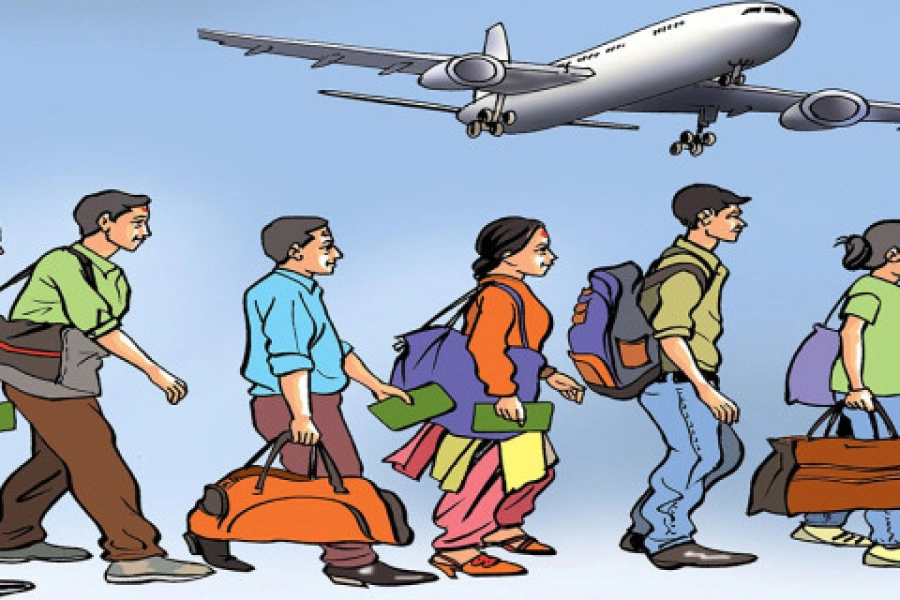
IMAGE: TIMESCREST.COM
Not until I became a postgraduate student of international public health in Sydney University did I discover PTSD as a diagnosable medical condition. At the same time, I learned that when mental trauma occurs in childhood, its effect can remain with the individual in covert ways well into adulthood, no matter what that individual achieves in later life educationally and professionally.
In Australia, I also came to know that some of that country’s most elite international sportsmen are not only medicated for depression, but it’s also a dark side of their lives which they battle since teenage. Reflecting on my own life, I believe that I can trace such feelings to the same period of my life.
My story of PTSD began at the age of five when my father, then a prosperous and literate trader, suddenly and inexplicably died—or was assumed to have done so. One evening at home, my father was found motionless with no apparent sign of life. My mother, and neighbors from whom she sought help, presumed that he had died.
As Nepal does not have a developed system of coronial inquiry, there is no independent facility or procedure for determining the cause of a sudden death, or finding out if unnatural, negligent, or criminal actions have contributed to a death. Accordingly, my father’s body was not subjected to any medical examination or autopsy.
Instead, it was taken to the village cremation ground for disposal, our religious custom being that human remains must be cremated within 24 hours of death.
While early disposal of the dead through cremation is a rational sanitary practice, Nepali religious culture is overlaid with sediments of superstition, one of which is that once a person—dead or alive—leaves home to embark on a journey, that person will face grave misfortune if he or she turns back. Within a week of my father’s cremation, rumors began circulating that his shrouded body had mysteriously revived when the pyre was ignited. The astonished cremators, fearing that lifting the body back and returning it home would bring untold misfortune on everyone, especially themselves, then used a khukuri to stab my father so as to prevent the possibility of recovery and allow the completion of cremation. Some twenty years later, this incident was confirmed to me by a fellow villager who had a close relative that had served as one of those cremators.
Before my father’s death, we had been a family of seven that comprised me, four sisters (of whom one was younger than me), and our parents. My eldest sister was married, but the others had not yet completed school. Our mother was illiterate. Our father, who was privileged to have sound mind and possess excellent life skills such as communication and compassion, was a profitable trader in rice. But as he had taught neither my mother, nor any of my older sisters, anything about the business, our economic situation rapidly spiralled downwards.
My mother had previously endured tough hardships and heartbreak, even before marrying my father. Emotionally and psychologically, she never recovered from the shock of our father’s untimely death and the later disclosures that he had been cremated alive. She was inconsolable. She wove hay mats at home for 16 hours every day. She was chronically depressed and sobbed frequently in the course of the day. My mother was constantly harassed in the street, addressed as a whore and with similarly opprobrious names by even family members including an uncle. As a primary school student, I was powerless to stop this torment which bystanders and village ruffians seemed to enjoy, never once intervening to stop this abuse.
Within a week of my father’s cremation, rumours began circulating that his body had revived when the pyre was ignited.
The burden on my sisters was intolerable. In time, their labor was needed to support the family, and instead of completing their secondary schooling, in which, until then, they had shown enormous promise, they were dispatched as child labourers to a nearby brick-kiln, manually carrying and breaking coal for the ovens, and stacking baked and unbaked bricks. It was menial work that earned low wages.
Our slide into poverty was even more evident when either my mother or I would glean discarded fruits and vegetables from the village market to complement our daily staple of dal and rice. Illiterate though she was, my mother had sufficient nous to know that micronutrients contained in green vegetables and yellow fruits were essential for our growth, especially for my sisters’. We even walked into Kathmandu to save the one rupee bus fare for our return home.
As my diet had lacked meat and milk protein, I was anorexic, and my face exploded in acne when I reached puberty. Aged 12, I used to roam the village and Patan at night, thinking about death. I recall my first serious thought of suicide at the age of 17. Typical of a teenager, I became obsessed with my looks and felt ashamed of my pimples and lack of fashionable clothes, not having a father’s guidance like my friends and peers. Nightmares about my father’s death haunted me for years.
I was successful in education, eventually attending Australia’s oldest university where I thrived in the field of international public health, a program which covered several aspects of mental health and through which I was introduced to PTSD, its common causes, and symptoms. The outcome of an independent psychological assessment shows that I still exhibit the symptoms of PTSD.
I was also lucky that Patrick Lesslie, an Australian friend, and his family gave me enormous emotional support when I suffered from emotional instability. Another Australian, John Williams also provided me emotional support. This included advice that acceptance of my condition was not just for me to embrace but that everyone had an obligation to be forbearing towards others who had suffered mental trauma. John was fond saying, ‘Krishna, God helps those who help themselves, and God help those who don’t!’
Five years after my graduation in international public health and human rights, I find that the conditions of other family members are similar to mine, and the stigma regarding mental health and people is unchanged. Many sufferers, because of culturally entrenched superstition and ignorance, are evicted from their homes and community. This vicious cycle is continuing and will continue until people who can help stop thinking about their own needs and learn compassion towards defenceless and vulnerable human beings.
The author graduated in International Public Health from Sydney University
kdrmhrjn@gmail.com
Related story
‘Kathmandu Blues & Roots Festival’ on Saturday