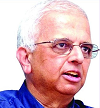
Responding to the suggestions of a delegation from the political parties to initiate the process by using his authority and all possible means, Nembang said electing the prime minister outside parliament would be against the constitution, House regulations and parliamentary practice.
The speaker gave the instances of electing Girija Prasad Koirala and Pushpa Kamal Dahal as prime minister since the promulgation of the Interim Constitution and said even if the prime minister is elected through political consensus under Article 38.1 of the constitution, the formal decision should be taken in the House.
He said Koirala was elected through political consensus but all the leaders proposing and seconding the motion had to appear in the House in person.
“Even Nepal Sadbhavana Party leader Anandi Devi Singh came to parliament to support the proposal to elect Koirala,” said Nembang.
He said the issue of the prime minister´s election has been brought up in parliament under clause 38.2, so there is no alternative to taking up the issue in the House. He said even the voting system has been clearly mentioned in the law and it does not give any leeway to the speaker to interpret the clause. “The election will be through division voting,” said Nembang.
Nembang said the speaker can set up some new tradition for the election but he cannot do this unless parliament is in session. He also ruled out removing obstacles in the parliamentary regulations as suggested by some lawyers to the major political parties. "If the law itself is clear, why is there a need for interpreting its clauses and removing obstacles?" Nembang was quoted as saying.
Nembang reminded the parties of the deliberations that took place on the eve of the fourth amendment to the constitution. The parties had turned down his suggestion to adopt a provision for appointing a majority leader as prime minister and securing a vote of confidence in the House within a certain period.
The 22-party delegation had urged the speaker to run the House at any cost if the Maoists want to continue obstructing it with a clear intention of disrupting the process of electing the prime minister.
“The speaker should use his authority to pave the way for holding an election for prime minister as per the request of the majority of lawmakers,” said Dr Minendra Rijal, a Nepali Congress lawmaker who was part of the delegation. “There are other options as well for proving a majority in favor of a proposed prime minister. We suggested the speaker explore such options.”
The speaker, however, was reported to have raised the question of morality with the caretaker prime minister. “I have told the prime minister that obstruction of the House by lawmakers of the prime minister´s party has given a negative message to the people and raised questions about the intention behind the prime minister´s resignation.
“It is the prime minister´s responsibility to ensure smooth functioning of parliament and it is the government which must provide business to the House,” said the speaker.
The speaker said that in parliamentary practice, the House is obstructed to draw the attention of the government to an issue raised by lawmakers. “But whose attention are the Maoists drawing by continuing to disrupt the House?”
Related story
HoR to elect Deputy Speaker on April 10