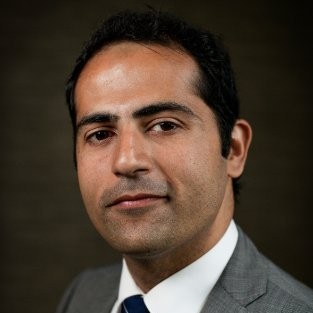
HELSINKI, Sept 10: Exiled Russian opposition politician Ilya Yashin has called "anti-war Russians" worldwide to vote against President Vladimir Putin's ruling party in legislative elections this month.
The protest, dubbed "noon for peace", is asking Russians who oppose the Kremlin's war in Ukraine to go to polling stations at noon on September 20 to vote against the ruling "United Russia", Yashin told AFP in Helsinki, where he met exiled supporters this month.
"If people come to vote against United Russia at the same time and line up in queues, then everyone will see just how many of us there really are," he said.
The results of the ballot are not in doubt.
Russia tightly controls elections, which rights groups have in the past said are marred by fraud, coercion and the banning of genuine opposition.
Putin's targeting of rivals has only intensified amid the Ukraine war, with all of his critics exiled, in jail or dead.
Last month, Russia's Supreme Court blocked the only anti-war party, Yabloko, from standing in the September vote.
"We don't consider this an election," Yashin underlined.
Yashin is the leader of "Peaceful Russia", a party founded in Berlin in June, which aims to bring together Russia's disparate opposition groups -- long marred by in-fighting, even in exile -- to call for an end on Russia's invasion of Ukraine, and advocate for rights.
Plane carrying dissident in coma leaves Russia for Germany

"Peaceful Russia" is not directly involved in the elections in any other way.
But, "we want to give people the opportunity to express their attitude toward what is happening, their negative attitude toward the war and toward Vladimir Putin's dictatorship," Yashin said, expecting thousands to join the campaign.
- 'First to return' -
Yashin, a former city lawmaker in Moscow and a longtime opponent of Putin, was jailed in 2022 after criticising Russia's invasion of Ukraine.
Two years later, he was released as part of a major prisoner swap with the West.
The Russian opposition has often been viewed as struggling with internal conflicts and for not being able to get their message through in Russia.
"I wouldn't dramatise conflicts within the Russian opposition," he said.
Yashin said his party hopes to gain power in the future, when it might be a more realistic aim.
"There are quite a few precedents in the world where dissidents created political parties in exile, but after some time returned to their homeland and took power," Yashin, who lives in Berlin, said.
Now, he said, was the time to prepare "for the political struggle."
"When the window of opportunity opens, I will be the first to return to Russia," he added.
The timing largely depends on when the war in Ukraine will end, "how it ends, and on what terms," he said.
- Post-election mobilisation -
Yashin warned of an "escalation" in Russia after the polls close.
He expects Putin to mobilise 300,000 to 500,000 men to the army to enable a larger-scale offensive in spring or summer next year.
"There is not a single sign that Putin is ready to begin serious negotiations with Ukraine ... but there are many signs that Putin is preparing an escalation," Yashin said.
"If Putin shifts into escalation mode, mobilisation becomes inevitable," he added.
Putin last ordered a "partial mobilisation" of reservists in 2022, calling up around 300,000 extra fighters following a string of military setbacks on the battlefield in Ukraine.
It was unpopular at home and triggered tens of thousands of draft-age men to flee the country.
The Kremlin has repeatedly denied plans for another call-up.
Yashin believes other developments are also possible -- "possibly involving a provocation against NATO", such as "an attempt to seize one of the cities in the Baltic states, or a provocation against Poland related to the location of Kaliningrad".
Moscow has repeatedly rejected claims it is set on attacking a NATO country.
Ukraine has also warned that Russia is likely to mobilise more troops after the September vote.
The Institute for the Study of War -- a US-based think tank -- said in July that Moscow appeared to be setting the "conditions" for another round of mobilisation, citing recently passed legislation allowing the army to recruit more types of convicts in wartime.