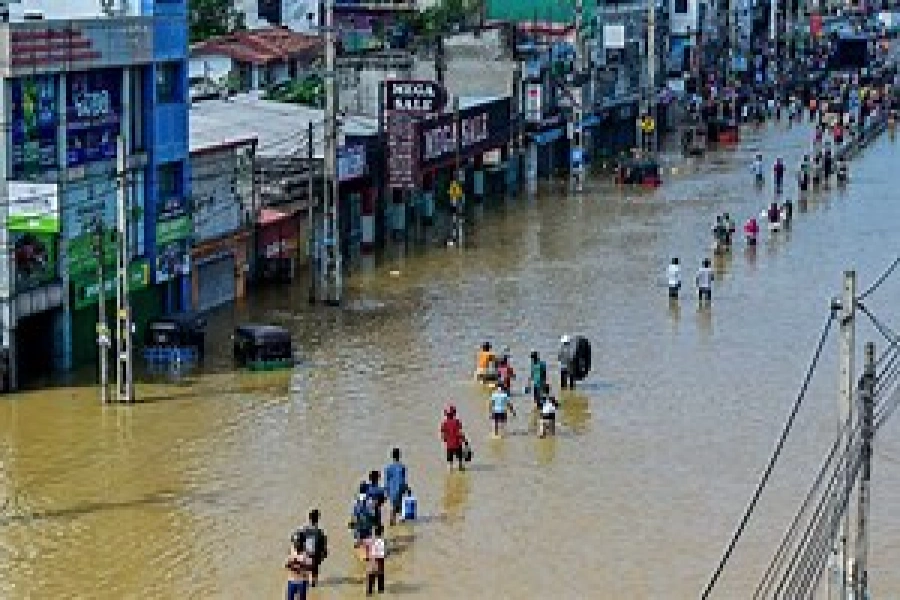
As envisaged in the UN Framework Convention on Climate Change (UNFCCC), the conference stressed on the need to translate the principles of common responsibilities and respective capabilities of the developed countries into operational practice. It noted that the world had spent more on corporate/financial bailouts than on promoting sustainability and, least of all, on addressing climate change.
The conference aimed at providing a forum for the countries of the South Asia Himalayas and other countries in the region to share knowledge and experience about common risks that climate change brings and the immense development opportunities that could be fostered.
The conference was attended by ministers, members of parliament and the Constituent Assembly and high-level government representatives from Afghanistan, Bangladesh, India, Maldives, Nepal, Pakistan, Sri Lanka and representative of Kyrgyz Republic. Other participants were from academic and research institutions, non-governmental organizations, development partners and national and international media.
The Global Ministerial Conference of the mountain countries will be held in Kyrgyz Republic in 2010 to discuss on issues of cooperation in the post-Copenhagen period.
Winners of UK-Nepal Climate Change Film Competition
The winners of a three-minute documentary film competition on the impact of climate change on the people of Nepal were announced at the Conference. Santoshi Nepal and Ishu Lama won the first prize for ´Act Locally Think Globally´ with cash prize of Rs 60,000. While Shiva Sharan Koirala won second prize worth Rs 40,000 for ´Jeopardy,´ third prize (Rs 30,000) went to Binod K Dhami and Padam R Paneru for ´3Cs of Climate Change.´
A total of 124 documentary-makers entered the competition, organized by the British Council, the British Embassy and the UK Government´s Department for International Development (DFID), in Kathmandu. A DFID statement quoted Jim Drummond, Director for South Asia, DFID, as saying, “It is the poorest who are most severely affected by climate change. They are the least able to prepare adequately, respond quickly and adapt effectively to the disasters and changes that climate change will bring, yet they have emitted the least. They must be our focus and that is why films like these - that showcase their stories, are so important.”
Related story
SHIFT for Our Planet: Youths urge authorities to make climate j...