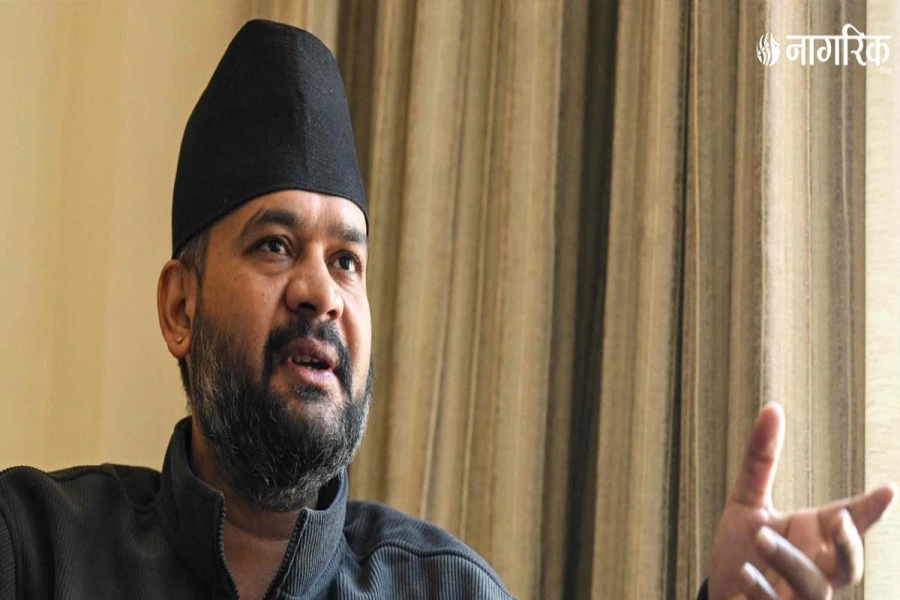
director.
After his debut film, “Acharya” in 2010, “Kathaa” is the second feature film made by the Sikkim-based moviemaker.
“Kathaa” was selected to be screened at the Goteborg International Film Festival in Sweden recently.[break]
How and where did the interest in filmmaking arise in you?
I started playing with filmmaking tools in 1998. Playing with my imagination has always been a part of my life, and hence, my interest grew in filmmaking.
What did you think about the response to your first film “Acharya”?
Acharya was appreciated by those who watched it. What I felt good about it was the fact that many people from all walks of life watched it.
What are some of the most important things to remember while making a film?
While we know about the important technical aspects we need to make a film, it´s also extremely important to know what one is doing. That´s the most important aspect of filmmaking. Most often, we tend to get confused in the middle of the process and get lost. This is because while our beginnings have basic structure, the latter phases are often fogged in the process.
How and in what ways is “Kathaa” different from your first film?
Kathaa is different from Acharya in many ways. Acharya was based on reality while Kathaa is fictional. From the budget to the number of cast and crew involved in these two films, everything varies. This latter movie tells the story of a mute girl (Kumari) and a Yak herder (Kaanchha). It’s about their love, dreams, separation and loss.
How do you choose the subject when you’re planning to make a film?
I don´t really plan much, especially when it comes to subject and genre. For instance, Kathaa was created without any script. Many stories come to my mind but only the ones that go all the way down to my heart get to shine on the silver screen.
Related story
Worth of stories



-1200x560-1774606010.webp)
-1200x560-1783685616.webp)