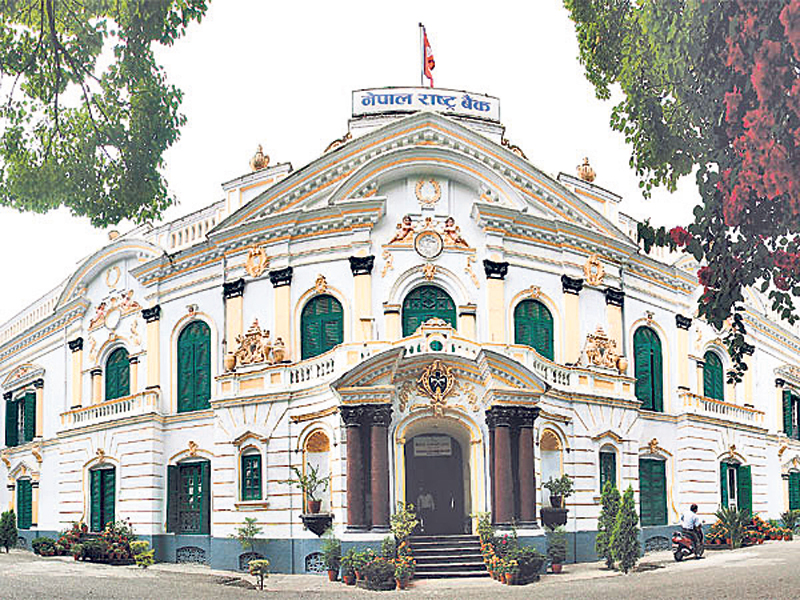
Authorities like Nepal Rastra Bank (NRB) have raised questions on possible misuse of the facility mainly after the Ministry of Commerce and Supplies (MoCS) -- the agency implementing the program -- distributed the incentives to sizeable number of lentil exporters.[break]
“Exporters dealing in handicraft and items having higher value addition had applied for the facility. However, a large chunk of incentive has gone into the pocket of lentil exporters,” said a source at Ministry of Finance.
MoCS has so far distributed Rs 110 million in cash incentives to a total of 46 exporters. Of them, 20 are lentil exporters and they have been provided cash incentives worth 4 percent of their total export amount, assessing their value addition at 100 percent.
Officials questioning the transparency in incentive distribution do not argue over higher value addition of lentil exports. “But as Nepal also imports a significant volume of lentils from India, it raises an obvious question why the ministry is generously distributing incentives to lentil exporters at a time when other exporters are complaining of hassles,” said the source.
That is not all. Even senior officials at the MoCS have raised questions over the way the Department of Industry (DoI) has been assessing value addition -- based on which incentives are distributed.
“We always believed noodles and carpet are products that rely heavily on imported raw materials. But DoI has assessed value addition for them in range of 52.15 percent to 80.26 percent. It seems that there are some flaws in the assessment process,” a senior official at MoCS said.
Even Gopal Krishna Joshi, vice president of Central Carpet Industries Association, expressed surprise over such high assessment of value addition by the DoI. “Value addition in carpet hovers at around 50 percent. It is surprising to learn that DoI has assessed it at as high as 78 percent,” he added.
Based on DoI´s assessment, MoCS has distributed cash incentives worth 4 percent of the total export amount to carpet exporters, including Rolpa Carpet Industries, Fishtail Rugs, Thakur Oriental Crafts and Exotic Oriental Crafts.
"Surprisingly, value addition for similar products has varied widely. This has compelled us to doubt the DoI´s intention,” said the source at MoCS.
For example, the source disclosed that DoI has assessed value addition of carpet produced by Exotic Oriental Crafts at 52.15 percent, Thakur Oriental Crafts at 75.51 percent, Fishtail Rugs at 63.93 percent and Rolpa Carpet at 78.32 percent.
Given the situation, MoCS has already expressed concerns over value addition assessment to the DoI.
The government had announced the program in 2009/10, hoping that it would boost exports. However, the scheme came into implementation in the current fiscal year only.
Records show, MoCS has so far distributed Rs 110 million to 46 exporters. Exporters of lentil, carpet, Nepali hand-made paper, noodles, feeds, coffee, leather goods, synthetic yarn, and polyester fiber, among others, have received the incentive.
Lal Mani Joshi, secretary at the MoCS, refused to comment on questions raised on value addition assessment. However, Dhruba Lal Rajbanshi, director general of DOI, claimed that the department´s value addition assessment is fair and that it is calculated taking into account the origin of raw materials and other ingredients used in those products.
"Officials at NRB and MoCS have raised question on comparatively higher number of lentil exporters in the list of beneficiaries,” Rajbanshi said, adding, “The assessment is done based on certain criteria and it is transparent.”
Related story
Export cash incentive scheme fails to deliver