

One such moment was when I travelled to a district in western Nepal to conduct a gender assessment in VSO’s focus schools.
“What types of jobs do you think women do?” was one of the interview questions I posed to students in order to understand their perceptions on gender.
“Sweeping the floor” said one girl in class 3.
“What about men?” I continued.
“Drinking alcohol” she answered.

PHOTO: CDKN.ORG
At first, I was a bit surprised when I received such feedback, but it later turned out that she was not the only child who gave such a response. Another boy said that a woman’s job was to wash clothes, while men’s jobs included discovering new things and earning money. These are some of the observations children have of gender roles and divisions of labor. They truly reflected the current unequal relations between men and women in Nepal.
In some schools that I visited, teachers were very happy to report that they had more girls than boys enrolled. But when asked for the reasons behind this, they revealed that due to the preferential behavior meted out to sons, boys are commonly sent to private schools or better government schools by their parents, while girls are usually admitted to nearby district schools. The investment in girls’ education was not considered as worthwhile as that in boys in Nepal, due to the shift of responsibility of daughters to their in-laws after marriage. Sons were considered by their immediate family as their ‘property’, while daughters would eventually become someone else’s.
Boys and girls were seated separately in classrooms. In one of the classes I observed, the teacher completely ignored female students, focusing on the boys’ side for most of the time, i.e. asking questions only to the male students, requesting more boys to write on the board, etc. As a result, most of the female students were either eating, or playing, or chatting, or drawing, and didn’t concentrate on the class.
At the next level, I found at the District Education Office (DEO) that only two of the 26 staff members were female. This is not unusual in Nepal. In January 2012, there was only one female District Education Officer among 75 districts. Women have low representation and participation in schools, education administration, and School Management Committees (SMCs).
Schools which had a greater number of female teachers explained to me that male teachers had more options to work in schools far from their homes, while female teachers often opted to work closer to home due to their reduced mobility and greater family responsibility. One male head teacher indicated that male teachers were more capable of delivering results, as female teachers’ family responsibilities demanded more of their time.
Another moment came when I was on a trip to a district in mid-western Nepal, collecting data around domestic violence. I happened to find that polygamy was prevalent in that area, despite it being illegal. What really surprised me was not that polygamy was being practiced, but that it was common knowledge amongst the community and practiced by several individuals in local government positions.
A few months after, I travelled to the Terai area in the eastern part of the country for VSO’s initiative on Women’s Political Participation. Most of the women in the villages were illiterate and did not speak Nepali. They only spoke local dialect and Hindi. There is a lack of meaningful participation of women in politics. One woman I talked to was affiliated to a specific political party. She told me she joined the party because she saw others do so. When I asked her what she usually did as a party member, she said: ‘I just followed what others did. ’
Nepal has a long road ahead in order to achieve gender equality. In the 2011 Global Gender Gap Report published by the World Economic Forum, Nepal ranked No. 126 out of 135 countries in terms of overall gender gap index. For me, gender equality means appreciating the differences between women and men, but still affording equal opportunities to both of them. Women and men should get equal access to those opportunities and receive equal results. Gender equality means ensuring equal sharing of household responsibilities in the private sphere, and decision-making power in the public sphere.
VSO is intent on mainstreaming gender into its education, health and secure livelihoods programs, and developing gender-specific initiatives to bring an end to violence against women and improving women’s participation in decision making. International Women’s Day celebrated on March 8th every year is an opportunity to review the progress of what has been achieved, and to continue to advocate for the realization of women’s rights. A journey of a thousand miles begins with a single step. I believe every small positive change we make now will lead, in the future, to an equal world for both men and women.
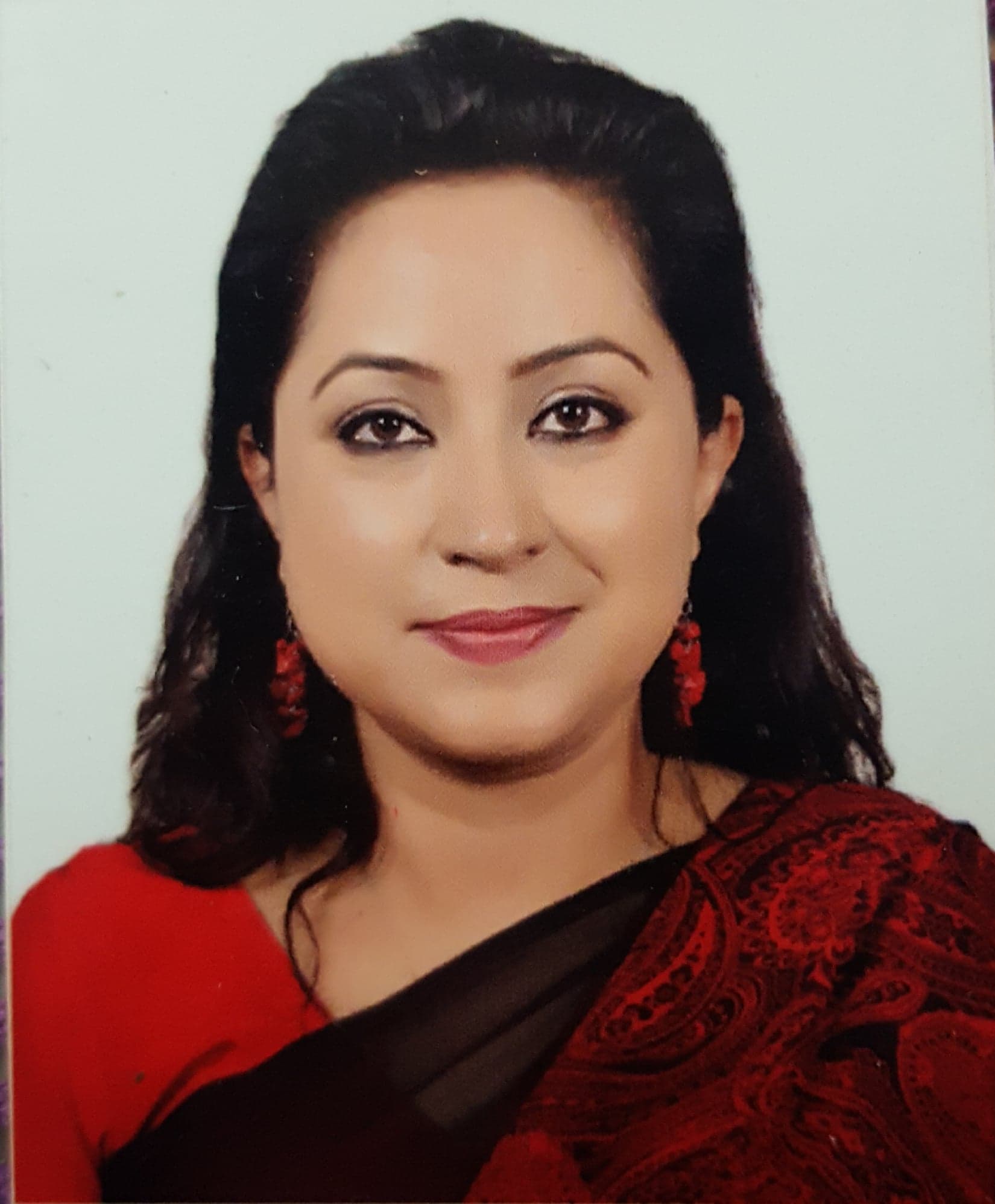
The author is currently working with VSO Nepal as a Gender and Capacity Building Advisor
haoyang72@gmail.com
Related story
Tom Ford closes Fashion Week with big hair, miles of sparkle


_20191012142921.jpeg)




-1778925320.webp)





