As I press on, the snow is slowly creeping through the plastic I’ve wrapped around my feet. At first, it’s a little disturbing, but slowly I get used to it. Slush! Slush! We move on. Strong winds often disturb the calmness of the falling snow, and the bells tied around the necks of the zopkyos (cow-and-yak breed) and yaks being herded down from Gorakshep add tune to it. We keep going up.

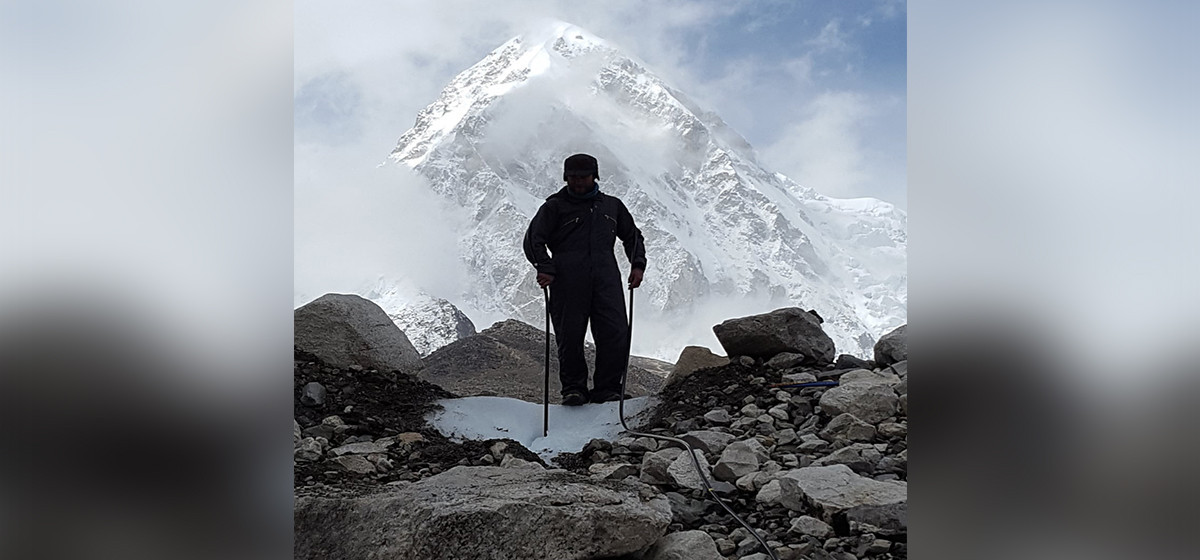
At around noon, we reach our destination. Luckily, the snowfall stops, and our scheduled visit to the Everest Base Camp (EBC) is undisturbed. This journey has been quite an adventure for me. I’ve never been to the mountains, or seen snow fall. And with plain stupidity, I’ve also left my trekking boots at Namche, and now I wear a Chinese Vista pair. Fighting blizzards, we do make it to the Base Camp the same day. Roaming around the yellow tents and standing tall at 6,000 meters, I realize it’s not the shoes: it’s something in me itself that made it up here.
This is the eighth day of our trek. We, seven young people, have been walking along the trail from Lukla to EBC in a bid to observe the effects of climate change in the Khumbu region. Our interaction with the locals along the way has shown us some unlikely pictures. People do enjoy the increasing temperatures. Green vegetables, carrots and cauliflowers now grow in abundance. And if not for the change in rainfall patterns, Khumbu is now more habitable.

The alarm raised over the Imja Lake also amuses the residents. Regarded as a deity, several myths surround the recent death of a Japanese researcher who inspected the lake without offering prayers prior to his survey. But very few local people are aware of the alleged fact that Imja Lake is retreating at the rate of 30 meters per year and they don’t fear its outburst. Yet, at Tengboche, special prayers and offerings were being made by the Rinpoche to prevent climate change.
The next day, I do make it to Kala Patthar. The wind is strong and the weather cold, but nothing can beat the beauty of the mountains. They keep calling me to climb them. Mt. Pumori dances to the rhythm of the early light, and Everest blows out misty winds.
Walking downhill, I’m suddenly stopped by a foreign trekker. “Did you climb Kala Patthar in your running shoes?” he asks me.
“I did. I also made it to the Everest Base Camp yesterday in the same shoes,” I reply.
He can’t hide his surprise and he asks me if he can take my picture. I nod happily.

In comparison to the previous decade, trekkers throng the EBC trail like never before. We met hundreds of them going up to Kala Patthar or climbing down. Along with them were porters transporting as much as 110 kilos of goods singly from Lukla to Namche and even higher. Watching them walk was equal to observing acrobatic performances.
Uninsured and without any technical and protective gears, these porters are the real unsung heroes of the trekking routes.
Presently, the world has gathered in Copenhagen, to sign a global pact aimed at fighting climate change. Representatives from Nepal must present a strong message to the developed nations about the reduction of their carbon dioxide emissions.

On our EBC trek, we observed several mountains capped by snow. But if global temperatures keep increasing at the present rate as monitored, the Himalayan ranges could become mere boulders in the near future. The Himalaya isn’t only the source of our national pride, they are home to numerous unique species of fauna and flora, and provides rich watershed to the Himalayan foothills to the south and in the north. Our encounters with some animals did provide a view to what presently is, and what will be in future if the ecological balance is disturbed by human carelessness.
Now, back in Kathmandu, I eagerly wait for the hazy weather to clear away. The Himalaya now holds a special place in my heart, and I’m eager to get a glimpse of its peaks. The mountains have taught me to dream, and I harbor an ambitious one – to scale at least one peak in my lifetime. Who knows, that particular one could be Mount Everest itself!
Related story
Khumbu region overwhelmed by tourists, Lukla records 200 flight...