Ruminating over the legacy of Rabindranath Tagore on his 150th birth anniversary, Marxist scholar Ashok Mitra predicted sometime ago that if there was any hope for Tagore and his songs, it rested with Bangladeshis. Conclusions of the imminent economist-politician of West Bengal are based on a deep understanding of impact of globalization, which the politician in him calls “blight”. Paradoxically, Tagore’s cosmopolitanism would have been offended by fears of globalization. The bard from Bengal was the first Asian to win a Nobel Prize and believed in keeping India’s doors and windows open with the caveat that care had to be taken so that strong winds did not blow its own world away.
Universalism was merely an ideal, but globalization has long been an engine of commerce and politics. Precisely for that reason, its force encountered resistance wherever it went whether in the guise of civilizing mission or in the garb of modernization. Locals invariably recognized globalization for what it was: The advance party of imperialism.
However, spreading tentacles of global capital is no more just a process; globalization is now an ideology that represents the characteristic thinking of the global governing elite. When defined as a set of “shared ideas or beliefs, which serve to justify interests of the dominant group”, ideology becomes a hegemonic concept that further enfeebles the marginalized in an insidious manner.
Marker of identity
At the time of partition of British India, few in what was to become Pakistan spoke Urdu as their first language. In the western wing of the newly created country, Punjabi, Pashto, Sindhi and Balochi were some of the main languages while an overwhelming majority in the eastern wing spoke Bengali. Along with the principles of religion as the primary basis of national identity, Mohajirs—Muslim migrants from Hindu-majority areas of undivided India—brought in Urdu, a language that had evolved in the Ganga plains over many centuries. It became the official language of Pakistan.
There was a slight difficulty with the decision of Mohajirs however: Urdu had long been a lingua franca but never really a proper official language. Mughals had preferred Persian. After Thomas Babington Macaulay and his infamous Minute on Indian Education of 1835, the British had gradually replaced Persian with English. Hindi faced similar difficulties in India. Post-partition, both India and Pakistan found it more convenient to adopt the language of British Empire as their own in all formal matters.
Newly independent countries tend to be unduly concerned with the primacy of their official language. It must have been a weak moment when Muhammad Ali Jinnah declared on a visit to East Pakistan that Bengalis needed to discard the language of Hindus and adopt Urdu. The argument was at best ingenious, if not fallacious altogether. If Islam indeed had a language, it was probably Arabic. Urdu had developed in the Hindu heartland through interactions between practitioners of multiple faiths. With an illustrious history of nearly a thousand years, a rich literary tradition, and a corps of administrators conversant in its official use, Bengali as the language of the majority of population had deserved to be at least an equal of Urdu in Pakistan. Destiny had other plans for the future of Bengali. It did not take long for the lingua franca of the eastern wing of Pakistan to become the official language of independent Bangladesh.
It all began on February 21, 1952 when police fired upon university students agitating for the dignity of their mother tongue. The day has since been marked as Shahid Diwas (Martyr’s Day) or just Ekushey. The first martyrs for the mother tongue in the world became idols of their motherland after the independence of Bangladesh. In November 1999, the General Conference of the UNESCO proclaimed that Ekushey would henceforth be celebrated worldwide as the International Mother Language Day. Forces of globalization, however, are more powerful than the kind of universalism that UN agencies espouse. The court may have outlawed “Banglish”, but it’s impossible to escape the hegemonic forces of the global capital, which prefers—as a short line in viral hit Kolaveri Di proclaims—“Only English-u”.
The pithy observation about the language of the heart—“Let me write the songs of a nation, and I care not who writes its laws”— is so potent that it has variously been attributed to Plato, his contemporary Greek musicologist the Damon of Athens, Napoleon and last heard, Scottish writer and politician Andrew Fletcher (1653-1716), among a host of other worthies of world history. In any case, ultimately the language of power triumphs over heart and mind and gets to write songs as well as laws.
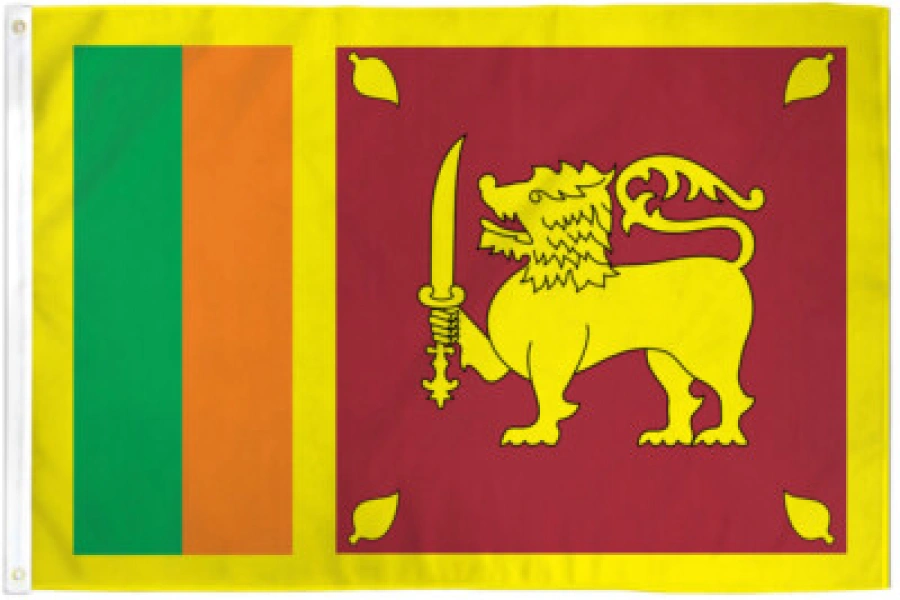
Seemingly contradictory forces are simultaneously at work in influencing language policies of different countries. For East Timor, formally the Democratic Republic of Timor-Leste, official languages are Tetum and Portuguese while working languages continue to be Indonesian (Bahasa Indonesia) and English. Singhalese have temporarily succeeded in crushing Tamil aspirations in northern Sri Lanka. It may take a while to see whether Singhalese fills the vacuum or resurgence of English emerges as a counter to the official language.
Longings of soul
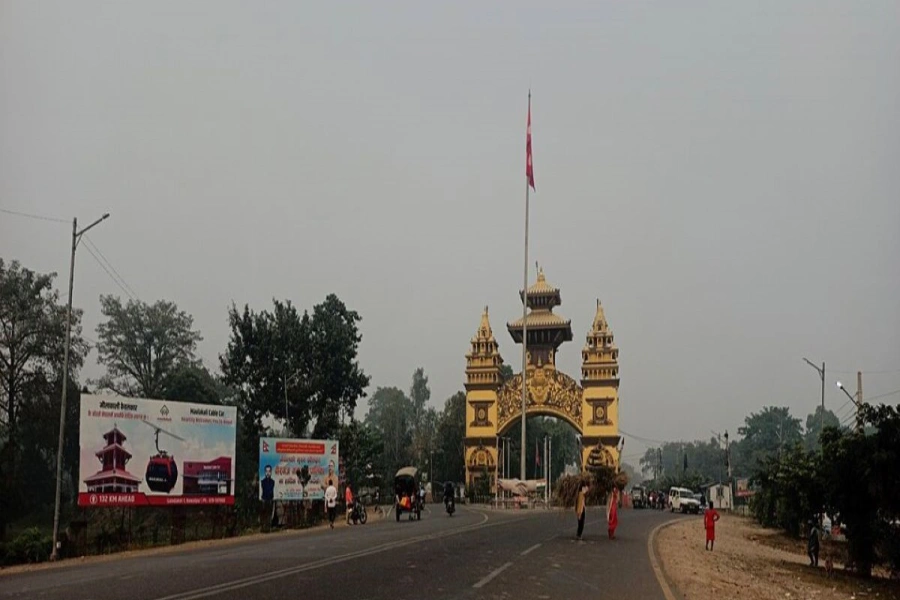
When ‘Hello Mithila’ radio program completed a decade of its broadcast last week, felicitating message flowed in from both sides of the ten-yard no-man’s-land in the Bagamati-Mechi plains. Dhirendra Premarshi and Rupa Jha have been chatting away in between songs and commercials for so long that they have become household names in the Mithila region. The popularity of the program is a testament to richness and poverty of the language at the same time.
The wealth of Maithili lies in its literature—“songs of the nation” as it were. The fourteenth-century Vaishnav poet Vidyapati created some of the finest verses in any language. Legend has it that Vidyapati’s composition was so refined and his devotion so pure that Lord Shiva decided to be with him for a while in the form of an orderly Ugna. Politics of language may have been partly responsible for their decision—since they traced their ancestry to Maithil kingdom of Simraungarh, Malla kings of Nepal valley had to provide some tangible proofs of their association—but richness of language was undoubtedly a contributing factor for the popularity of Maithili in literary expressions of the time including devotional songs, plays and poetry. Maithili has since been dislodged from that position not just in the Kathmandu valley but even in its own homeland where the new imperial language rules the roost. In its newly acquired identity as Nepali, Gorkha Bhasha has marginalized Maithili in Nepal.
Across the border, Hindi had delivered an even more debilitating blow where the formal language of the state had de-legitimized Maithili as one its dialects. Maithili-speakers with nationalist pretensions patronized Hindi. The Maithil Maharaja of Darbhanga channeled his immense resources towards Banaras Hindu University and funded the publication of a Hindi newspaper rather than show fealty to the language of his forefathers. New Delhi recognized the independent existence of Maithili few years ago, but the damage done to the psyche of Maithils on Indian side of the border is so deep that it would take decades for them to gain the confidence of owning their ancestral language.
Challenges of being hemmed in by languages of the state in India and in Nepal were difficult enough; Maithili now has to contend with aspirations of newly empowered populations within its own fold that want separate languages to assert their distinctive identities. And then there is English—its alphabets, numbers and symbols ubiquitous on every accoutrement of newly literate classes.
Hopes for Maithili, and other mother tongues in a similar position, perhaps lie in the realization that suppressed linguistic aspirations can erupt suddenly with nationalist ambitions and disrupt the balance of power in any region of the world. The diasporas may hence become patrons of the mother tongue they had abandoned. In a hegemonic world, displaced people need the anchor of their heritage even more urgently than the ones who have to bear its burden on a daily basis. Far too many mother tongues in the world have died; survival of those left standing amidst the debris is in the best interest of those that rule over the space.
Related story
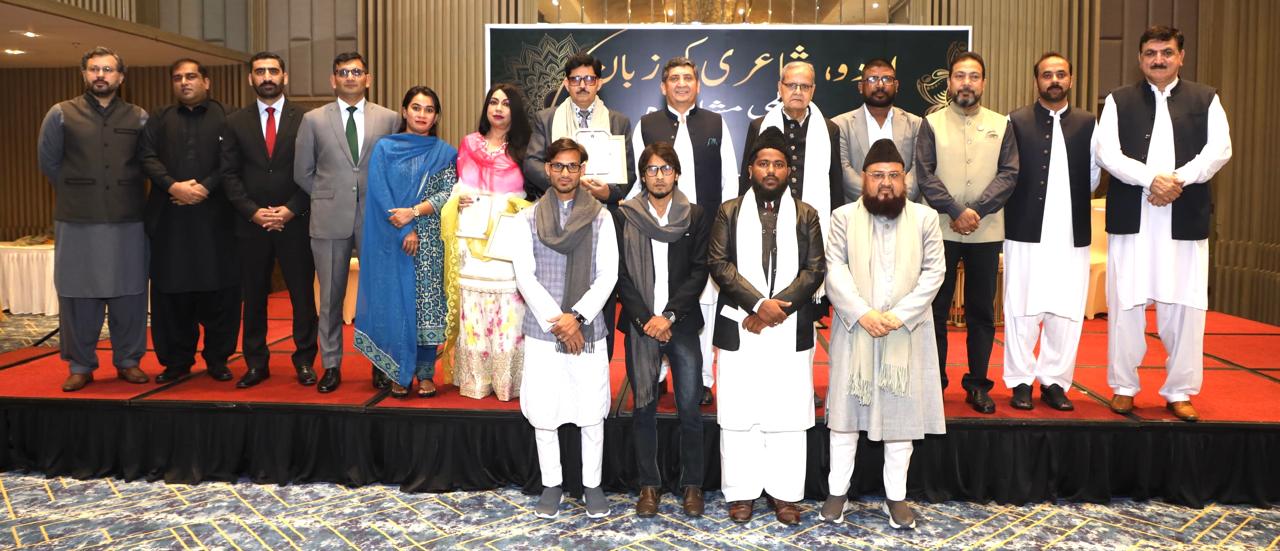
Pak embassy organizes poetry symposium — Aalmi Mushaira: Urdu,...