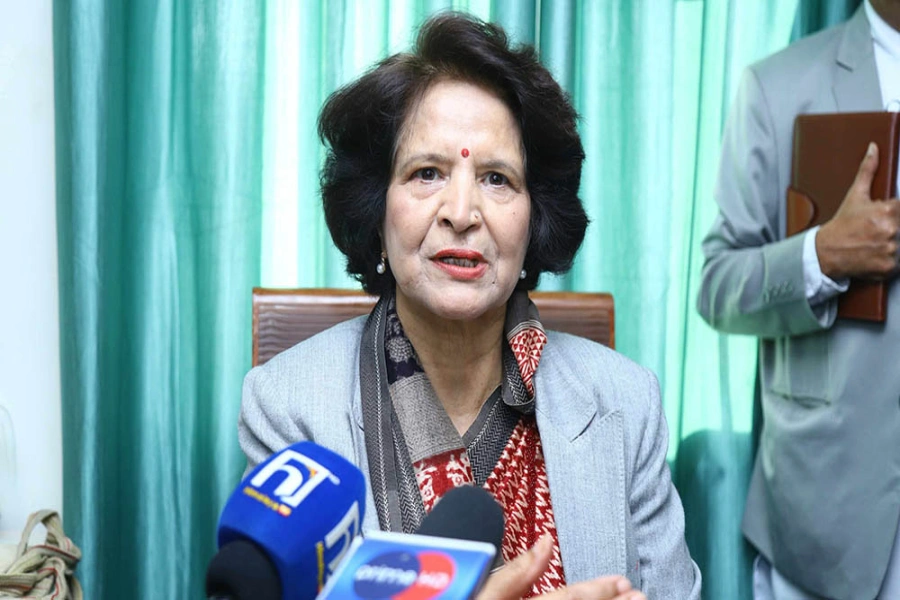
Dr Padam Bahadur Chand, who returned to Kathmandu on August 13 after coordinating relief operations in Jajarkot since July 17, said there was nothing new with the diarrhea outbreak this year. [break]"Diarrhea is caused by poor sanitation and contaminated water. It is transmitted through faeco-oral route, which means one has to eat feces to contract the disease," he explained. “One can never contract the disease if one maintains proper hygiene, drinks boiled water and washes hands properly.”

Health Secretary Dr Sudha Sharma said the prolonged dry spell this year had played a major role in the spread of the disease. “There was no adequate rainfall, temperature was higher and the first rain contaminated the source of water with sewage,” Dr Sharma explained. There has been general consensus among experts that the first spell of rainfall did not continue for long enough to flush out contaminated water from the water sources. The poor rainfall, according to another school of thought, meant new sources of water was unavailable and people shared their source of water with cattle.
Dr Chand, however, begged to differ. He said that the diarrhea epidemic had been claiming lives in Jajarkot almost every year. “We couldn´t respond timely, as Jajarkot is relatively more remote than other districts that had been affected by diarrhea in the past," Dr Chand explains.
Dr Sharma agreed, “It killed patients in a few hours, while it took us longer to reach the affected areas.

Dr Chand attributed the spread of diarrhea from Rokayagaun to other districts to various factors like lack of awareness, sanitation and hygiene, geographical remoteness and unavailability of health services. “The geographic terrain is such that there are only four-five houses on a hill, while other houses can only be reached after walking for hours. So, the government couldn´t have set up health facilities for every little settlement in the district,” Dr Chand explained. The only way to curb the spread of the disease could have been for the diarrhea patients to go to health posts themselves, he added.
Water resources expert Dr Ajay Dixit said studies were underway to find out the causes that led to spread of the disease. He also claimed that only 19 percent of the locals had toilets in their houses.
Medicine supply and health workers

Dr Chand admitted that there was a short supply of medicines when the outbreak of the disease was first reported. He, however, claimed that the 58 health centers were adequately supplied with medicines when the disease hit epidemic proportion.
"After we set up health camps, many people visited health facilities. All these people were not necessarily diarrhea patients. They would be prescribed medicines for the diseases they were inflicted with, which were not available in our health camps. So, they complained to media and others that medicines were not available," Dr Chand explained.
He also says there was no scarcity of health workers. “We don´t need an MBBS doctor to treat diarrhea patients. The government had sent adequate health workers.”
Lessons from Jajarkot and challenges ahead

Dr Chand said that it was lack of awareness among locals which had made the job difficult. “Once we started mobilizing the locals to raise awareness, our job became a lot easier," he recalls.
He said that the problem of water and open defecation was prevalent in almost all hilly districts. It would take a long time before people get used to maintaining proper hygiene.
He also suggested the government to be well prepared to deal with such tragedies. “For instance, the government should recruit temporary health workers during the epidemic season. In addition, the government should provide incentives to doctors working in the remote areas,” Dr Chand said.
(All photos by Kalendra Sejuwal.)
premdhakal@myrepublica.com
Related story
Middle East tensions ground paragliding pilots, NOTAM issued ov...